Cher Daniel, Polly David, Berven Sigurd
SI-BONE, Inc., San Jose, CA, USA.
Department of Orthopedic Surgery, University of Minnesota, Minneapolis, MN, USA.
Med Devices (Auckl). 2014 Apr 12;7:73-81. doi: 10.2147/MDER.S59437. eCollection 2014.
The sacroiliac joint (SIJ) is an important and significant cause of low back pain. We sought to quantify the burden of disease attributable to the SIJ.
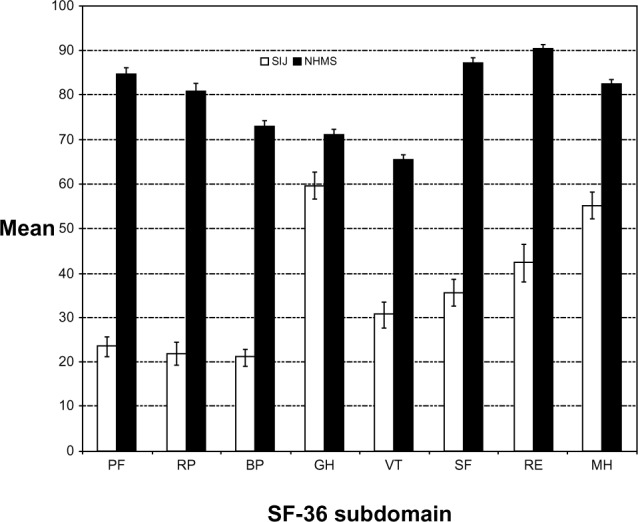
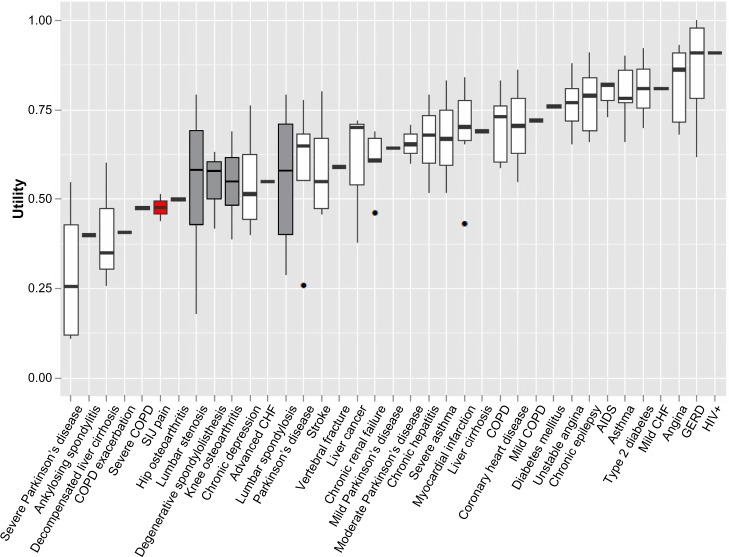
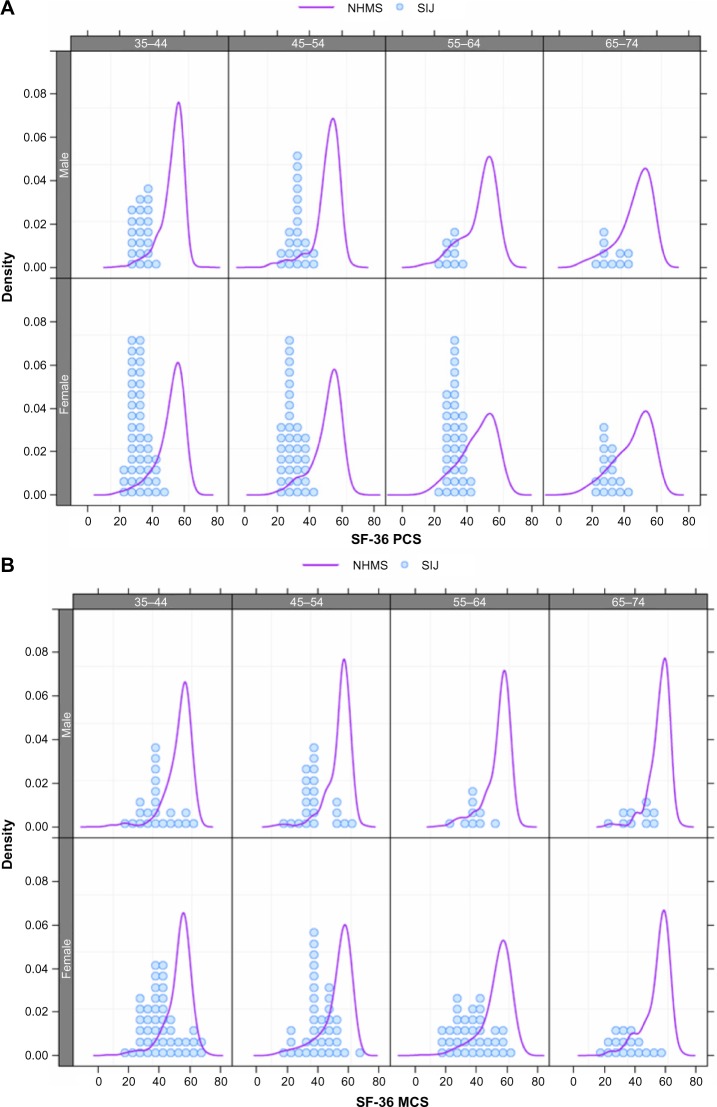
The authors compared EuroQol 5D (EQ-5D) and Short Form (SF)-36-based health state utility values derived from the preoperative evaluation of patients with chronic SIJ pain participating in two prospective clinical trials of minimally invasive SIJ fusion versus patients participating in a nationally representative USA cross-sectional survey (National Health Measurement Study [NHMS]). Comparative analyses controlled for age, sex, and oversampling in NHMS. A utility percentile for each SIJ subject was calculated using NHMS as a reference cohort. Finally, SIJ health state utilities were compared with utilities for common medical conditions that were published in a national utility registry.
SIJ patients (number [n]=198) had mean SF-6D and EQ-5D utility scores of 0.51 and 0.44, respectively. Values were significantly depressed (0.28 points for the SF-6D utility score and 0.43 points for EQ-5D; both P<0.0001) compared to NHMS controls. SIJ patients were in the lowest deciles for utility compared to the NHMS controls. The SIJ utility values were worse than those of many common, major medical conditions, and similar to those of other common preoperative orthopedic conditions.
Patients with SIJ pain presenting for minimally invasive surgical care have marked impairment in quality of life that is worse than in many chronic health conditions, and this is similar to other orthopedic conditions that are commonly treated surgically. SIJ utility values are in the lowest two deciles when compared to control populations.
骶髂关节(SIJ)是下腰痛的一个重要且显著的病因。我们试图量化归因于骶髂关节的疾病负担。
作者比较了参与两项微创骶髂关节融合前瞻性临床试验的慢性骶髂关节疼痛患者术前评估得出的基于欧洲五维健康量表(EQ - 5D)和简短健康调查问卷(SF)- 36的健康状态效用值,以及参与美国全国代表性横断面调查(国家健康测量研究[NHMS])的患者的效用值。比较分析对NHMS中的年龄、性别和过度抽样进行了控制。使用NHMS作为参考队列计算每个骶髂关节患者的效用百分位数。最后,将骶髂关节健康状态效用值与国家效用登记处公布的常见医疗状况的效用值进行比较。
骶髂关节患者(n = 198)的平均SF - 6D和EQ - 5D效用得分分别为0.51和0.44。与NHMS对照组相比,这些值显著降低(SF - 6D效用得分降低0.28分,EQ - 5D降低0.43分;两者P < 0.0001)。与NHMS对照组相比,骶髂关节患者的效用处于最低十分位数。骶髂关节效用值比许多常见的主要医疗状况更差,与其他常见的术前骨科状况相似。
接受微创外科治疗的骶髂关节疼痛患者的生活质量有明显损害,比许多慢性健康状况更差,这与其他通常接受手术治疗的骨科状况相似。与对照人群相比,骶髂关节效用值处于最低的两个十分位数。