Takechi Tayori, Wada Ritsuko, Fukuda Tsubasa, Harada Kazuki, Takamura Hitoshi
Faculty of Human Science, Kobe Shoin Women's University, Hyogo 657-0015, Japan ; Graduate School of Humanities and Science, Nara Women's University, Nara 630-8506, Japan.
Laboratory of Marine Food Processing and Safety, Department of Food Science and Technology, National Fisheries University, Independent Administrative Institution, The Ministry of Agriculture Forestry and Fisheries of Japan, Yamaguchi 759-6595, Japan.
Biomed Rep. 2014 May;2(3):364-369. doi: 10.3892/br.2014.244. Epub 2014 Feb 28.
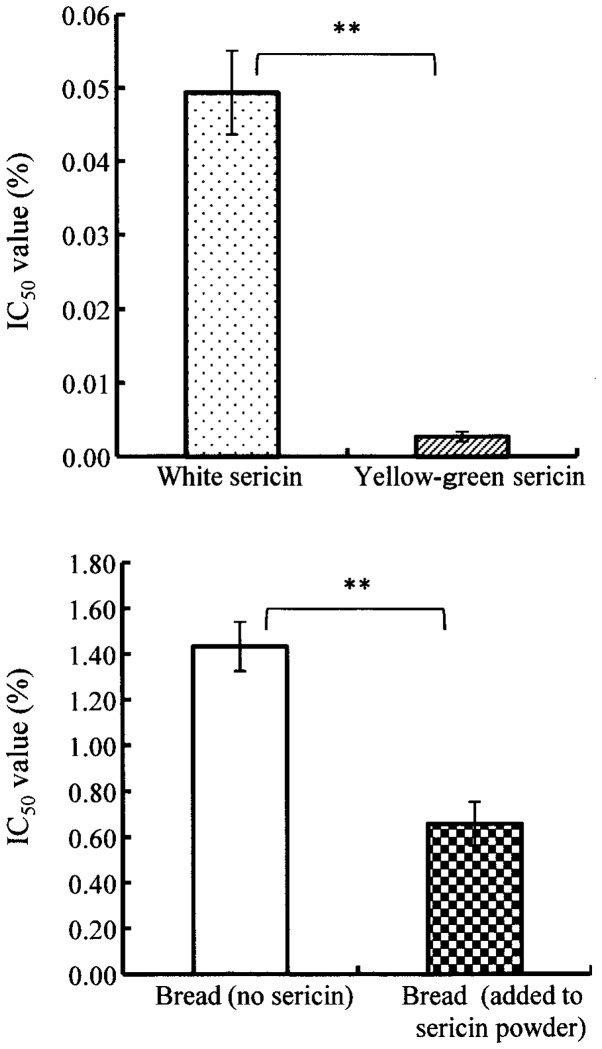
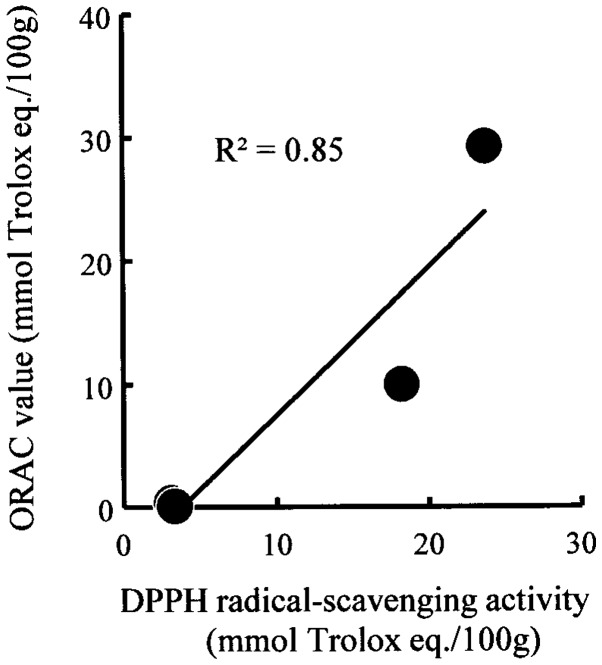
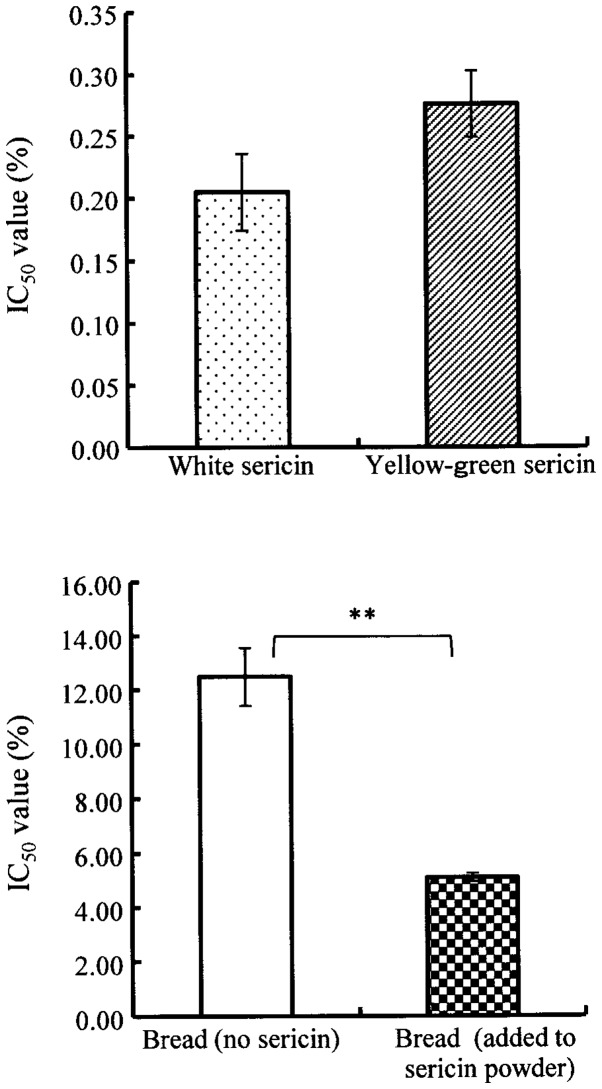
Recent efforts have focused on the use of sericin proteins extracted from cocoons of silkworm as a healthy food source for human consumption. In this study, we focused on the antioxidative properties of sericin proteins. The antioxidative properties were measured in sericin proteins extracted from the shell of the cocoon, designated hereafter as white sericin protein and yellow-green sericin protein, as well as bread without sericin protein and bread to which white sericin powder had been added using four measurement methods: 1,1-Diphenyl-2-picrylhydrazyl (DPPH), chemiluminescence, oxygen radical absorbance capacity (ORAC) and electron spin resonance (ESR). High antioxidative properties of sericin proteins were indicated by all four methods. A comparison of the two types of sericin proteins revealed that yellow-green sericin protein exhibited high antioxidative properties as indicated by the DPPH, chemiluminescence and ORAC methods. By contrast, a higher antioxidative property was determined in white sericin protein by the ESR method. Consequently, our findings confirmed that sericin proteins have antioxidative properties against multiple radicals. In addition, the antioxidative property of bread was enhanced by the addition of sericin powder to the bread. Therefore, findings of this study suggest that sericin proteins may be efficiently used as beneficial food for human health.
最近的研究致力于将从蚕茧中提取的丝胶蛋白用作人类食用的健康食物来源。在本研究中,我们聚焦于丝胶蛋白的抗氧化特性。使用四种测量方法对从蚕茧外层提取的丝胶蛋白(以下分别称为白色丝胶蛋白和黄绿色丝胶蛋白)、不含丝胶蛋白的面包以及添加了白色丝胶粉的面包的抗氧化特性进行了测量,这四种方法分别是:1,1-二苯基-2-苦基肼自由基(DPPH)法、化学发光法、氧自由基吸收能力(ORAC)法和电子自旋共振(ESR)法。所有这四种方法均表明丝胶蛋白具有较高的抗氧化特性。对这两种丝胶蛋白的比较显示,黄绿色丝胶蛋白在DPPH法、化学发光法和ORAC法中表现出较高的抗氧化特性。相比之下,白色丝胶蛋白在ESR法中表现出更高的抗氧化特性。因此,我们的研究结果证实了丝胶蛋白对多种自由基具有抗氧化特性。此外,向面包中添加丝胶粉可增强面包的抗氧化性能。所以,本研究结果表明丝胶蛋白可有效地用作对人体健康有益的食物。