Liao W S, Ma K T, Woodworth C D, Mengel L, Isom H C
Department of Biochemistry and Molecular Biology, University of Texas M. D. Anderson Cancer Center, Houston 77030.
Mol Cell Biol. 1989 Jul;9(7):2779-86. doi: 10.1128/mcb.9.7.2779-2786.1989.
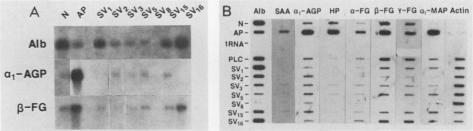
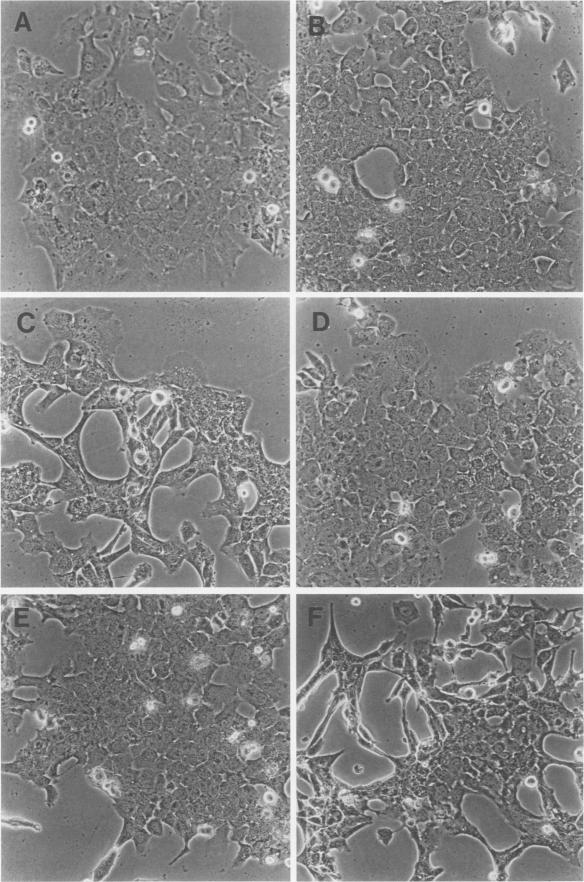
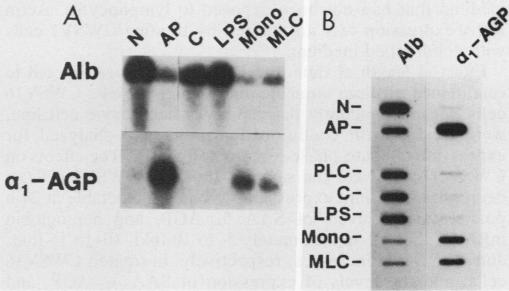
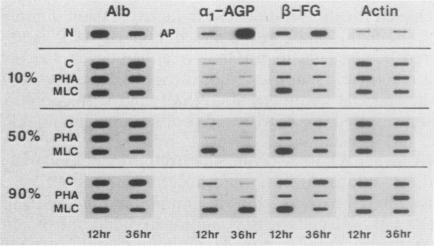
Seven simian virus 40 (SV40)-hepatocyte cell lines were characterized with respect to the ability to express eight liver acute-phase genes. cDNA clones corresponding to albumin, serum amyloid A, alpha 1-acid glycoprotein, haptoglobin, alpha-, beta-, and gamma-fibrinogen, and alpha 1-major-acute-phase protein mRNAs were used in Northern (RNA) or slot blot analyses. In the noninduced state, six of the seven cell lines showed significant (i.e., liverlike) levels of constitutive expression of all genes examined except that expression of haptoglobin mRNA was considerable lower than in the normal liver. To examine whether these immortalized liver cells can respond appropriately to inflammatory mediators, cells were treated with conditioned medium from activated human monocytes or mixed lymphocyte cultures. Results showed that these SV40-hepatocyte cell lines responded to the conditioned media in culture by down-regulating albumin gene expression and up-regulating other acute-phase genes in a time- and dose-dependent manner. These results indicate that the SV40-hepatocytes retained not only the ability to express a number of acute-phase genes but also the ability to respond to external stimuli. The usefulness of these cell lines for analysis of the molecular mechanisms involved in the regulation of these acute-phase genes is discussed.
对七种猿猴病毒40(SV40)-肝细胞系进行了表征,以确定其表达八种肝脏急性期基因的能力。与白蛋白、血清淀粉样蛋白A、α1-酸性糖蛋白、触珠蛋白、α-、β-和γ-纤维蛋白原以及α1-主要急性期蛋白mRNA相对应的cDNA克隆用于Northern(RNA)或狭缝印迹分析。在未诱导状态下,七个细胞系中的六个显示出除触珠蛋白mRNA表达明显低于正常肝脏外,所检测的所有基因的组成型表达水平均显著(即类似肝脏)。为了研究这些永生化肝细胞是否能对炎症介质做出适当反应,用来自活化的人单核细胞或混合淋巴细胞培养物的条件培养基处理细胞。结果表明,这些SV40-肝细胞系在培养中对条件培养基做出反应,以时间和剂量依赖的方式下调白蛋白基因表达并上调其他急性期基因。这些结果表明,SV40-肝细胞不仅保留了表达多种急性期基因的能力,还保留了对外部刺激做出反应的能力。讨论了这些细胞系在分析这些急性期基因调控所涉及的分子机制方面的用途。