Adem Getnet Dino, Roy Stuart J, Zhou Meixue, Bowman John P, Shabala Sergey
School of Land and Food, University of Tasmania, Private Bag 54, Hobart Tas 7001, Australia.
BMC Plant Biol. 2014 Apr 28;14:113. doi: 10.1186/1471-2229-14-113.
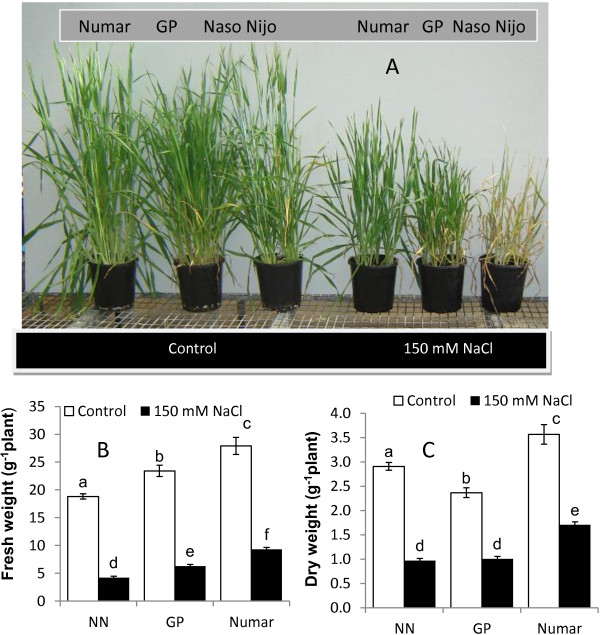
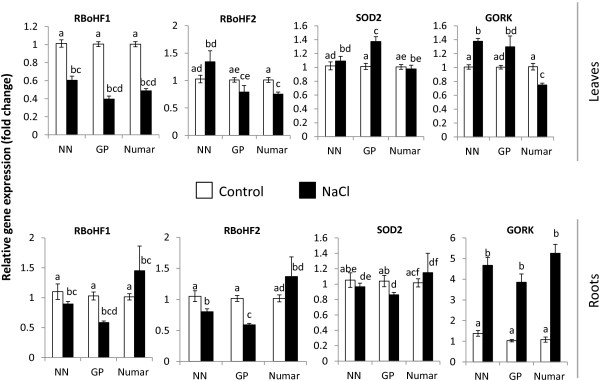
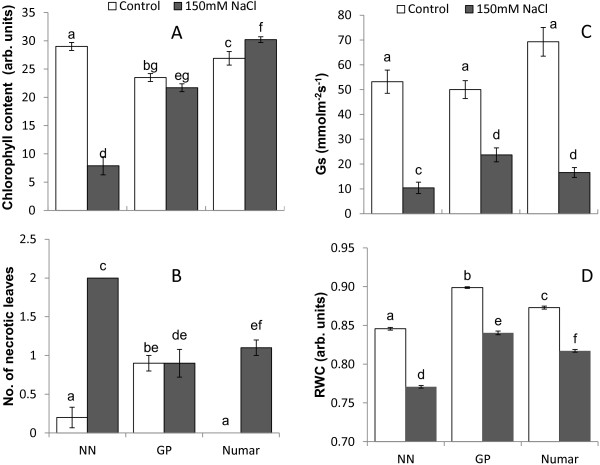
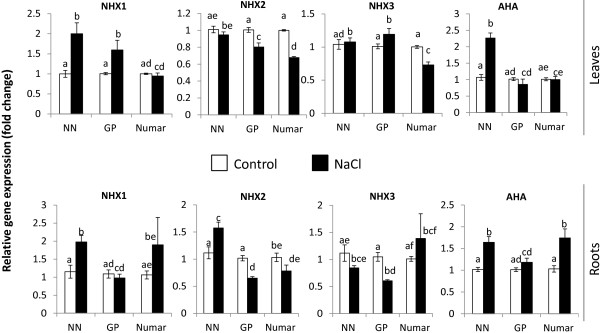
Salinity tolerance is a physiologically multi-faceted trait attributed to multiple mechanisms. Three barley (Hordeum vulgare) varieties contrasting in their salinity tolerance were used to assess the relative contribution of ionic, osmotic and oxidative stress components towards overall salinity stress tolerance in this species, both at the whole-plant and cellular levels. In addition, transcriptional changes in the gene expression profile were studied for key genes mediating plant ionic and oxidative homeostasis (NHX; RBOH; SOD; AHA and GORK), to compare a contribution of transcriptional and post-translational factors towards the specific components of salinity tolerance.
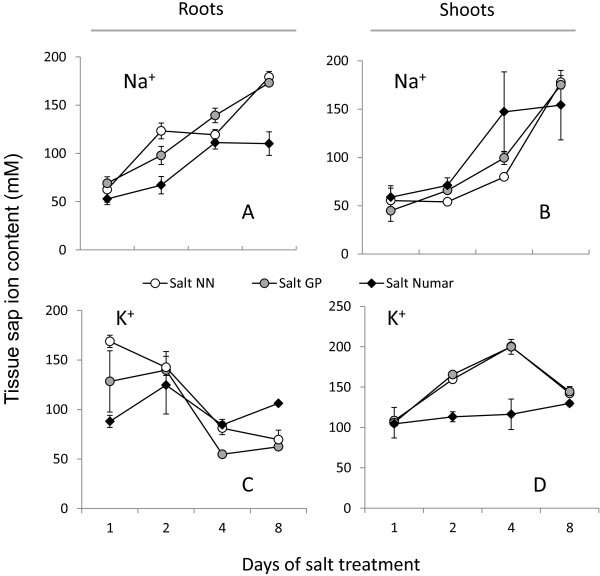
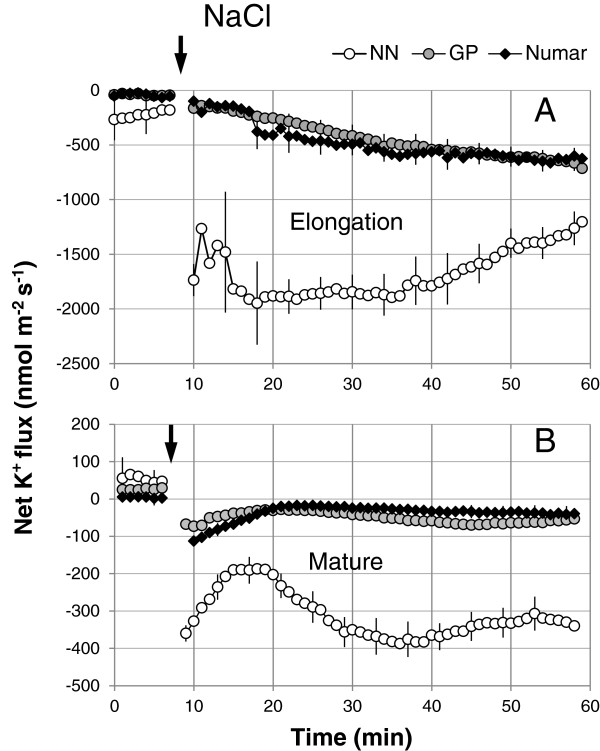
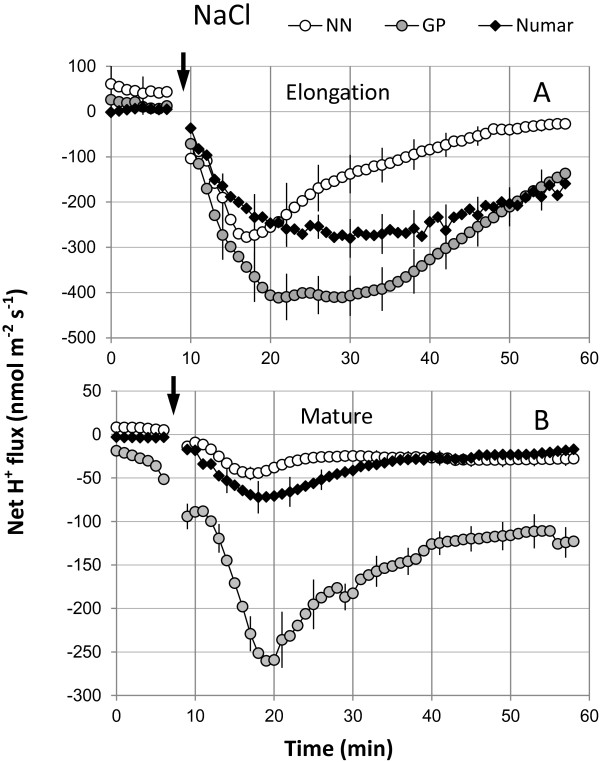
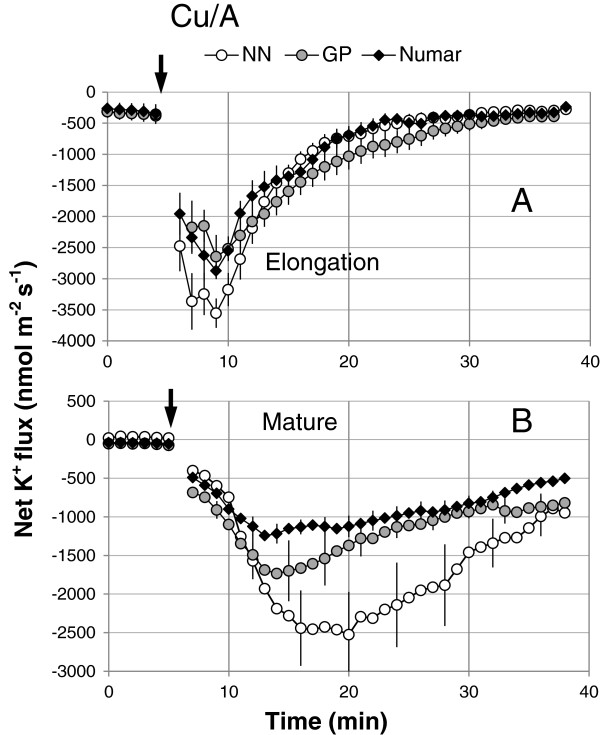
Our major findings are two-fold. First, plant tissue tolerance was a dominating component that has determined the overall plant responses to salinity, with root K(+) retention ability and reduced sensitivity to stress-induced hydroxyl radical production being the main contributing tolerance mechanisms. Second, it was not possible to infer which cultivars were salinity tolerant based solely on expression profiling of candidate genes at one specific time point. For the genes studied and the time point selected that transcriptional changes in the expression of these specific genes had a small role for barley's adaptive responses to salinity.
For better tissue tolerance, sodium sequestration, K(+) retention and resistance to oxidative stress all appeared to be crucial. Because these traits are highly interrelated, it is suggested that a major progress in crop breeding for salinity tolerance can be achieved only if these complementary traits are targeted at the same time. This study also highlights the essentiality of post translational modifications in plant adaptive responses to salinity.
耐盐性是一种具有多种生理机制的多方面性状。利用三个耐盐性不同的大麦(Hordeum vulgare)品种,在全株和细胞水平上评估离子、渗透和氧化应激成分对该物种整体耐盐性的相对贡献。此外,研究了介导植物离子和氧化稳态的关键基因(NHX;RBOH;SOD;AHA和GORK)的基因表达谱转录变化,以比较转录和翻译后因素对耐盐性特定成分的贡献。
我们的主要发现有两个方面。首先,植物组织耐受性是决定植物对盐度整体反应的主要因素,根系钾离子保留能力和对应激诱导的羟基自由基产生的敏感性降低是主要的耐受机制。其次,仅根据一个特定时间点候选基因的表达谱无法推断哪些品种耐盐。对于所研究的基因和所选的时间点,这些特定基因表达的转录变化对大麦对盐度的适应性反应作用较小。
为了获得更好的组织耐受性,钠隔离、钾离子保留和抗氧化应激似乎都至关重要。由于这些性状高度相关,建议只有同时针对这些互补性状,才能在耐盐作物育种方面取得重大进展。本研究还强调了翻译后修饰在植物对盐度适应性反应中的重要性。