Bonales-Alatorre Edgar, Pottosin Igor, Shabala Lana, Chen Zhong-Hua, Zeng Fanrong, Jacobsen Sven-Erik, Shabala Sergey
School of Agricultural Science and Tasmanian Institute for Agriculture, University of Tasmania, Private Bag 54, Hobart, TAS 7001, Australia.
Int J Mol Sci. 2013 Apr 29;14(5):9267-85. doi: 10.3390/ijms14059267.
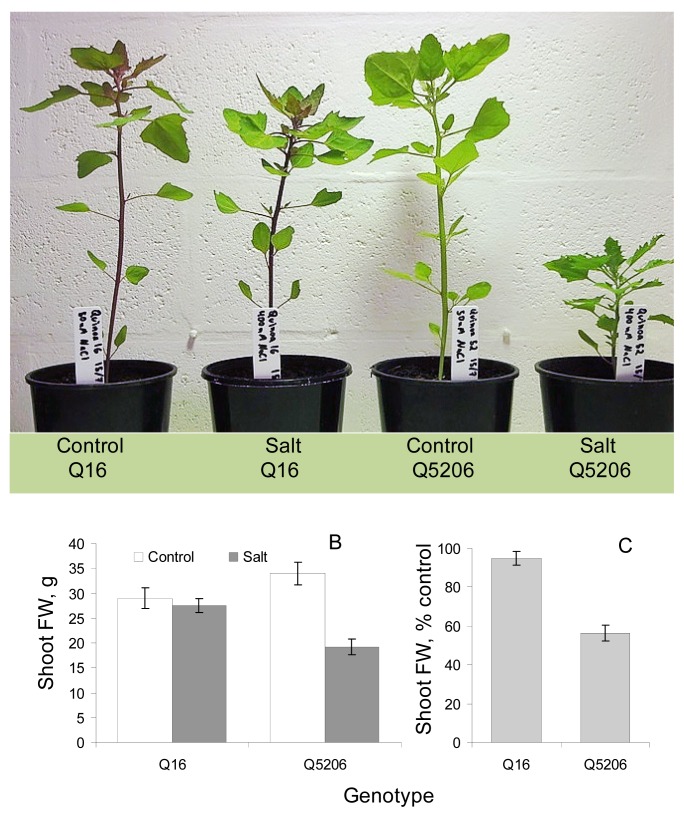
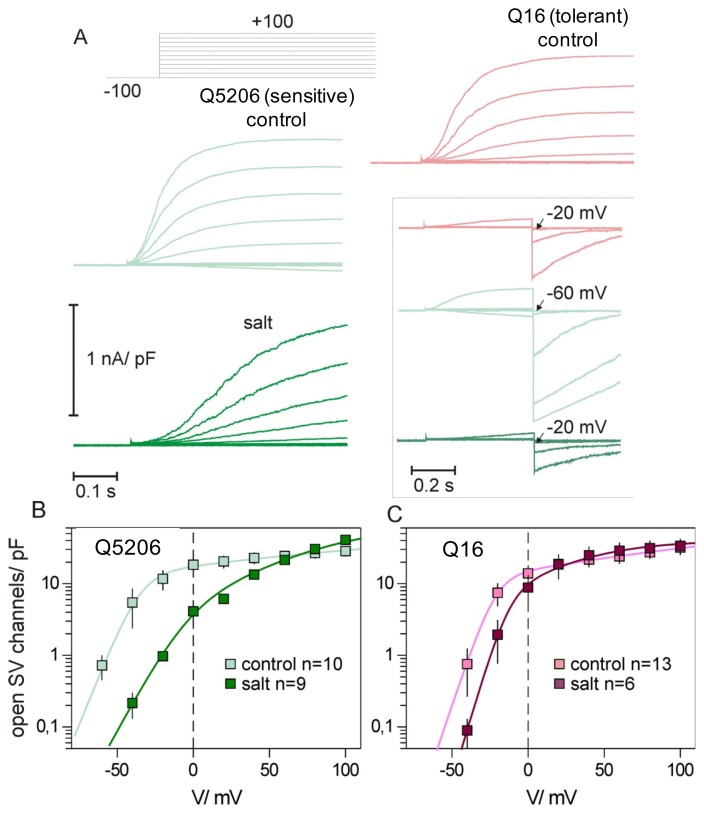
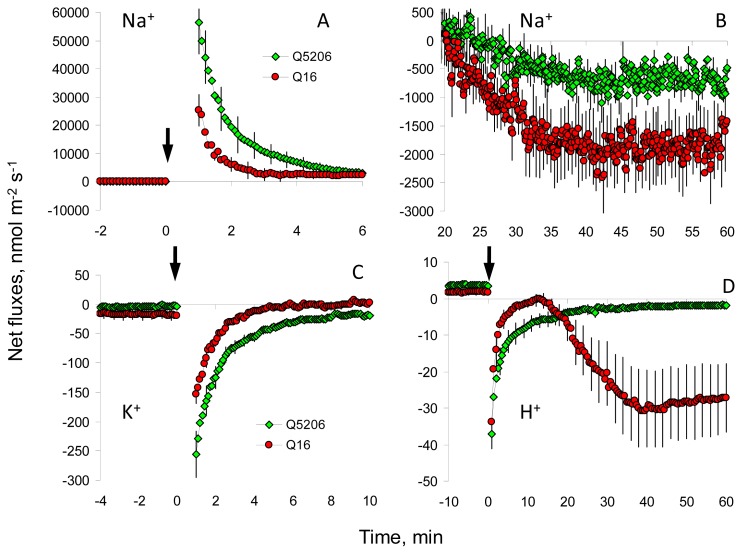
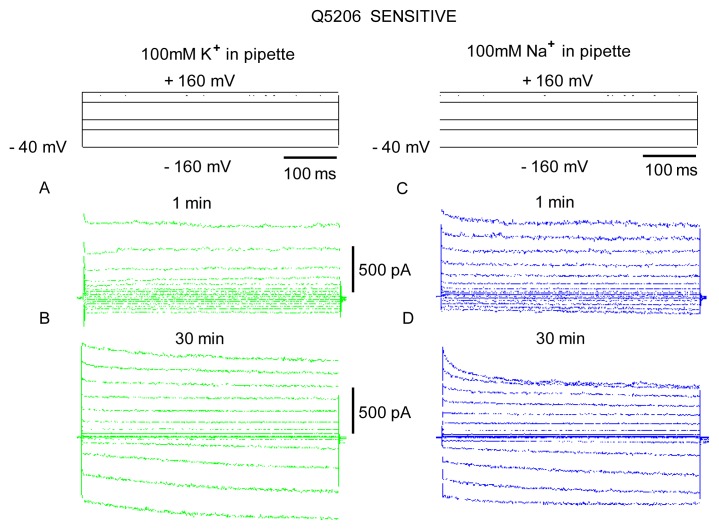
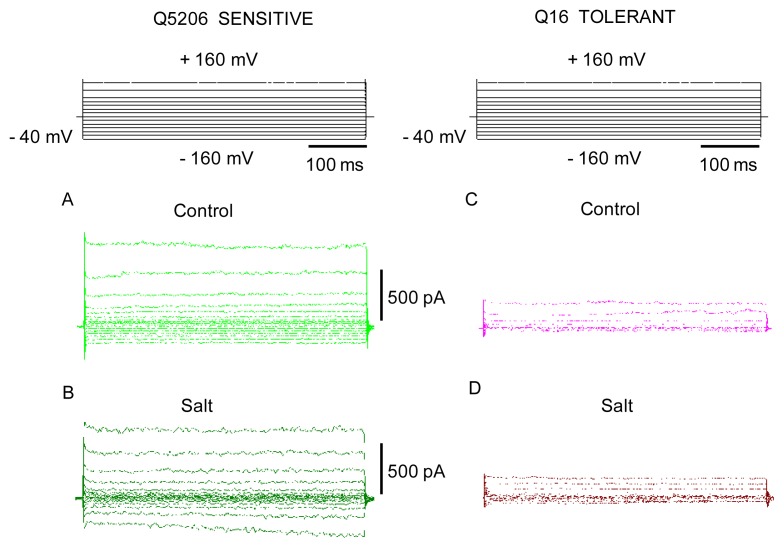
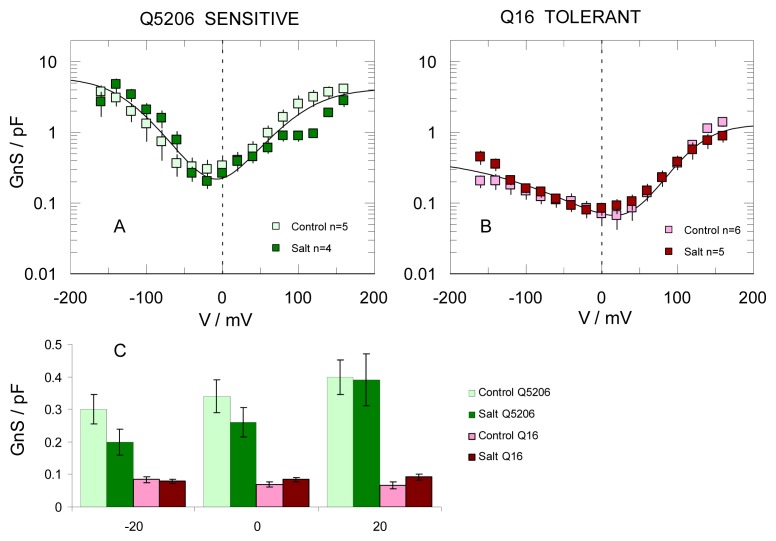
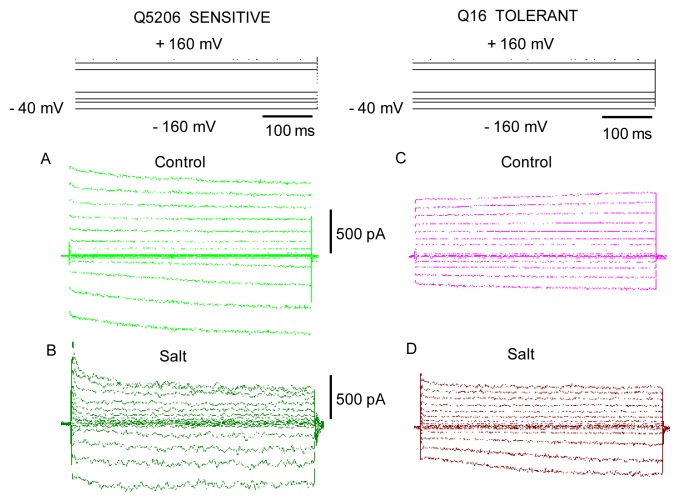
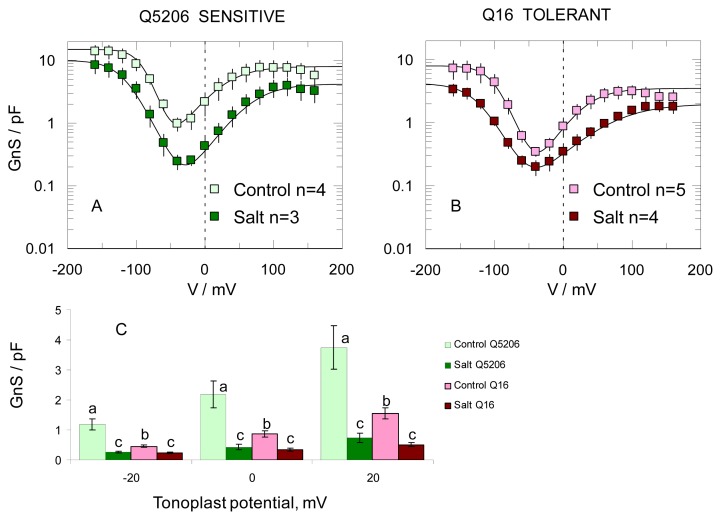
Halophytes species can be used as a highly convenient model system to reveal key ionic and molecular mechanisms that confer salinity tolerance in plants. Earlier, we reported that quinoa (Chenopodium quinoa Willd.), a facultative C3 halophyte species, can efficiently control the activity of slow (SV) and fast (FV) tonoplast channels to match specific growth conditions by ensuring that most of accumulated Na+ is safely locked in the vacuole (Bonales-Alatorre et al. (2013) Plant Physiology). This work extends these finding by comparing the properties of tonoplast FV and SV channels in two quinoa genotypes contrasting in their salinity tolerance. The work is complemented by studies of the kinetics of net ion fluxes across the plasma membrane of quinoa leaf mesophyll tissue. Our results suggest that multiple mechanisms contribute towards genotypic differences in salinity tolerance in quinoa. These include: (i) a higher rate of Na+ exclusion from leaf mesophyll; (ii) maintenance of low cytosolic Na+ levels; (iii) better K+ retention in the leaf mesophyll; (iv) a high rate of H+ pumping, which increases the ability of mesophyll cells to restore their membrane potential; and (v) the ability to reduce the activity of SV and FV channels under saline conditions. These mechanisms appear to be highly orchestrated, thus enabling the remarkable overall salinity tolerance of quinoa species.
盐生植物物种可用作一个非常便利的模型系统,以揭示赋予植物耐盐性的关键离子和分子机制。此前,我们报道过藜麦(Chenopodium quinoa Willd.),一种兼性C3盐生植物物种,能够通过确保大部分积累的Na+安全地锁定在液泡中,有效控制慢速(SV)和快速(FV)液泡膜通道的活性,以匹配特定的生长条件(博纳莱斯 - 阿拉托雷等人,(2013年)《植物生理学》)。这项工作通过比较两种耐盐性不同的藜麦基因型中液泡膜FV和SV通道的特性,扩展了这些发现。对藜麦叶片叶肉组织质膜上净离子通量动力学的研究对这项工作起到了补充作用。我们的结果表明,多种机制导致了藜麦耐盐性的基因型差异。这些机制包括:(i)从叶片叶肉中排出Na+的速率更高;(ii)维持较低的胞质Na+水平;(iii)在叶片叶肉中更好地保留K+;(iv)较高的H+泵浦速率,这增加了叶肉细胞恢复其膜电位的能力;以及(v)在盐胁迫条件下降低SV和FV通道活性的能力。这些机制似乎高度协调,从而使藜麦物种具有显著的整体耐盐性。