Chuter Vivienne, Spink Martin, Searle Angela, Ho Alan
Discipline of Podiatry, University of Newcastle, Sydney, NSW, Australia.
BMC Musculoskelet Disord. 2014 Apr 29;15:140. doi: 10.1186/1471-2474-15-140.
Low back pain (LBP) is a significant public health problem in Western industrialised countries and has been reported to affect up to 80% of adults at some stage in their lives. It is associated with high health care utilisation costs, disability, work loss and restriction of social activities. An intervention of foot orthoses or insoles has been suggested to reduce the risk of developing LBP and be an effective treatment strategy for people suffering from LBP. However, despite the common usage of orthoses and insoles, there is a lack of clear guidelines for their use in relation to LBP. The aim of this review is to investigate the effectiveness of foot orthoses and insoles in the prevention and treatment of non specific LBP.
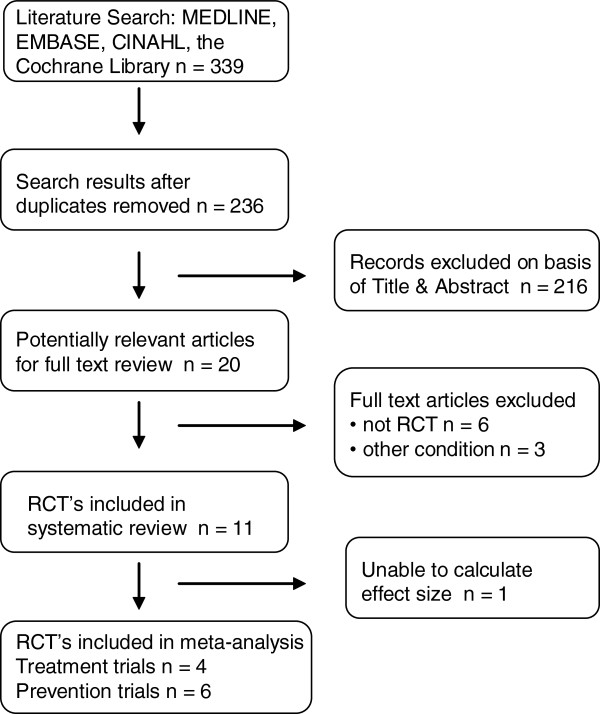
A systematic search of MEDLINE, CINAHL, EMBASE and The Cochrane Library was conducted in May 2013. Two authors independently reviewed and selected relevant randomised controlled trials. Quality was evaluated using the Cochrane Collaboration Risk of Bias Tool and the Downs and Black Checklist. Meta-analysis of study data were conducted where possible.
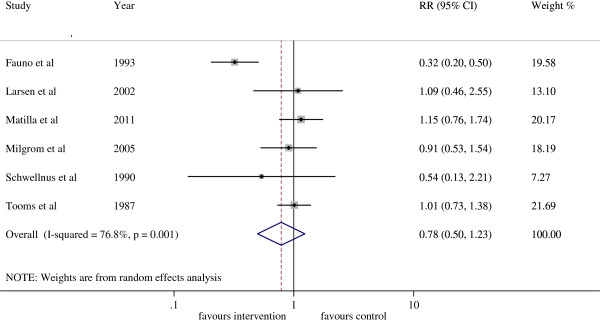
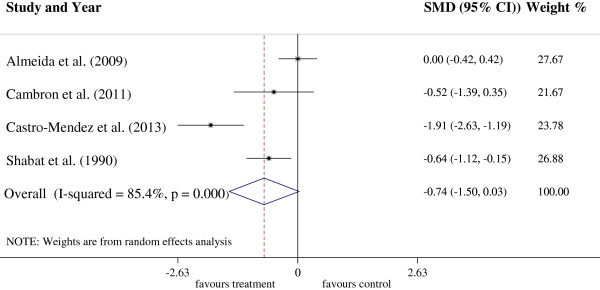
Eleven trials were included: five trials investigated the treatment of LBP (n=293) and six trials examined the prevention of LBP (n=2379) through the use of foot orthoses or insoles. Meta-analysis showed no significant effect in favour of the foot orthoses or insoles for either the treatment trials (standardised mean difference (SMD) -0.74, CI 95%: -1.5 to 0.03) or the prevention trials (relative risk (RR) 0.78, CI 95%: 0.50 to 1.23).
There is insufficient evidence to support the use of insoles or foot orthoses as either a treatment for LBP or in the prevention of LBP. The small number, moderate methodological quality and the high heterogeneity of the available trials reduce the strength of current findings. Future research should concentrate on identification of LBP patients most suited to foot orthoses or insole treatment, as there is some evidence that trials structured along these lines have a greater effect on reducing LBP.
下背痛(LBP)是西方工业化国家一个重大的公共卫生问题,据报道,在其一生中的某个阶段,高达80%的成年人会受到影响。它与高昂的医疗保健使用成本、残疾、工作损失以及社交活动受限相关。有人建议使用足部矫形器或鞋垫进行干预,以降低发生下背痛的风险,并作为下背痛患者的一种有效治疗策略。然而,尽管矫形器和鞋垫被广泛使用,但对于其在治疗下背痛方面的使用,仍缺乏明确的指导方针。本综述的目的是研究足部矫形器和鞋垫在预防和治疗非特异性下背痛方面的有效性。
2013年5月对MEDLINE、CINAHL、EMBASE和考克兰图书馆进行了系统检索。两位作者独立审查并选择相关的随机对照试验。使用考克兰协作偏倚风险工具和唐斯与布莱克清单评估质量。尽可能对研究数据进行荟萃分析。
纳入了11项试验:5项试验研究了使用足部矫形器或鞋垫治疗下背痛(n = 293),6项试验研究了使用足部矫形器或鞋垫预防下背痛(n = 2379)。荟萃分析表明,无论是治疗试验(标准化均数差(SMD)-0.74,95%CI:-1.5至0.03)还是预防试验(相对风险(RR)0.78,95%CI:0.50至1.23),足部矫形器或鞋垫均无显著效果。
没有足够的证据支持使用鞋垫或足部矫形器治疗下背痛或预防下背痛。现有试验数量少、方法学质量中等以及异质性高,降低了当前研究结果的可信度。未来的研究应集中于确定最适合足部矫形器或鞋垫治疗的下背痛患者,因为有证据表明,按照这些思路开展的试验在减轻下背痛方面有更大的效果。