Heckman-Stoddard Brandy M, Smith Judith J
Semin Oncol Nurs. 2014 May;30(2):109-16. doi: 10.1016/j.soncn.2014.03.004.
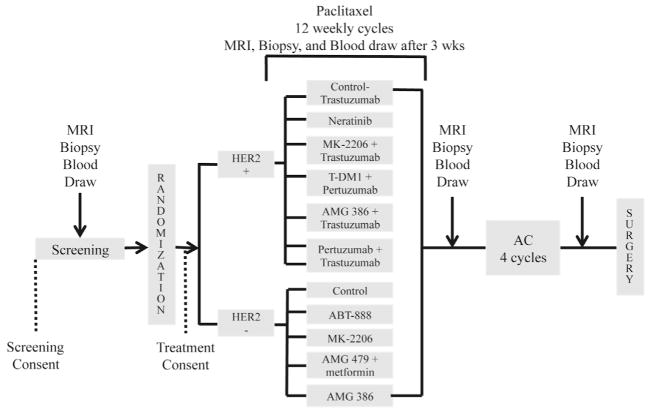
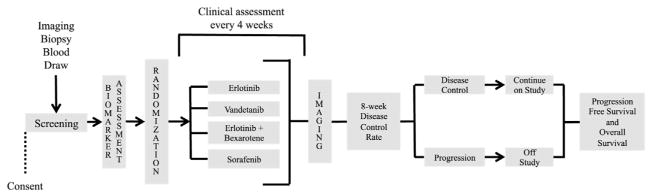
To discuss the role of clinical trials in the changing landscape of cancer care resulting in individualized cancer treatment plans including a discussion of several innovative randomized studies designed to evaluate multiple targeted therapies in molecularly defined subsets of individuals.
Medical and nursing literature, research articles, and clinicaltrials.gov.
Recent advancements in cancer biomarkers and biomedical technology have begun to transform fundamentals of cancer therapeutics and clinical trials through innovative adaptive trial designs. The goal of these studies is to learn not only if a drug is safe and effective but also how it is best delivered and who will derive the most benefit.
Implementation of clinical trials in the cancer biomarker era requires knowledge, skills, and expertise related to the use of biomarkers and molecularly defined processes underlying a malignancy, as well as an understanding of associated ethical, legal, and social issues to provide competent, safe, and effective health care and patient communication.
探讨临床试验在癌症治疗格局变化中所起的作用,这种变化促成了个性化癌症治疗方案的制定,包括讨论多项旨在评估针对分子定义的个体亚组的多种靶向治疗的创新性随机研究。
医学与护理文献、研究文章以及临床试验.gov。
癌症生物标志物和生物医学技术的最新进展已开始通过创新性适应性试验设计改变癌症治疗学和临床试验的基础。这些研究的目标不仅是了解一种药物是否安全有效,还包括了解其最佳给药方式以及谁将从中获益最多。
在癌症生物标志物时代实施临床试验需要具备与生物标志物的使用以及恶性肿瘤潜在的分子定义过程相关的知识、技能和专业知识,同时需要理解相关的伦理、法律和社会问题,以提供称职、安全且有效的医疗保健服务以及与患者的沟通。