Peng Cheng, Wang Xiaobo, Chen Jingnan, Jiao Rui, Wang Lijun, Li Yuk Man, Zuo Yuanyuan, Liu Yuwei, Lei Lin, Ma Ka Ying, Huang Yu, Chen Zhen-Yu
Food & Nutritional Sciences Programme, School of Life Sciences, The Chinese University of Hong Kong, Shatin, Hong Kong.
Lipids Technology and Engineering, College of Food Science and Technology, Henan University of Technology, Henan, China.
Biomed Res Int. 2014;2014:831841. doi: 10.1155/2014/831841. Epub 2014 Apr 3.
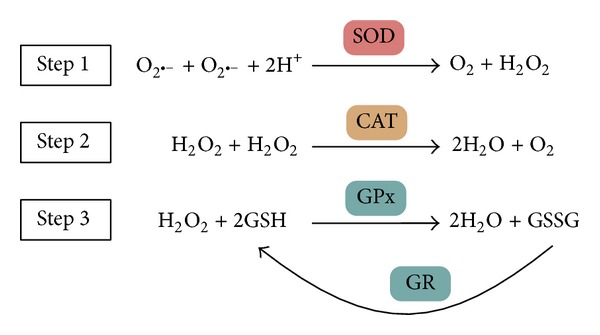
Interest in relationship between diet and ageing is growing. Research has shown that dietary calorie restriction and some antioxidants extend lifespan in various ageing models. On the one hand, oxygen is essential to aerobic organisms because it is a final electron acceptor in mitochondria. On the other hand, oxygen is harmful because it can continuously generate reactive oxygen species (ROS), which are believed to be the factors causing ageing of an organism. To remove these ROS in cells, aerobic organisms possess an antioxidant defense system which consists of a series of enzymes, namely, superoxide dismutase (SOD), catalase (CAT), glutathione peroxidase (GPx), and glutathione reductase (GR). In addition, dietary antioxidants including ascorbic acid, vitamin A, vitamin C, α-tocopherol, and plant flavonoids are also able to scavenge ROS in cells and therefore theoretically can extend the lifespan of organisms. In this connection, various antioxidants including tea catechins, theaflavins, apple polyphenols, black rice anthocyanins, and blueberry polyphenols have been shown to be capable of extending the lifespan of fruit flies. The purpose of this review is to brief the literature on modern biological theories of ageing and role of dietary antioxidants in ageing as well as underlying mechanisms by which antioxidants can prolong the lifespan with focus on fruit flies as an model.
人们对饮食与衰老之间关系的兴趣与日俱增。研究表明,饮食热量限制和某些抗氧化剂可在各种衰老模型中延长寿命。一方面,氧气对需氧生物至关重要,因为它是线粒体中的最终电子受体。另一方面,氧气是有害的,因为它会持续产生活性氧(ROS),而活性氧被认为是导致生物体衰老的因素。为了清除细胞中的这些活性氧,需氧生物拥有一种抗氧化防御系统,该系统由一系列酶组成,即超氧化物歧化酶(SOD)、过氧化氢酶(CAT)、谷胱甘肽过氧化物酶(GPx)和谷胱甘肽还原酶(GR)。此外,包括抗坏血酸、维生素A、维生素C、α-生育酚和植物类黄酮在内的膳食抗氧化剂也能够清除细胞中的活性氧,因此从理论上讲可以延长生物体的寿命。就此而言,包括茶儿茶素、茶黄素、苹果多酚、黑米花青素和蓝莓多酚在内的各种抗氧化剂已被证明能够延长果蝇的寿命。本综述的目的是简要介绍有关衰老的现代生物学理论、膳食抗氧化剂在衰老中的作用以及抗氧化剂延长寿命的潜在机制的文献,重点以果蝇为模型。