Iovine Barbara, Oliviero Giorgia, Garofalo Mariangela, Orefice Maria, Nocella Francesca, Borbone Nicola, Piccialli Vincenzo, Centore Roberto, Mazzone Massimiliano, Piccialli Gennaro, Bevilacqua Maria Assunta
Dipartimento di Medicina Molecolare e Biotecnologie Mediche, Università degli Studi di Napoli Federico II, Napoli, Italy.
Dipartimento di Farmacia, Università degli Studi di Napoli Federico II, Napoli, Italy.
PLoS One. 2014 May 7;9(5):e96755. doi: 10.1371/journal.pone.0096755. eCollection 2014.
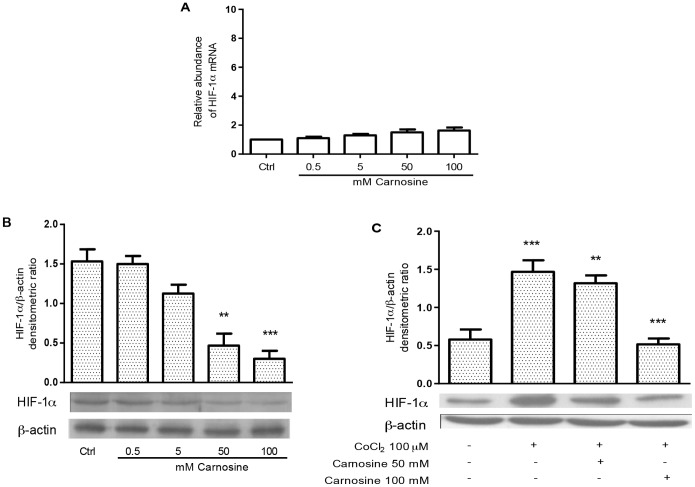
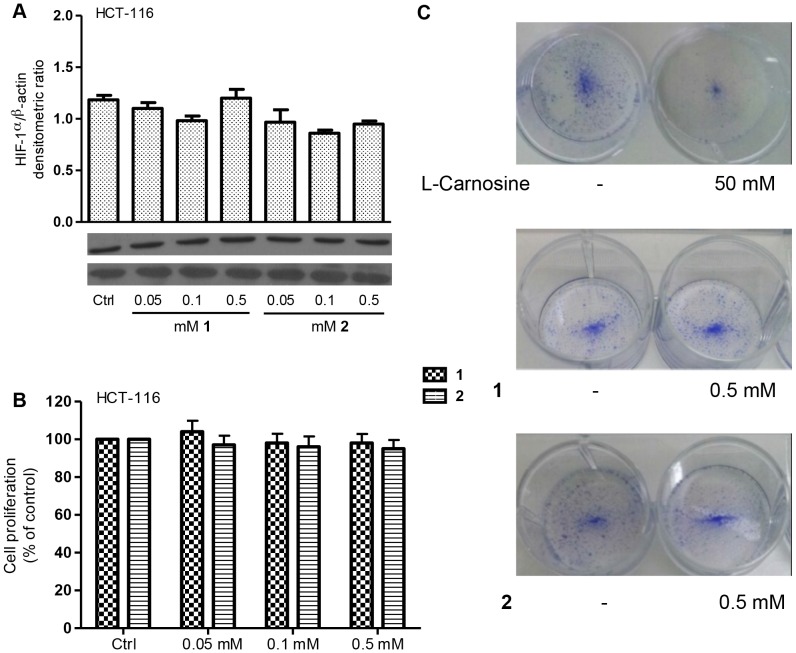
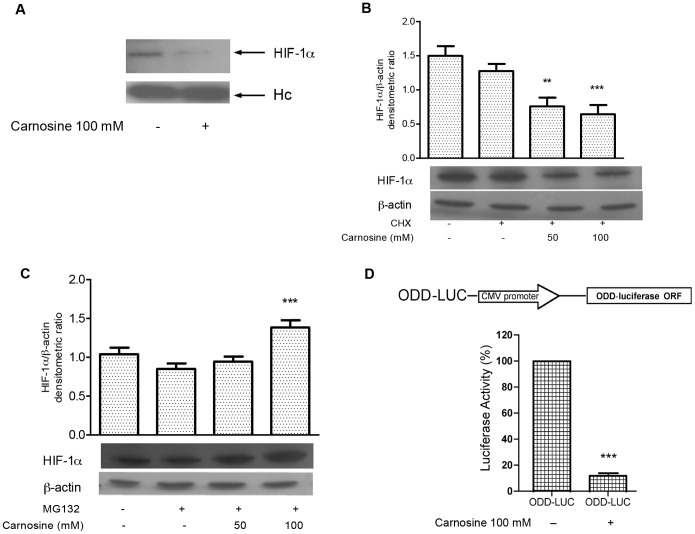
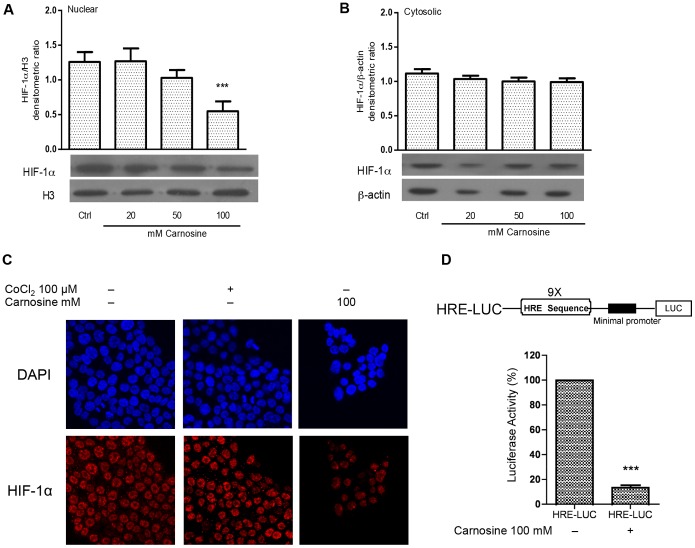
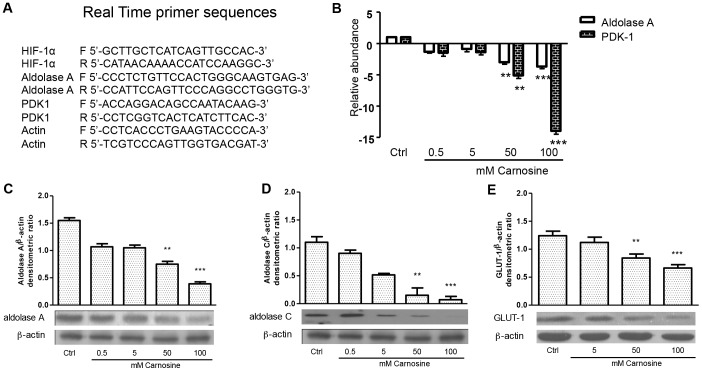
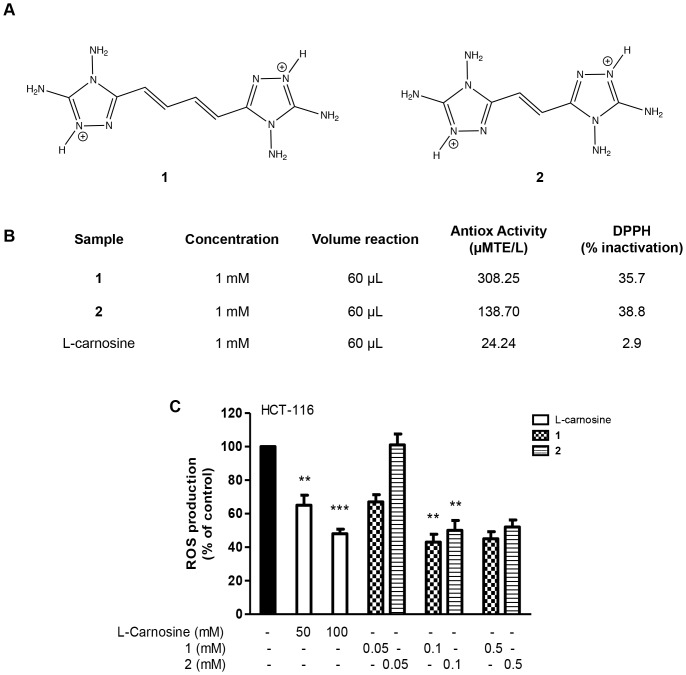
In recent years considerable attention has been given to the use of natural substances as anticancer drugs. The natural antioxidant dipeptide L-carnosine belongs to this class of molecules because it has been proved to have a significant anticancer activity both in vitro and in vivo. Previous studies have shown that L-carnosine inhibits the proliferation of human colorectal carcinoma cells by affecting the ATP and Reactive Oxygen Species (ROS) production. In the present study we identified the Hypoxia-Inducible Factor 1α (HIF-1α) as a possible target of L-carnosine in HCT-116 cell line. HIF-1α protein is over-expressed in multiple types of human cancer and is the major cause of resistance to drugs and radiation in solid tumours. Of particular interest are experimental data supporting the concept that generation of ROS provides a redox signal for HIF-1α induction, and it is known that some antioxidants are able to suppress tumorigenesis by inhibiting HIF-1α. In the current study we found that L-carnosine reduces the HIF-1α protein level affecting its stability and decreases the HIF-1 transcriptional activity. In addition, we demonstrated that L-carnosine is involved in ubiquitin-proteasome system promoting HIF-1α degradation. Finally, we compared the antioxidant activity of L-carnosine with that of two synthetic anti-oxidant bis-diaminotriazoles (namely 1 and 2, respectively). Despite these three compounds have the same ability in reducing intracellular ROS, 1 and 2 are more potent scavengers and have no effect on HIF-1α expression and cancer cell proliferation. These findings suggest that an analysis of L-carnosine antioxidant pathway will clarify the mechanism underlying the anti-proliferative effects of this dipeptide on colon cancer cells. However, although the molecular mechanism by which L-carnosine down regulates or inhibits the HIF-1α activity has not been yet elucidated, this ability may be promising in treating hypoxia-related diseases.
近年来,天然物质作为抗癌药物的应用受到了广泛关注。天然抗氧化二肽L-肌肽属于这类分子,因为已证明它在体外和体内均具有显著的抗癌活性。先前的研究表明,L-肌肽通过影响ATP和活性氧(ROS)的产生来抑制人结肠癌细胞的增殖。在本研究中,我们确定缺氧诱导因子1α(HIF-1α)是L-肌肽在HCT-116细胞系中的一个可能靶点。HIF-1α蛋白在多种人类癌症中过度表达,是实体瘤对药物和辐射产生抗性的主要原因。特别值得关注的是实验数据支持这样的概念,即ROS的产生为HIF-1α的诱导提供了氧化还原信号,并且已知一些抗氧化剂能够通过抑制HIF-1α来抑制肿瘤发生。在当前研究中,我们发现L-肌肽降低了HIF-1α蛋白水平,影响其稳定性,并降低了HIF-1的转录活性。此外,我们证明L-肌肽参与泛素-蛋白酶体系统,促进HIF-1α的降解。最后,我们将L-肌肽的抗氧化活性与两种合成抗氧化剂双二氨基三唑(分别为1和2)的抗氧化活性进行了比较。尽管这三种化合物在降低细胞内ROS方面具有相同的能力,但1和2是更强的清除剂,对HIF-1α表达和癌细胞增殖没有影响。这些发现表明,对L-肌肽抗氧化途径的分析将阐明这种二肽对结肠癌细胞抗增殖作用的潜在机制。然而,尽管L-肌肽下调或抑制HIF-1α活性的分子机制尚未阐明,但这种能力在治疗缺氧相关疾病方面可能很有前景。