Niklasson Lars, Sundh Henrik, Olsen Rolf-Erik, Jutfelt Fredrik, Skjødt Karsten, Nilsen Tom O, Sundell Kristina Snuttan
Fish Endocrinology Laboratory, Department of Biological and Environmental Sciences, University of Gothenburg, Gothenburg, Sweden.
Department of Animal Welfare, Institute of Marine Research, Matredal, Norway.
PLoS One. 2014 May 8;9(5):e94288. doi: 10.1371/journal.pone.0094288. eCollection 2014.
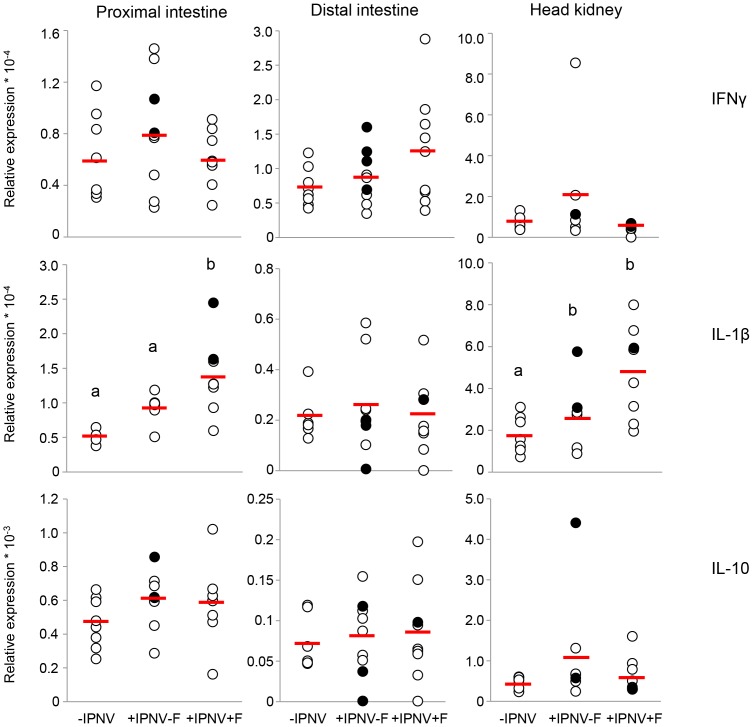
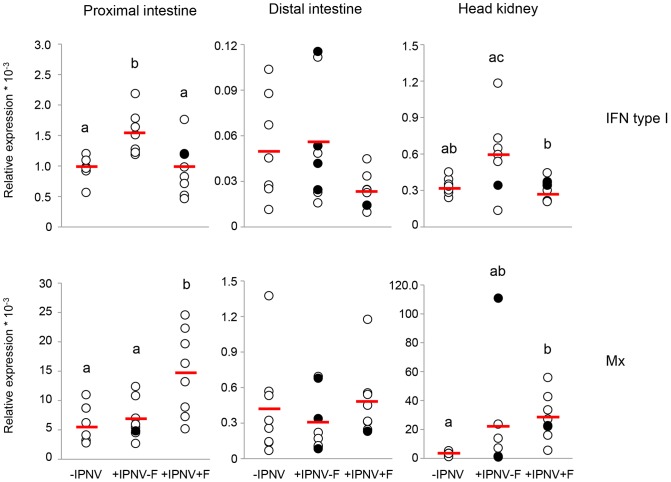
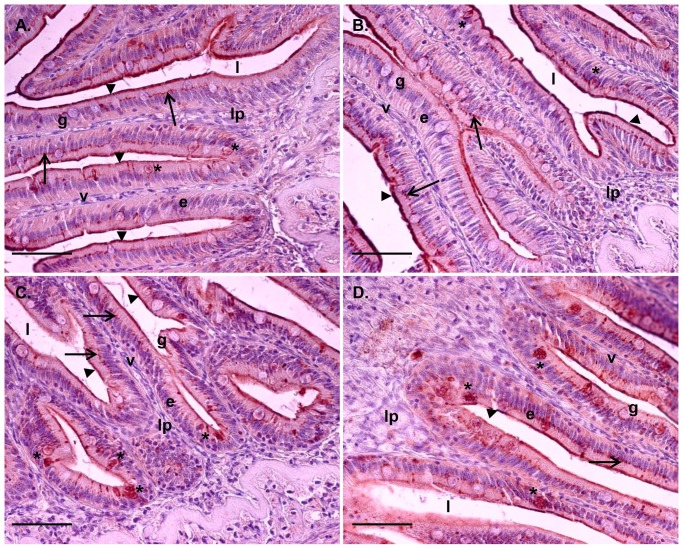
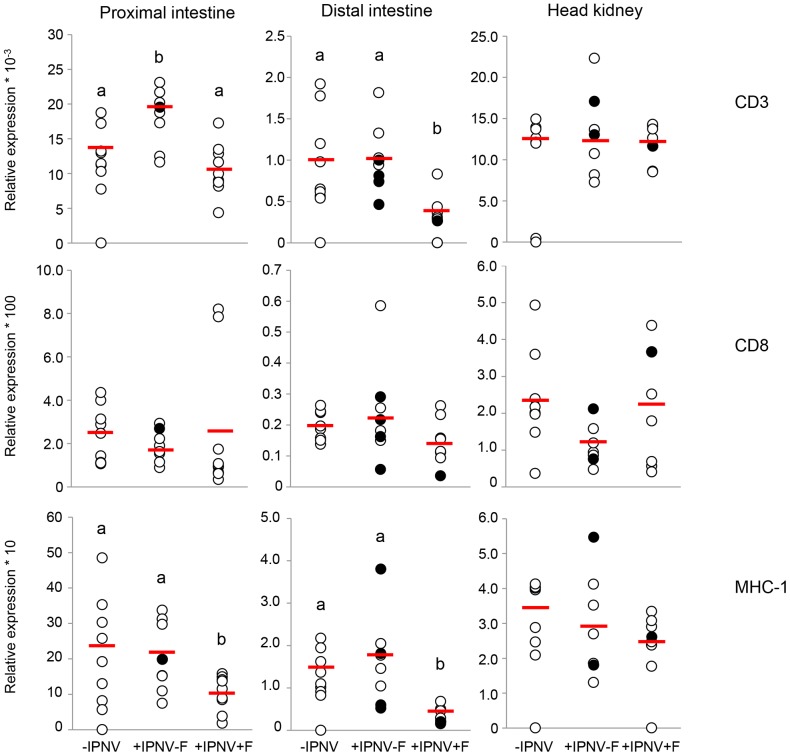
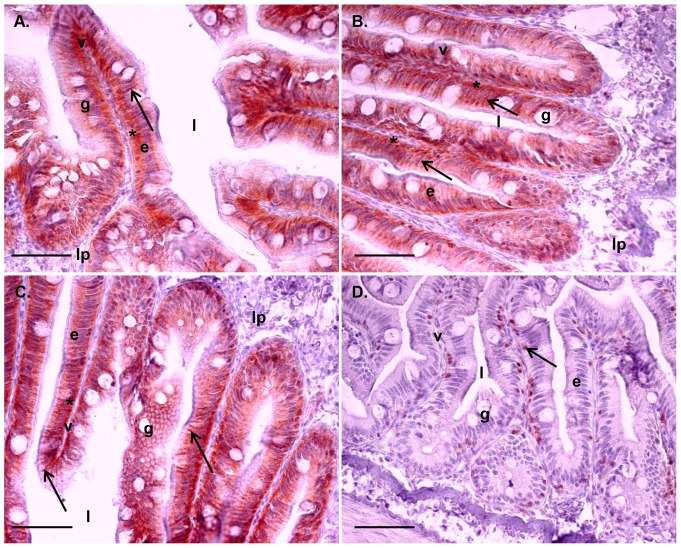
Infectious pancreatic necrosis virus (IPNV) causes high incidence of disease in salmonids during the first period after SW transfer. During this period as well as during periods of stress, cortisol levels increase and indications of a relationship between IPNV susceptibility and cortisol have been suggested. The intestine is an entry route and a target tissue for IPNV displaying severe enteritis and sloughing of the mucosa in infected fish. The mechanisms behind effects of the virus on the intestinal tissue and the impact of cortisol on the effect remain unclear. In the present study, Atlantic salmon post smolts treated with or without slow release cortisol implants were subjected to a cohabitant IPNV challenge. Analysis of genes and proteins related to the innate and acquired immune responses against virus was performed 6 days post-challenge using qPCR and immunohistochemistry. An increased mRNA expression of anti-viral cytokine interferon type I was observed in the proximal intestine and head kidney as a response to the viral challenge and this effect was suppressed by cortisol. No effect was seen in the distal intestine. T-cell marker CD3 as well as MHC-I in both intestinal regions and in the head kidney was down regulated at the mRNA level. Number of CD8α lymphocytes decreased in the proximal intestine in response to cortisol. On the other hand, mRNA expression of Mx and IL-1β increased in the proximal intestine and head kidney in IPNV challenged fish in the presence of cortisol suggesting that the immune activation shifts in timing and response pathway during simulated stress. The present study clearly demonstrates that IPNV infection results in a differentiated epithelial immune response in the different intestinal regions of the Atlantic salmon. It also reveals that the epithelial immune response differs from the systemic, but that both are modulated by the stress hormone cortisol.
传染性胰腺坏死病毒(IPNV)在鲑鱼转入海水后的第一阶段会导致疾病的高发病率。在此期间以及应激期间,皮质醇水平会升高,并且有人提出IPNV易感性与皮质醇之间存在关联。肠道是IPNV的进入途径和靶组织,受感染的鱼会出现严重的肠炎和黏膜脱落。病毒对肠道组织的影响机制以及皮质醇对这种影响的作用仍不清楚。在本研究中,对植入或未植入缓释皮质醇的大西洋鲑鱼后幼鱼进行了同居IPNV攻毒试验。攻毒6天后,使用qPCR和免疫组织化学分析了与针对病毒的先天免疫和获得性免疫反应相关的基因和蛋白质。作为对病毒攻毒的反应,在近端肠道和头肾中观察到抗病毒细胞因子I型干扰素的mRNA表达增加,而这种作用被皮质醇抑制。在远端肠道中未观察到影响。在两个肠道区域和头肾中,T细胞标志物CD3以及MHC-I在mRNA水平上均下调。近端肠道中CD8α淋巴细胞的数量因皮质醇而减少。另一方面,在存在皮质醇的情况下,IPNV攻毒的鱼的近端肠道和头肾中Mx和IL-1β 的mRNA表达增加,这表明在模拟应激期间免疫激活在时间和反应途径上发生了变化。本研究清楚地表明,IPNV感染会导致大西洋鲑鱼不同肠道区域出现分化的上皮免疫反应。它还揭示了上皮免疫反应与全身免疫反应不同,但两者均受应激激素皮质醇的调节。