Guerra Fernando, Wagner Wilfried, Wiltfang Jörg, Rocha Salomão, Moergel Maximilian, Behrens Eleonore, Nicolau Pedro
J Clin Periodontol. 2014 May;41(5):521-9. doi: 10.1111/jcpe.12244.
The purpose of this ongoing randomized study was to assess differences in bone level changes and success rates using implants supporting single crowns in the posterior mandible either with platform matched or platform switched abutments.
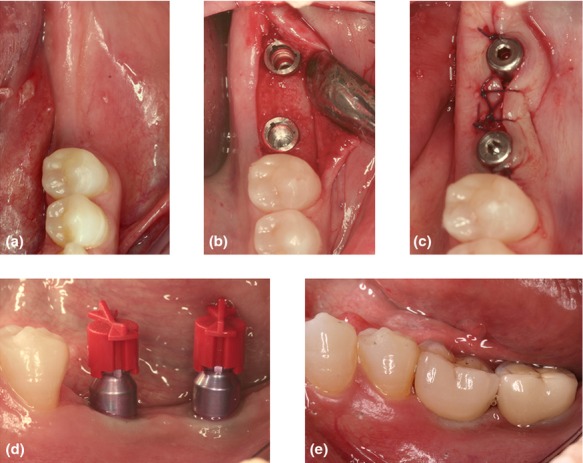
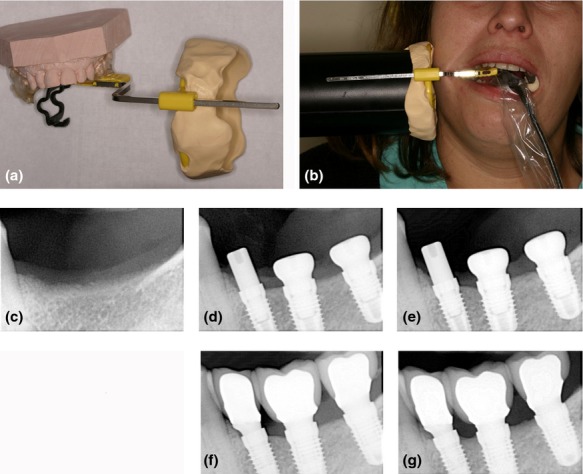
Patients aged 18 and above, missing at least two teeth in the posterior mandible and with a natural tooth mesial to the most proximal implant site were enrolled. Randomization followed implant placement. Definitive restorations were placed after a minimum transgingival healing period of 8 weeks. Changes in crestal bone level from surgery and loading (baseline) to 12-month post-loading were radiographically measured. Implant survival and success were determined.
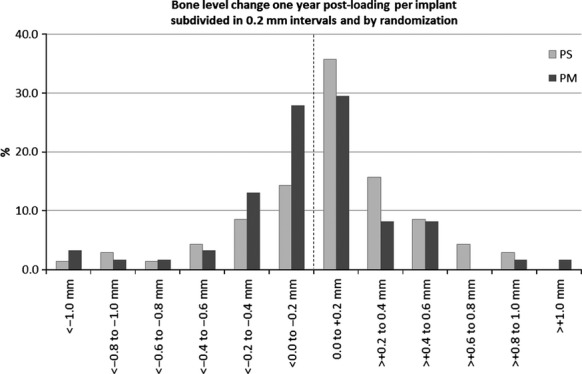
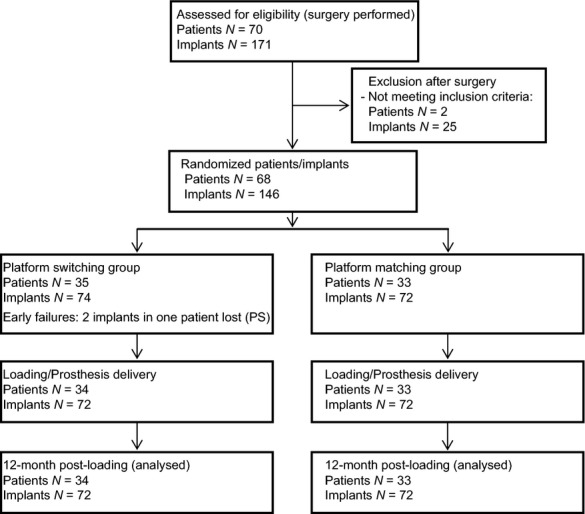
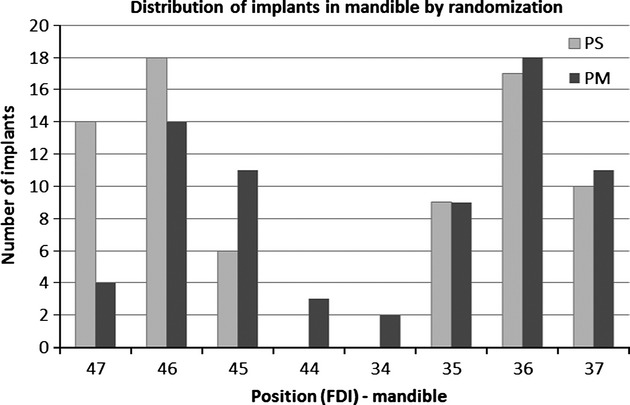
Sixty-eight patients received 74 implants in the platform switching group and 72 in the other one. The difference of mean marginal bone level change from surgery to 12 months was significant between groups (p < 0.004). Radiographical mean bone gain or no bone loss from loading was noted for 67.1% of the platform switching and 49.2% of the platform matching implants. Implant success rates were 97.3% and 100%, respectively.
Within the same implant system the platform switching concept showed a positive effect on marginal bone levels when compared with restorations with platform matching.
这项正在进行的随机研究旨在评估使用平台匹配或平台转换基台的种植体支持下颌后牙单冠时,骨水平变化和成功率的差异。
纳入年龄在18岁及以上、下颌后牙至少缺失两颗且最靠近种植位点的近中存在天然牙的患者。种植体植入后进行随机分组。在至少8周的龈下愈合期后进行最终修复。通过影像学测量从手术和加载(基线)到加载后12个月时嵴顶骨水平的变化。确定种植体的存活情况和成功率。
平台转换组68例患者植入74颗种植体,另一组72例。两组从手术到12个月时平均边缘骨水平变化的差异具有统计学意义(p < 0.004)。67.1%的平台转换种植体和49.2%的平台匹配种植体在加载后影像学显示有骨增量或无骨吸收。种植体成功率分别为97.3%和100%。
在同一种植系统中,与平台匹配的修复体相比,平台转换概念对边缘骨水平有积极影响。