Gregor Mendel Institute (GMI), Dr. Bohr-Gasse 3, 1030 Vienna, Austria.
Biology (Basel). 2012 Sep 12;1(2):395-410. doi: 10.3390/biology1020395.
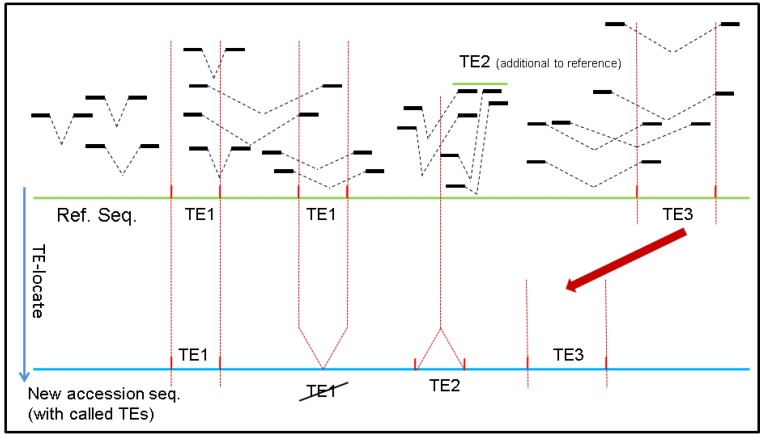
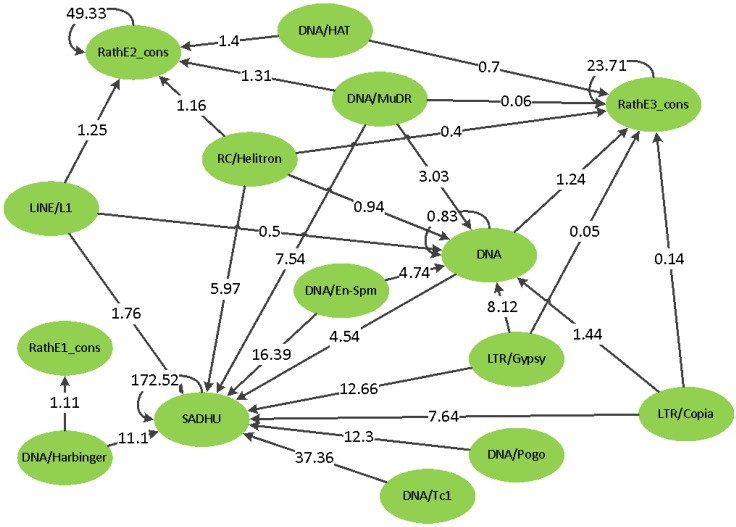
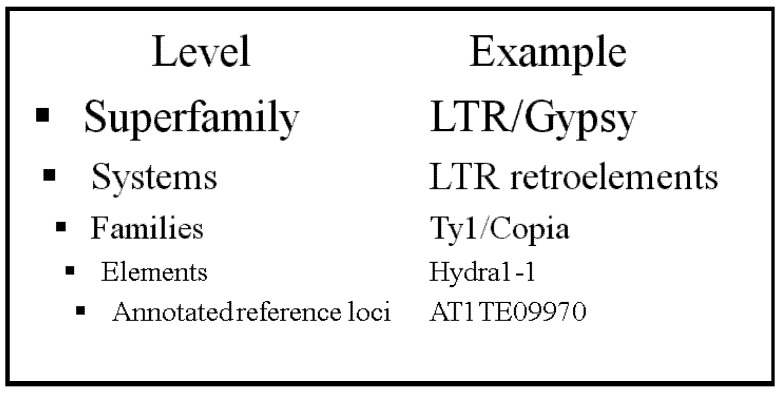
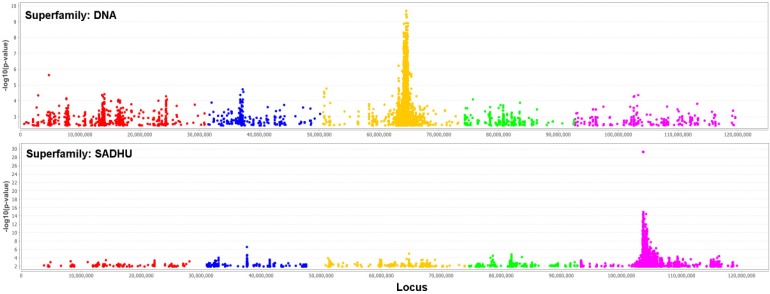
Transposable elements (TEs) are common mobile DNA elements present in nearly all genomes. Since the movement of TEs within a genome can sometimes have phenotypic consequences, an accurate report of TE actions is desirable. To this end, we developed TE-Locate, a computational tool that uses paired-end reads to identify the novel locations of known TEs. TE-Locate can utilize either a database of TE sequences, or annotated TEs within the reference sequence of interest. This makes TE-Locate useful in the search for any mobile sequence, including retrotransposed gene copies. One major concern is to act on the correct hierarchy level, thereby avoiding an incorrect calling of a single insertion as multiple events of TEs with high sequence similarity. We used the (super)family level, but TE-Locate can also use any other level, right down to the individual transposable element. As an example of analysis with TE-Locate, we used the Swedish population in the 1,001 Arabidopsis genomes project, and presented the biological insights gained from the novel TEs, inducing the association between different TE superfamilies. The program is freely available, and the URL is provided in the end of the paper.
转座元件 (TEs) 是存在于几乎所有基因组中的常见可移动 DNA 元件。由于 TEs 在基因组内的移动有时会产生表型后果,因此需要准确报告 TEs 的活动。为此,我们开发了 TE-Locate,这是一种计算工具,可利用配对末端读取来识别已知 TEs 的新位置。TE-Locate 可以使用 TE 序列数据库或感兴趣的参考序列中的注释 TEs。这使得 TE-Locate 可用于搜索任何移动序列,包括反转录基因拷贝。一个主要关注点是在正确的层次级别上操作,从而避免将单个插入错误地称为具有高序列相似性的多个 TEs 事件。我们使用了(超)家族级别,但 TE-Locate 也可以使用任何其他级别,甚至可以使用单个转座元件。作为 TE-Locate 分析的一个示例,我们使用了 1,001 拟南芥基因组项目中的瑞典人群,并展示了从新 TEs 中获得的生物学见解,这些新 TEs 诱导了不同 TE 超家族之间的关联。该程序是免费提供的,网址在文章末尾提供。