Section of Molecular and Translational Cardiology, Department of Internal Medicine III, Heidelberg University Hospital Heidelberg University, Heidelberg, Germany.
Institute of Molecular Medicine and Cell Research, Freiburg University, Freiburg, Germany German Consortium for Translational Cancer Research (DKTK), Partner site Freiburg German Cancer Research Center (DKFZ), Heidelberg, Germany.
EMBO Mol Med. 2014 Jun;6(6):778-94. doi: 10.15252/emmm.201303498. Epub 2014 Apr 6.
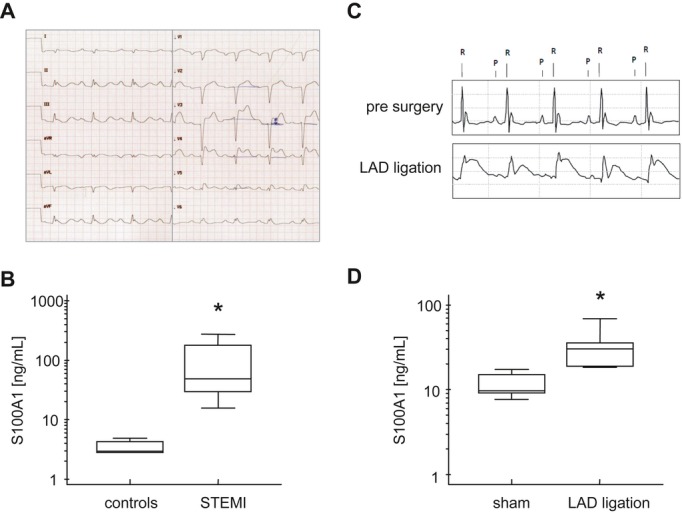
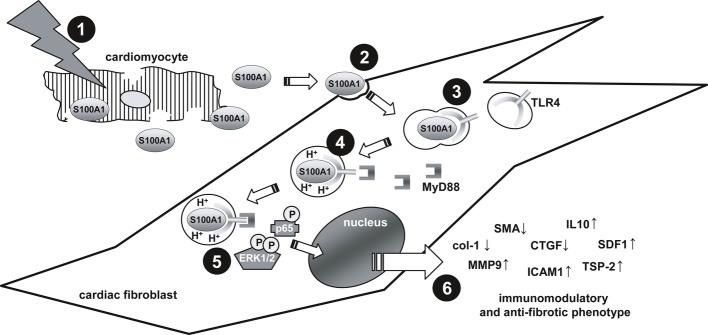
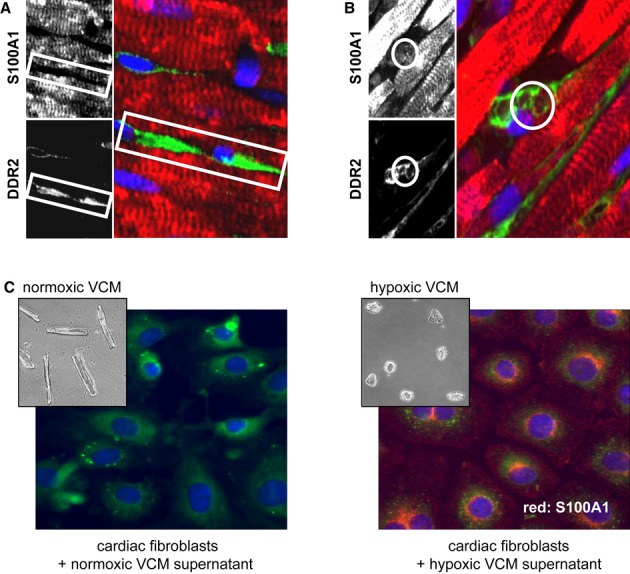
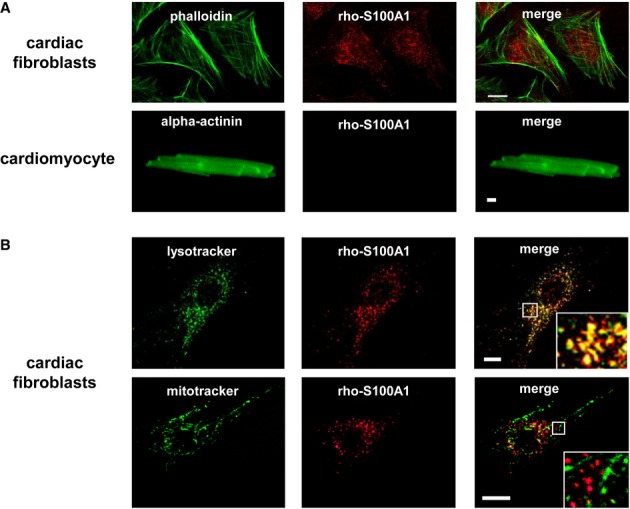
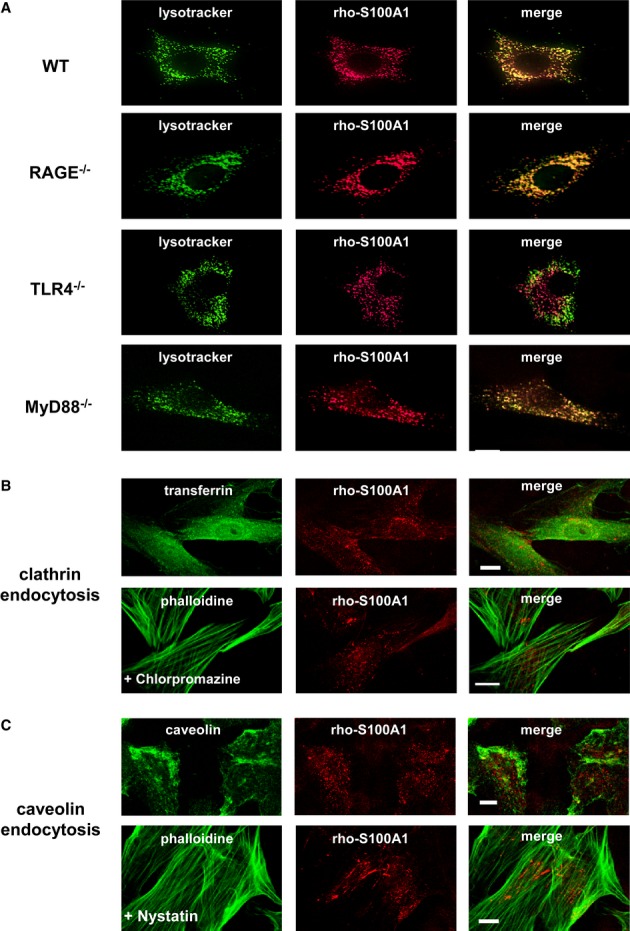
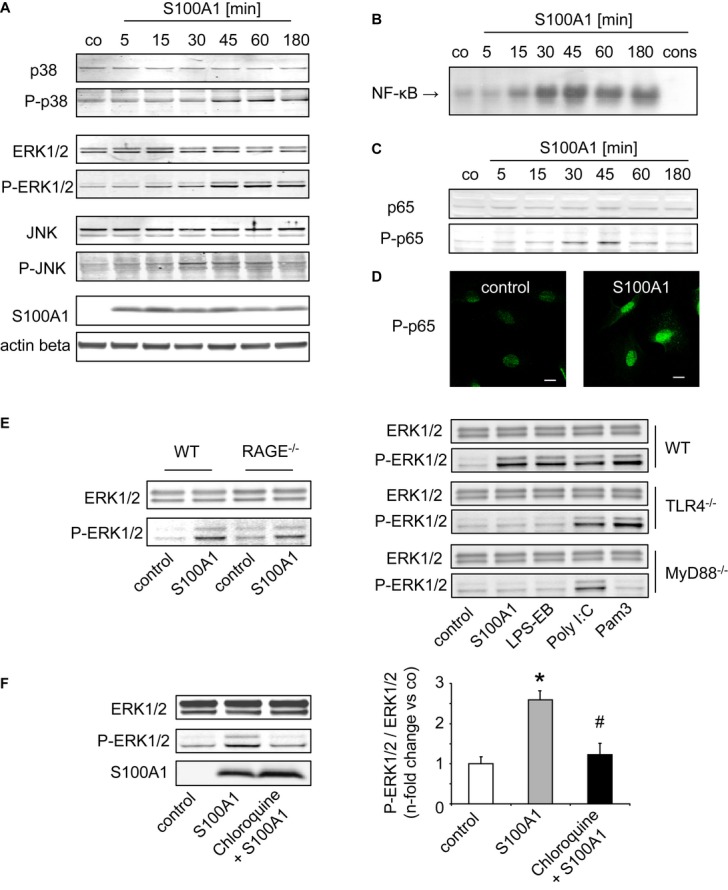
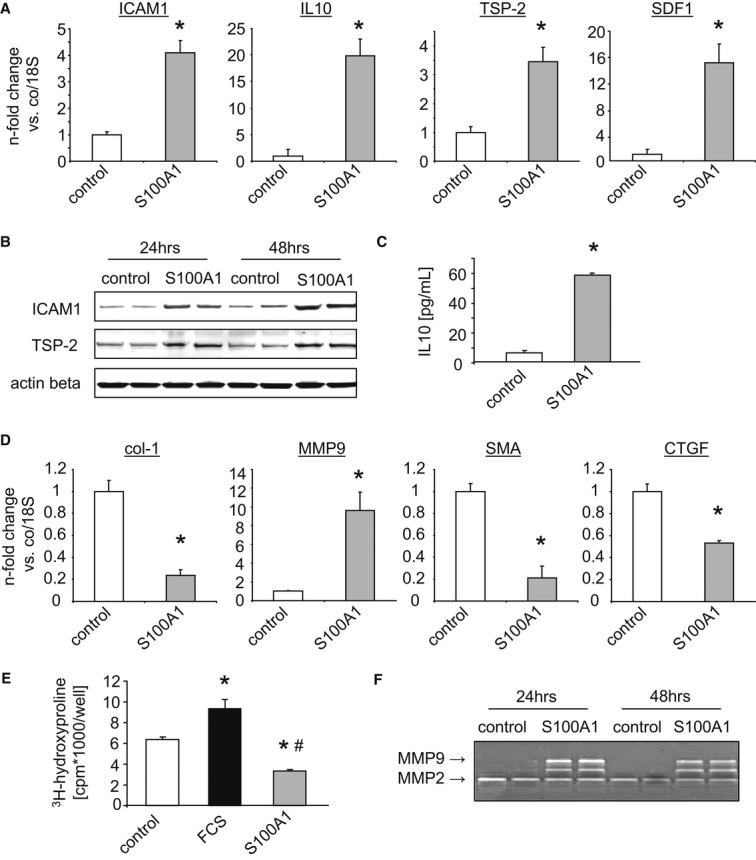
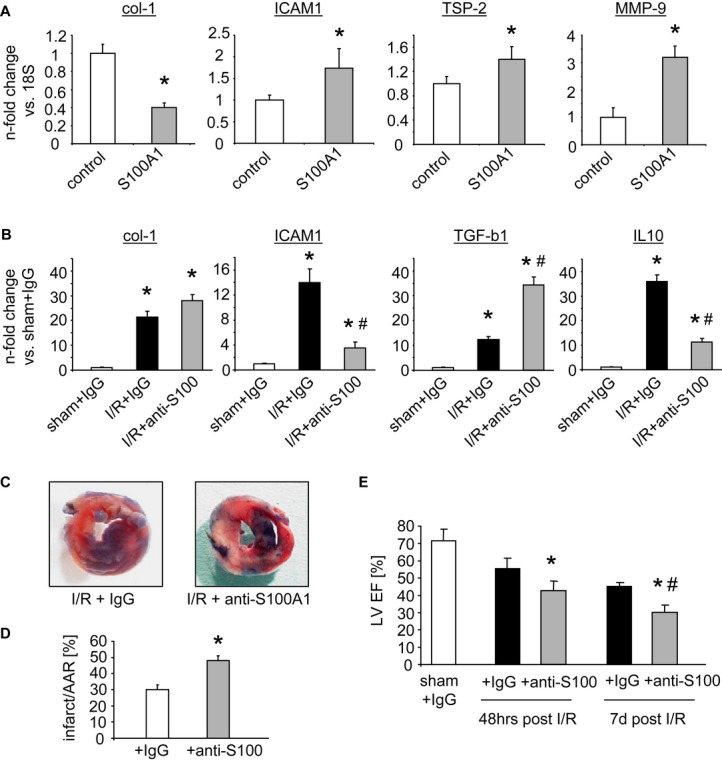
Members of the S100 protein family have been reported to function as endogenous danger signals (alarmins) playing an active role in tissue inflammation and repair when released from necrotic cells. Here, we investigated the role of S100A1, the S100 isoform with highest abundance in cardiomyocytes, when released from damaged cardiomyocytes during myocardial infarction (MI). Patients with acute MI showed significantly increased S100A1 serum levels. Experimental MI in mice induced comparable S100A1 release. S100A1 internalization was observed in cardiac fibroblasts (CFs) adjacent to damaged cardiomyocytes. In vitro analyses revealed exclusive S100A1 endocytosis by CFs, followed by Toll-like receptor 4 (TLR4)-dependent activation of MAP kinases and NF-κB. CFs exposed to S100A1 assumed an immunomodulatory and anti-fibrotic phenotype characterized i.e. by enhanced intercellular adhesion molecule-1 (ICAM1) and decreased collagen levels. In mice, intracardiac S100A1 injection recapitulated these transcriptional changes. Moreover, antibody-mediated neutralization of S100A1 enlarged infarct size and worsened left ventricular functional performance post-MI. Our study demonstrates alarmin properties for S100A1 from necrotic cardiomyocytes. However, the potentially beneficial role of extracellular S100A1 in MI-related inflammation and repair warrants further investigation.
S100 蛋白家族的成员被报道作为内源性危险信号(警报素)发挥作用,当从坏死细胞释放时,在组织炎症和修复中发挥积极作用。在这里,我们研究了 S100A1(在心肌细胞中含量最高的 S100 同工型)在心肌梗死后从受损心肌细胞中释放时的作用。急性心肌梗死患者的血清 S100A1 水平显著升高。在小鼠实验性心肌梗死中诱导了类似的 S100A1 释放。在邻近受损心肌细胞的心脏成纤维细胞 (CFs) 中观察到 S100A1 的内化。体外分析显示 CFs 对 S100A1 的专有内吞作用,随后是 Toll 样受体 4 (TLR4) 依赖性 MAP 激酶和 NF-κB 的激活。暴露于 S100A1 的 CFs 呈现出免疫调节和抗纤维化表型,其特征在于细胞间黏附分子-1 (ICAM1) 增强和胶原水平降低。在小鼠中,心脏内注射 S100A1 再现了这些转录变化。此外,抗体介导的 S100A1 中和增加了心肌梗死后的梗死面积并恶化了左心室功能。我们的研究表明坏死心肌细胞的 S100A1 具有警报素特性。然而,细胞外 S100A1 在心肌梗死后炎症和修复中的潜在有益作用需要进一步研究。