School of Public Health, Key Lab of Public Health Safety of the Ministry of Education, Institute of Global Health, Fudan University.
J Epidemiol. 2014;24(4):321-6. doi: 10.2188/jea.je20140030. Epub 2014 May 17.
Cardiac arrhythmias are cardiac rhythm disorders that comprise an important public health problem. Few prior studies have examined the association between ambient air pollution and arrhythmias in general populations in mainland China.
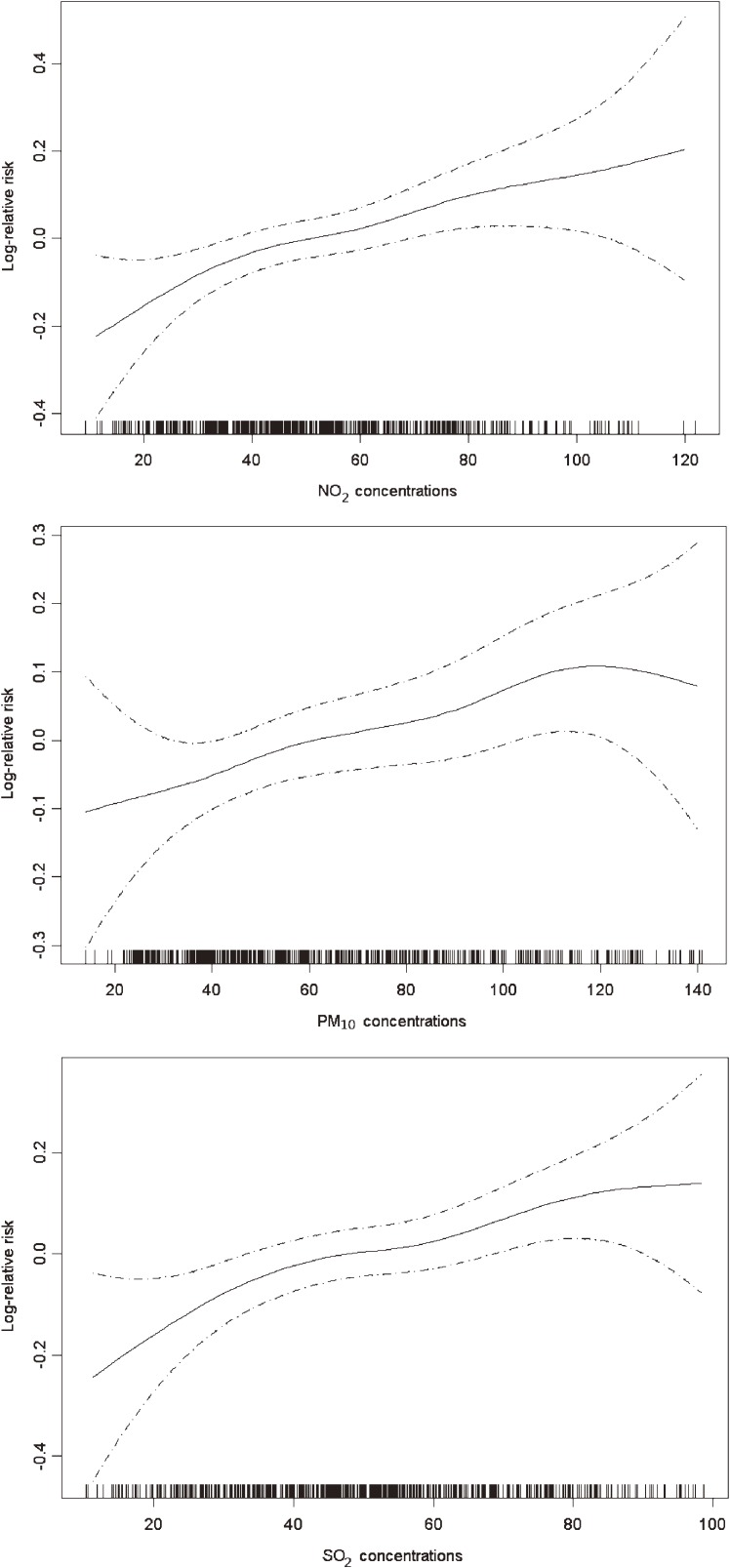
We performed a time-series analysis to investigate the short-term association between air pollution (particulate matter with an aerodynamic diameter less than 10 µm [PM10], sulfur dioxide [SO2], and nitrogen dioxide [NO2]) and outpatient visits for arrhythmia in Shanghai, China. We applied the over-dispersed Poisson generalized additive model to analyze the associations after control for seasonality, day of the week, and weather conditions. We then stratified the analyses by age, gender, and season.
We identified a total of 56 940 outpatient visits for cardiac arrhythmia. A 10-µg/m3 increase in the present-day concentrations of PM10, SO2, and NO2 corresponded to increases of 0.56% (95% CI 0.42%, 0.70%), 2.07% (95% CI 1.49%, 2.64%), and 2.90% (95% CI 2.53%, 3.27%), respectively, in outpatient arrhythmia visits. The associations were stronger in older people (aged ≥65 years) and in females. This study provides the first evidence that ambient air pollution is significantly associated with increased risk of cardiac arrhythmia in mainland China.
Our analyses provide evidence that the current air pollution levels have an adverse effect on cardiovascular health and strengthened the rationale for further limiting air pollution levels in the city.
心律失常是一种心脏节律紊乱,是一个重要的公共卫生问题。以前很少有研究调查过在中国大陆的一般人群中,环境空气污染与心律失常之间的关系。
我们进行了一项时间序列分析,以调查空气污染(空气动力学直径小于 10 µm 的颗粒物[PM10]、二氧化硫[SO2]和二氧化氮[NO2])与中国上海心律失常门诊就诊之间的短期关联。我们应用过离散泊松广义相加模型,在控制季节性、星期几和天气条件后,分析了这些关联。然后,我们按年龄、性别和季节对分析进行了分层。
我们共确定了 56940 例心律失常门诊就诊。PM10、SO2 和 NO2 的本底浓度每增加 10 µg/m3,门诊心律失常就诊的增加幅度分别为 0.56%(95%CI 0.42%,0.70%)、2.07%(95%CI 1.49%,2.64%)和 2.90%(95%CI 2.53%,3.27%)。这些关联在老年人(年龄≥65 岁)和女性中更强。本研究首次提供了证据,表明环境空气污染与中国大陆心律失常风险增加显著相关。
我们的分析提供了证据,表明当前的空气污染水平对心血管健康有不利影响,并为进一步限制城市空气污染水平提供了更充分的理由。