Duan Ping, Sun Shiling, Li Bo, Huang Chuntian, Xu Yan, Han Xuefei, Xing Ying, Yan Wenhai
Institute of Basic Medicine, Zhengzhou University, Zhengzhou, Henan, China.
Hematology Department in the First Affiliated Hospital of Henan University of Traditional Chinese Medicine, Zhengzhou, Henan, China.
PLoS One. 2014 May 19;9(5):e97684. doi: 10.1371/journal.pone.0097684. eCollection 2014.
To investigate the modulation of microRNAs (miRNAs) upon the neuronal differentiation of mesenchymal stem cells (MSCs) through targeting RE-1 Silencing Factor (REST), a mature neuronal gene suppressor in neuronal and un-neuronal cells.
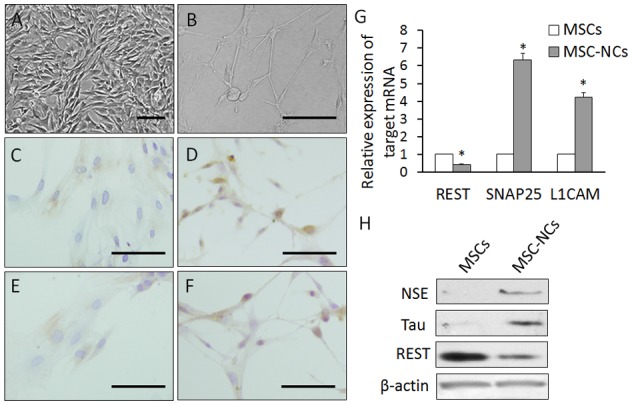
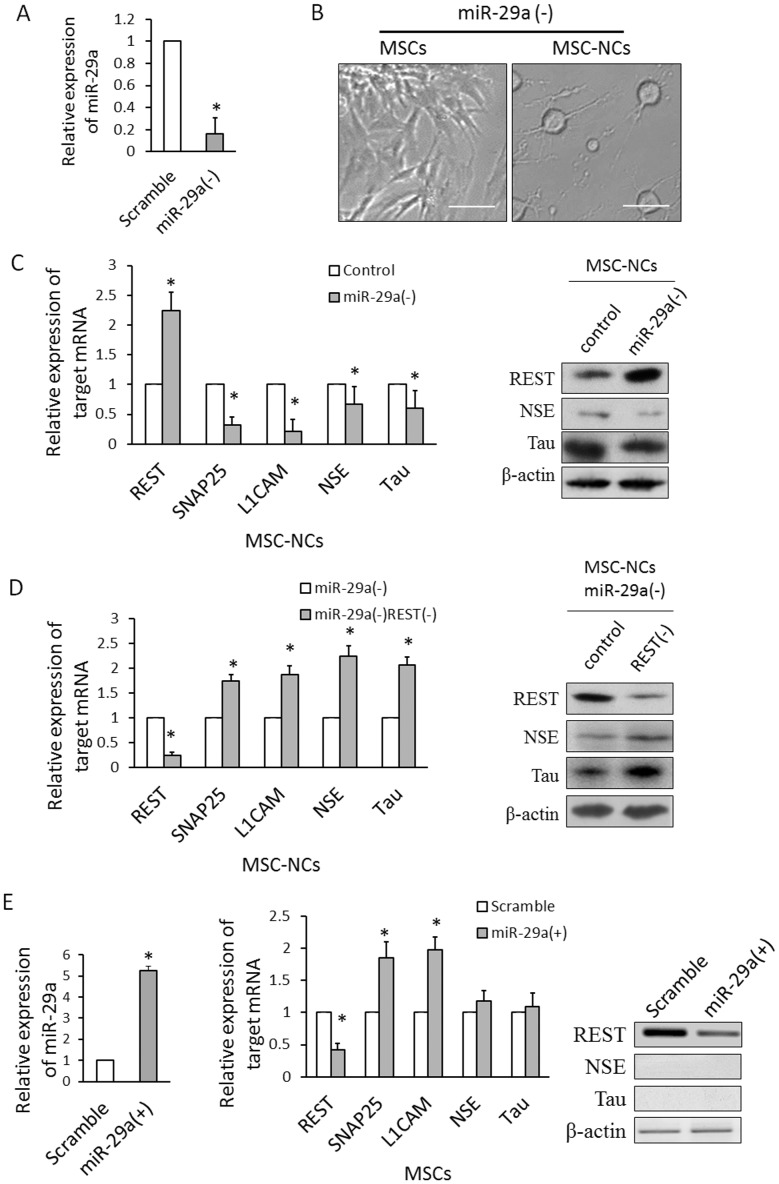
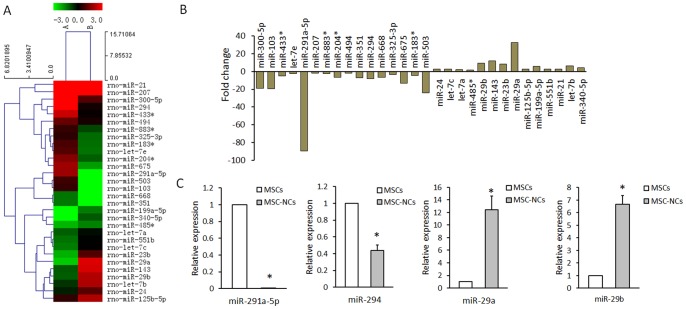
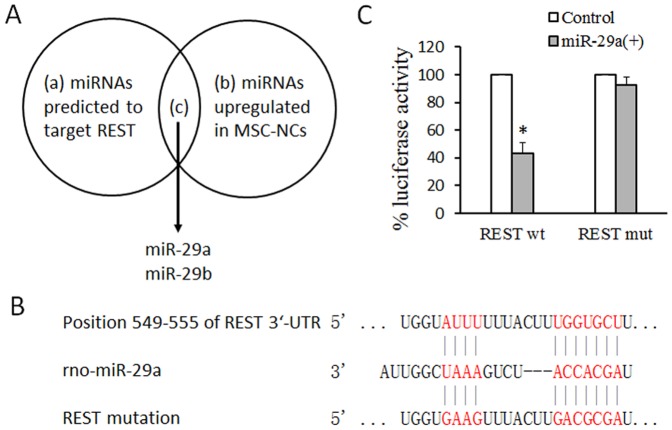
Rat bone marrow derived-MSCs were induced into neuron-like cells (MSC-NCs) by DMSO and BHA in vitro. The expression of neuron specific enolase (NSE), microtubule-associated protein tau (Tau), REST and its target genes, including synaptosomal-associated protein 25 (SNAP25) and L1 cell adhesion molecular (L1CAM), were detected in MSCs and MSC-NCs. miRNA array analysis was conducted to screen for the upregulated miRNAs after neuronal differentiation. TargetScan was used to predict the relationship between these miRNAs and REST gene, and dual luciferase reporter assay was applied to validate it. Gain and loss of function experiments were used to study the role of miR-29a upon neuronal differentiation of MSCs. The knockdown of REST was conducted to show that miR-29a affected this process through targeting REST.
MSCs were induced into neuron-like cells which presented neuronal cell shape and expressed NSE and Tau. The expression of REST declined and the expression of SNAP25 and L1CAM increased upon the neuronal differentiation of MSCs. Among 14 upregulated miRNAs, miR-29a was validated to target REST gene. During the neuronal differentiation of MSCs, miR-29a inhibition blocked the downregulation of REST, as well as the upregulation of SNAP25, L1CAM, NSE and Tau. REST knockdown rescued the effect of miR-29a inhibition on the expression of NSE and Tau. Meanwhile, miR-29a knockin significantly decreased the expression of REST and increased the expression of SNAP25 and L1CMA in MSCs, but did not significantly affect the expression of NSE and Tau.
miR-29a regulates neurogenic markers through targeting REST in mesenchymal stem cells, which provides advances in neuronal differentiation research and stem cell therapy for neurodegenerative diseases.
通过靶向RE-1沉默因子(REST,一种在神经元和非神经元细胞中成熟的神经元基因抑制因子),研究微小RNA(miRNA)对间充质干细胞(MSC)神经元分化的调控作用。
体外使用二甲基亚砜(DMSO)和丁基羟基茴香醚(BHA)将大鼠骨髓来源的MSC诱导为神经元样细胞(MSC-NC)。检测MSC和MSC-NC中神经元特异性烯醇化酶(NSE)、微管相关蛋白tau(Tau)、REST及其靶基因(包括突触小体相关蛋白25(SNAP25)和L1细胞粘附分子(L1CAM))的表达。进行miRNA芯片分析以筛选神经元分化后上调的miRNA。使用TargetScan预测这些miRNA与REST基因之间的关系,并应用双荧光素酶报告基因检测进行验证。采用功能获得和功能缺失实验研究miR-29a在MSC神经元分化中的作用。通过敲低REST来表明miR-29a通过靶向REST影响这一过程。
MSC被诱导为呈现神经元细胞形态并表达NSE和Tau的神经元样细胞。MSC神经元分化后,REST的表达下降,SNAP25和L/CAM的表达增加。在14种上调的miRNA中,miR-29a被验证为靶向REST基因。在MSC神经元分化过程中,抑制miR-29a可阻断REST的下调以及SNAP25、L1CAM、NSE和Tau的上调。敲低REST可挽救miR-29a抑制对NSE和Tau表达的影响。同时,过表达miR-29a可显著降低MSC中REST的表达并增加SNAP25和L1CMA的表达,但对NSE和Tau的表达影响不显著。
miR-29a通过靶向MSC中的REST调节神经源性标志物,这为神经元分化研究和神经退行性疾病的干细胞治疗提供了进展。