Yan Yutao, Ding Yu, Ming Bingxia, Du Wenjiao, Kong Xiaoling, Tian Li, Zheng Fang, Fang Min, Tan Zheng, Gong Feili
Institute of Organ Transplantation, Tongji Hospital, Tongji Medical College, Huazhong University of Science and Technology, Wuhan 4340030, China.
Department of Immunology, Tongji Medical College.
Mol Cells. 2014 May;37(5):418-25. doi: 10.14348/molcells.2014.0031. Epub 2014 May 16.
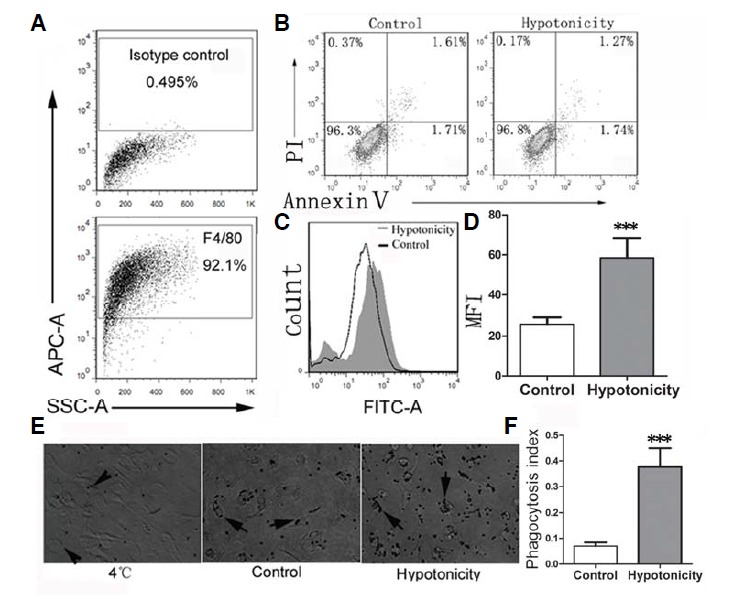
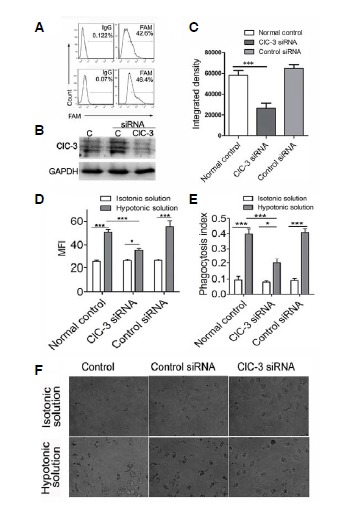
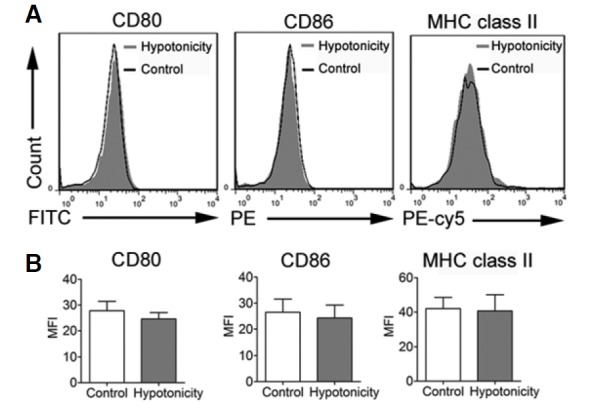
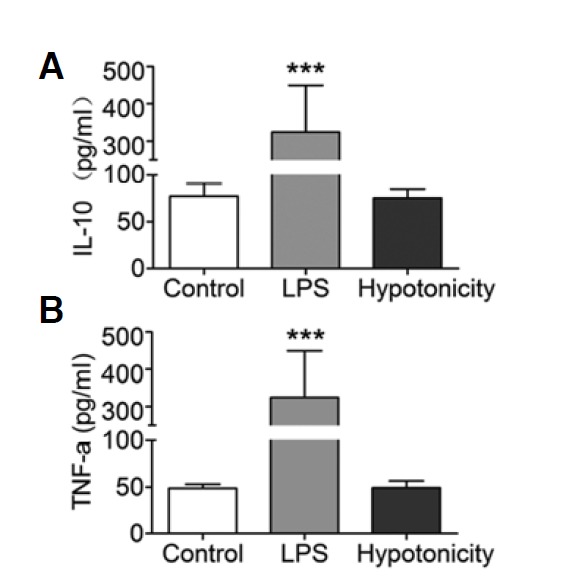
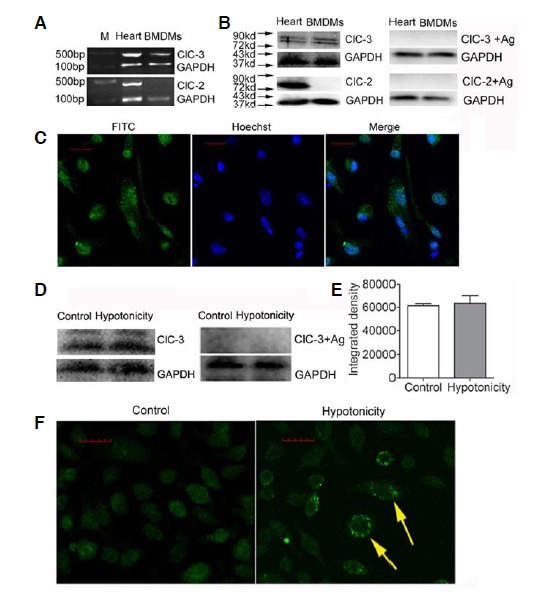
Extracellular hypotonic stress can affect cellular function. Whether and how hypotonicity affects immune cell function remains to be elucidated. Macrophages are immune cells that play key roles in adaptive and innate in immune reactions. The purpose of this study was to investigate the role and underlying mechanism of hypotonic stress in the function of bone marrow-derived macrophages (BMDMs). Hypotonic stress increased endocytic activity in BMDMs, but there was no significant change in the expression of CD80, CD86, and MHC class II molecules, nor in the secretion of TNF-α or IL-10 by BMDMs. Furthermore, the enhanced endocytic activity of BMDMs triggered by hypotonic stress was significantly inhibited by chloride channel-3 (ClC-3) siRNA. Our findings suggest that hypotonic stress can induce endocytosis in BMDMs and that ClC-3 plays a central role in the endocytic process.
细胞外低渗应激可影响细胞功能。低渗是否以及如何影响免疫细胞功能仍有待阐明。巨噬细胞是在适应性免疫反应和先天性免疫反应中起关键作用的免疫细胞。本研究的目的是探讨低渗应激在骨髓来源巨噬细胞(BMDM)功能中的作用及潜在机制。低渗应激增加了BMDM的内吞活性,但BMDM表面CD80、CD86和MHC II类分子的表达以及TNF-α或IL-10的分泌均无显著变化。此外,氯化物通道-3(ClC-3)小干扰RNA显著抑制了低渗应激引发的BMDM内吞活性增强。我们的研究结果表明,低渗应激可诱导BMDM发生内吞作用,且ClC-3在内吞过程中起核心作用。