Centro de Biología Celular y Molecular de Enfermedades, Instituto de Investigaciones Científicas y Servicios de Alta Tecnología, Ciudad de Panamá, Panamá ; Department of Biotechnology, Acharya Nagarjuna University, Guntur, India.
Centro de Descubrimiento de Drogas y Biodiversidad, Instituto de Investigaciones Científicas y Servicios de Alta Tecnología, Ciudad de Panamá, Panamá
PLoS One. 2013 Dec 16;8(12):e84107. doi: 10.1371/journal.pone.0084107. eCollection 2013.
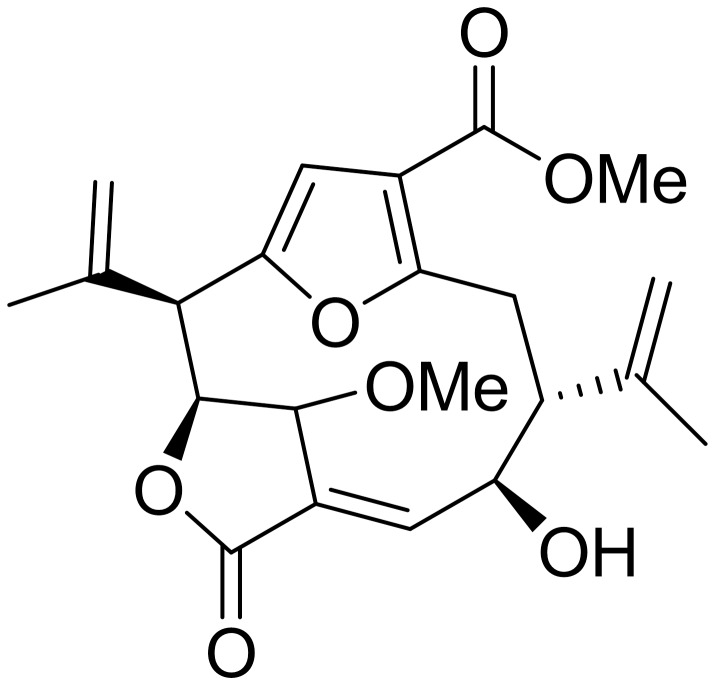
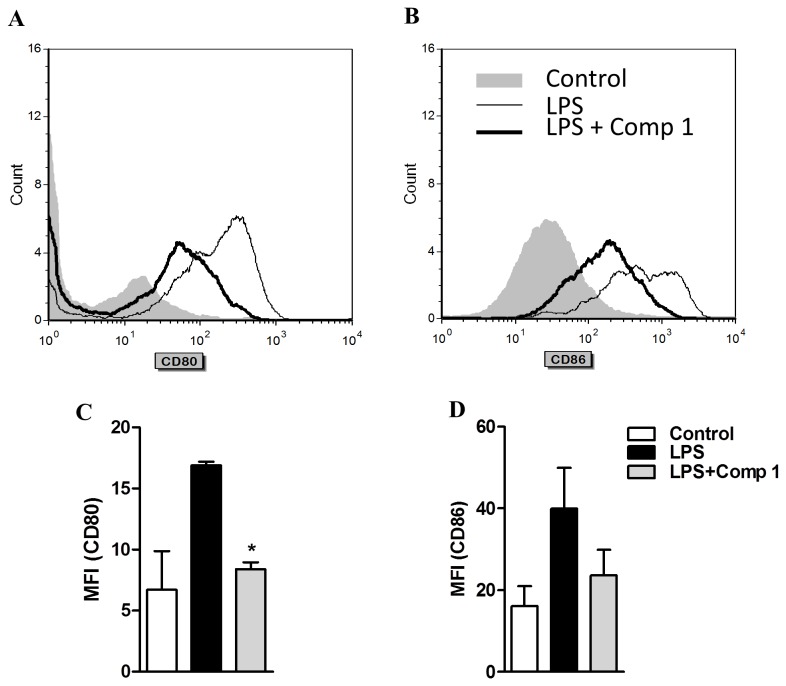
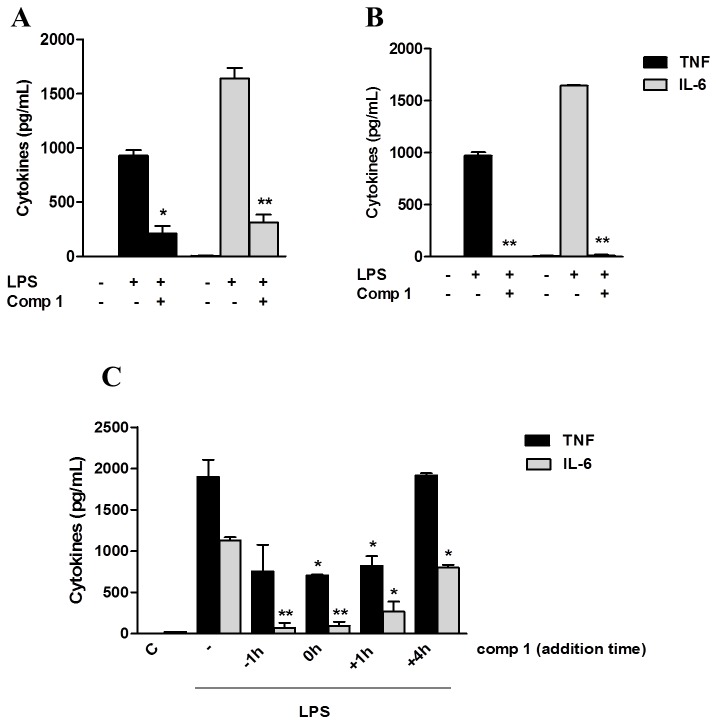
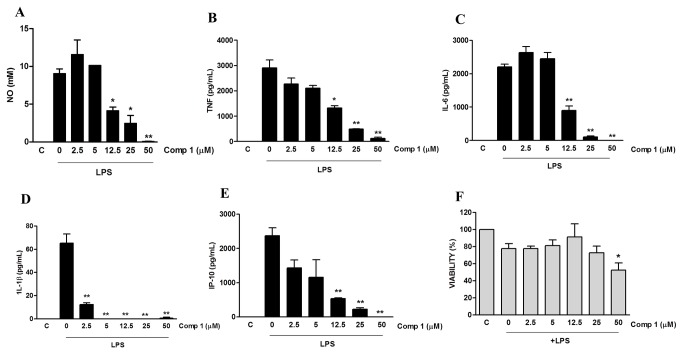
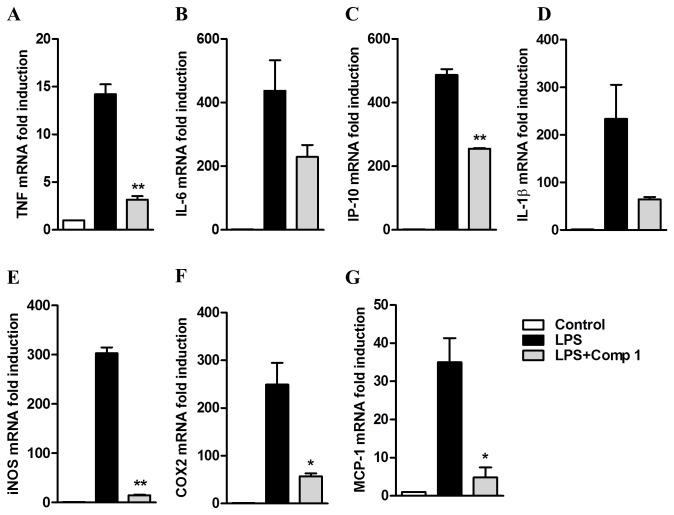
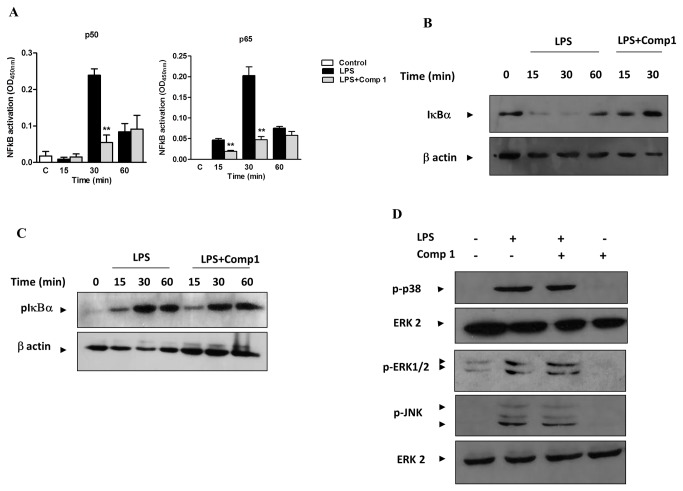
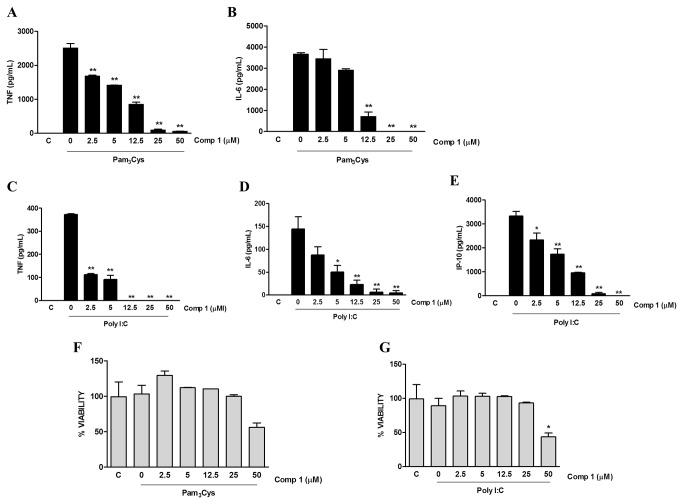
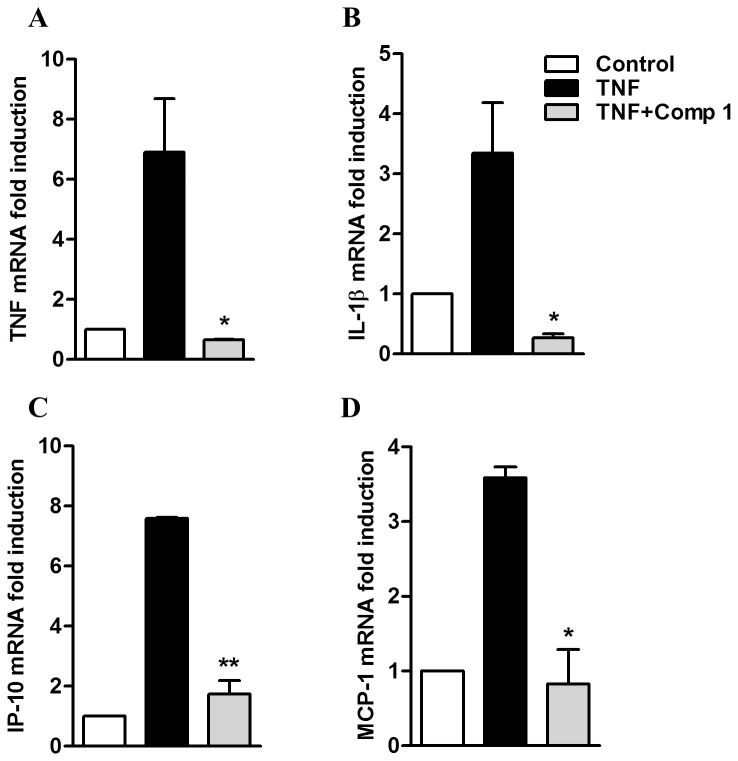
Several diterpenoids isolated from terrestrial and marine environments have been identified as important anti-inflammatory agents. Although considerable progress has been made in the area of anti-inflammatory treatment, the search for more effective and safer compounds is a very active field of research. In this study we investigated the anti-inflammatory effects of a known pseudopterane diterpene (referred here as compound 1) isolated from the octocoral Pseudopterogorgia acerosa on the tumor necrosis factor- alpha (TNF-α) and TLRs- induced response in macrophages. Compound 1 inhibited the expression and secretion of the inflammatory mediators TNF-α, interleukin (IL)-6, IL-1β, nitric oxide (NO), interferon gamma-induced protein 10 (IP-10), ciclooxygenase (COX)-2, inducible nitric oxide synthase (iNOS) and monocyte chemoattractant protein-1 (MCP-1) induced by LPS in primary murine macrophages. This effect was associated with the inhibition of IκBα degradation and subsequent activation of NFκB. Compound 1 also inhibited the expression of the co-stimulatory molecules CD80 and CD86, which is a hallmark of macrophage activation and consequent initiation of an adaptive immune response. The anti-inflammatory effect was not exclusive to LPS because compound 1 also inhibited the response of macrophages to TNF-α and TLR2 and TLR3 ligands. Taken together, these results indicate that compound 1 is an anti-inflammatory molecule, which modulates a variety of processes occurring in macrophage activation.
从陆地和海洋环境中分离出来的几种二萜类化合物已被确定为重要的抗炎剂。尽管在抗炎治疗方面已经取得了相当大的进展,但寻找更有效和更安全的化合物仍然是一个非常活跃的研究领域。在这项研究中,我们研究了从八放珊瑚 Pseudopterogorgia acerosa 中分离出的一种已知的伪海鞘二萜(此处称为化合物 1)对肿瘤坏死因子-α(TNF-α)和 TLRs 诱导的巨噬细胞反应的抗炎作用。化合物 1 抑制了由 LPS 诱导的炎症介质 TNF-α、白细胞介素 (IL)-6、IL-1β、一氧化氮 (NO)、干扰素 γ 诱导蛋白 10 (IP-10)、环加氧酶 (COX)-2、诱导型一氧化氮合酶 (iNOS) 和单核细胞趋化蛋白-1 (MCP-1) 在原代小鼠巨噬细胞中的表达和分泌。这种作用与抑制 IκBα 降解和随后 NFκB 的激活有关。化合物 1 还抑制了共刺激分子 CD80 和 CD86 的表达,这是巨噬细胞活化和随后启动适应性免疫反应的标志。抗炎作用不仅限于 LPS,因为化合物 1 还抑制了巨噬细胞对 TNF-α 和 TLR2 和 TLR3 配体的反应。综上所述,这些结果表明化合物 1 是一种抗炎分子,可调节巨噬细胞活化过程中发生的多种过程。