Scott Ricardo S, Henneberger Christian, Padmashri Ragunathan, Anders Stefanie, Jensen Thomas P, Rusakov Dmitri A
1] UCL Institute of Neurology, University College London, Queen Square, WC1N 3BG London, UK [2] Instituto de Neurociencias de Alicante, Universidad Miguel Hernández-CSIC, Campus de San Juan, Sant Joan d'Alacant, 03550 Alicante, Spain [3].
1] UCL Institute of Neurology, University College London, Queen Square, WC1N 3BG London, UK [2] Institute of Cellular Neurosciences, University of Bonn Medical School, D-53105 Bonn, Germany [3].
Nat Commun. 2014 May 23;5:3817. doi: 10.1038/ncomms4817.
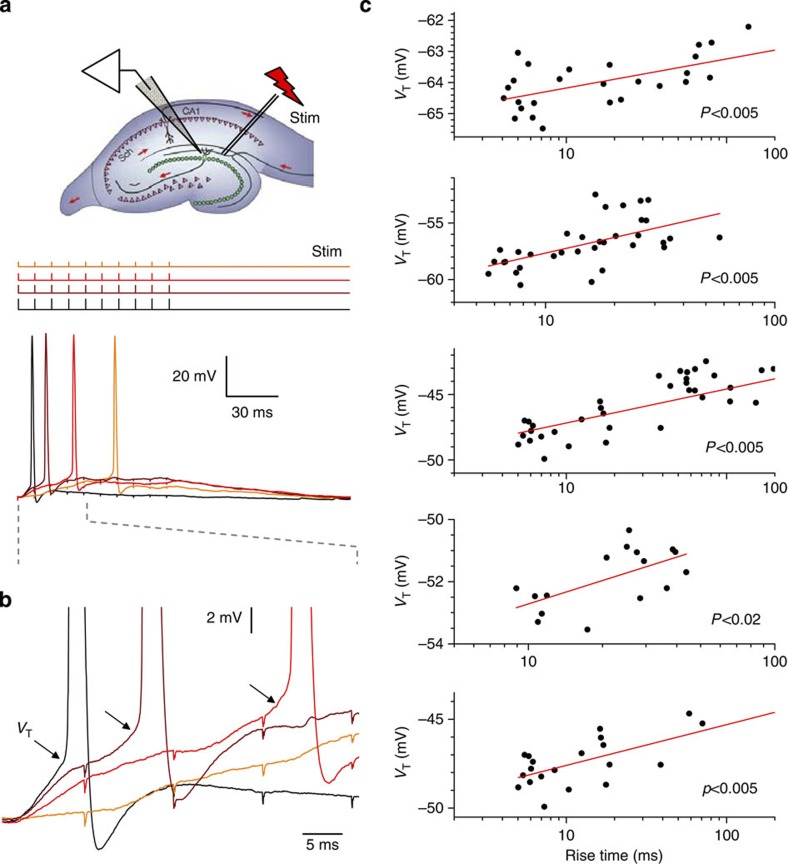
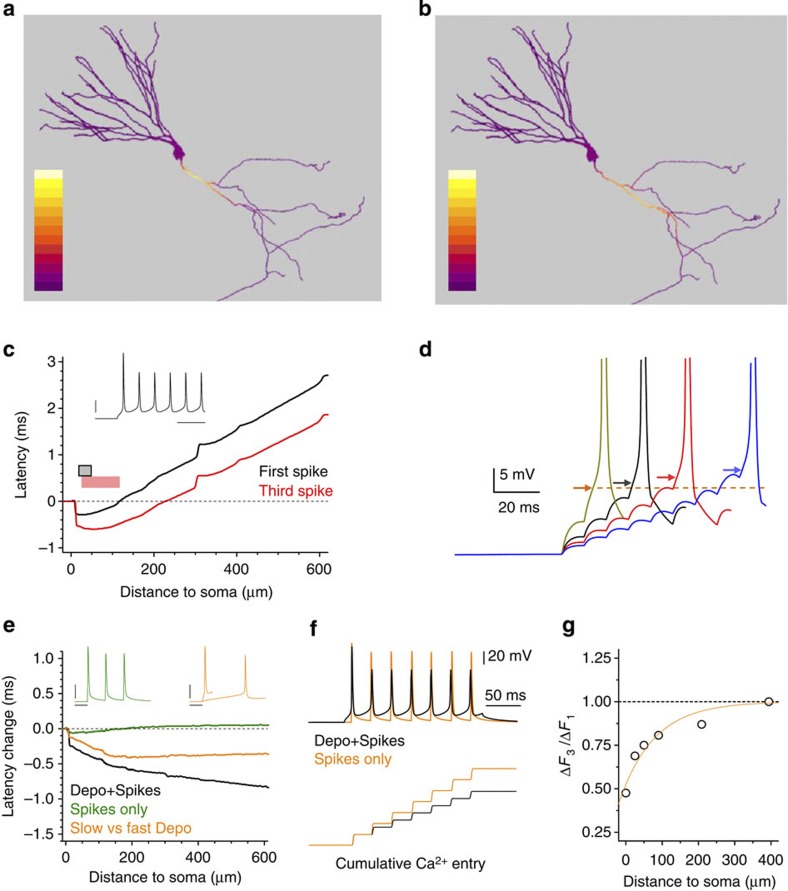
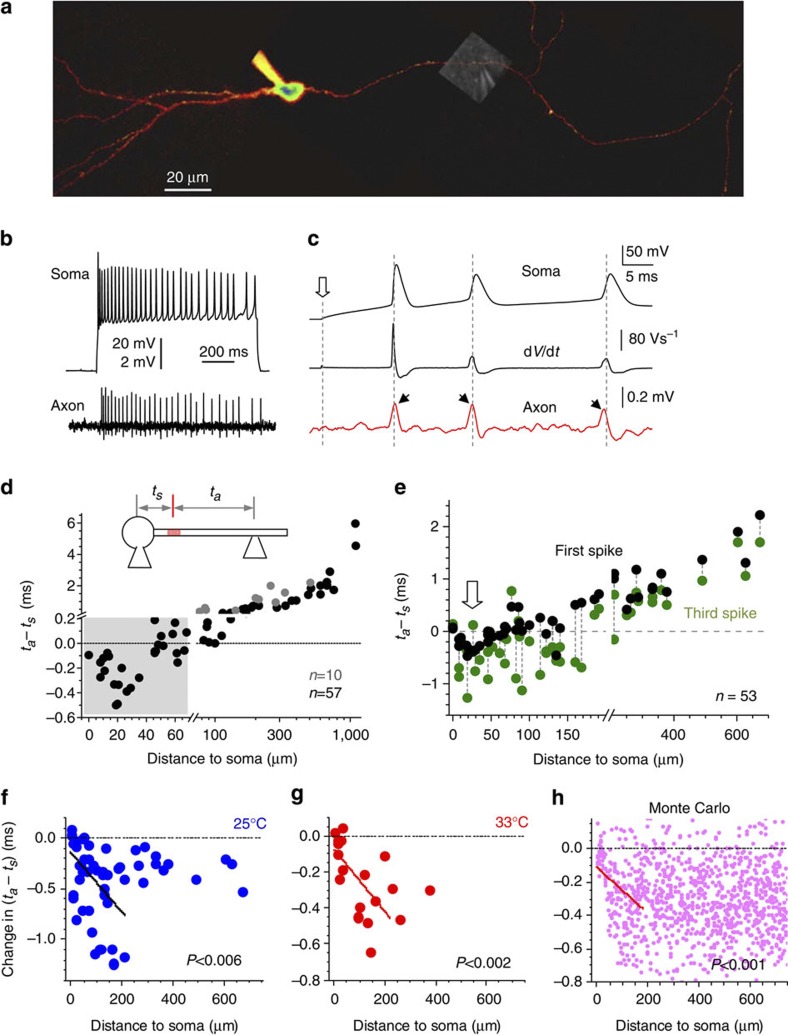
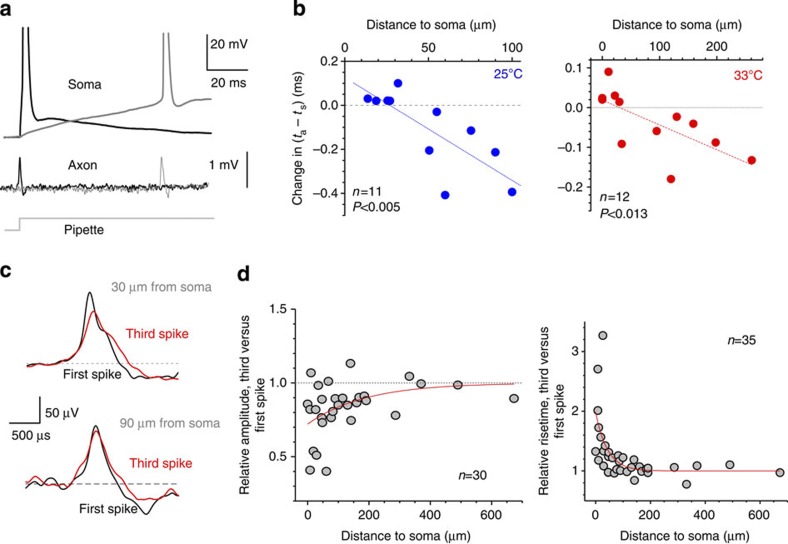
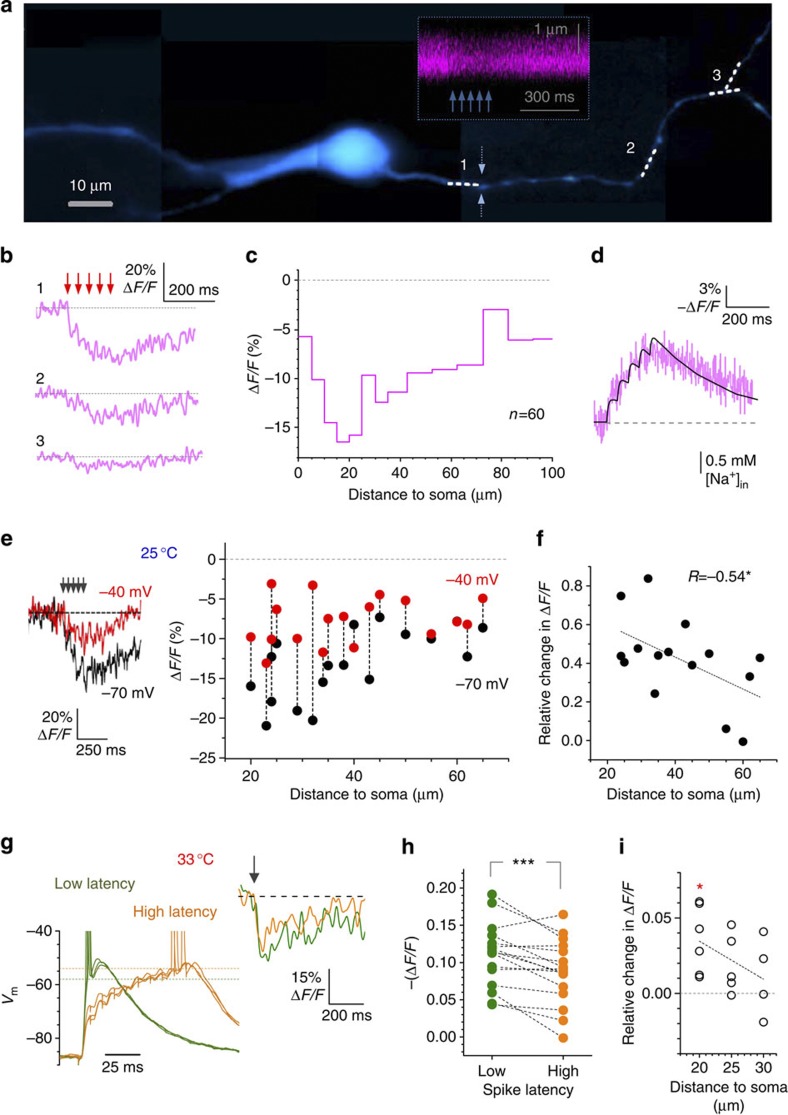
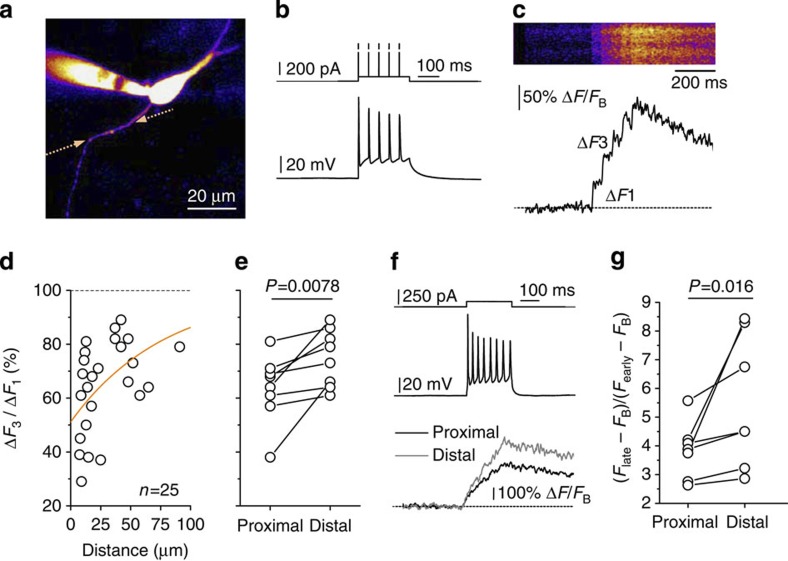
Action potential (AP) generation is the key to information-processing in the brain. Although APs are normally initiated in the axonal initial segment, developmental adaptation or prolonged network activity may alter the initiation site geometry thus affecting cell excitability. Here we find that hippocampal dentate granule cells adapt their spiking threshold to the kinetics of the ongoing dendrosomatic excitatory input by expanding the AP-initiation area away from the soma while also decelerating local axonal spikes. Dual-patch soma-axon recordings combined with axonal Na(+) and Ca(2+) imaging and biophysical modelling show that the underlying mechanism involves distance-dependent inactivation of axonal Na(+) channels due to somatic depolarization propagating into the axon. Thus, the ensuing changes in the AP-initiation zone and local AP propagation could provide activity-dependent control of cell excitability and spiking on a relatively rapid timescale.
动作电位(AP)的产生是大脑信息处理的关键。虽然动作电位通常在轴突起始段启动,但发育适应或长时间的网络活动可能会改变起始部位的几何形状,从而影响细胞兴奋性。在这里,我们发现海马齿状颗粒细胞通过将动作电位起始区域从胞体移开,同时减缓局部轴突动作电位,使其发放阈值适应正在进行的树突-胞体兴奋性输入的动力学。双膜片钳胞体-轴突记录结合轴突钠(Na+)和钙(Ca2+)成像以及生物物理建模表明,其潜在机制涉及由于胞体去极化传播到轴突导致轴突钠通道的距离依赖性失活。因此,动作电位起始区和局部动作电位传播的后续变化可以在相对快速的时间尺度上提供对细胞兴奋性和发放的活动依赖性控制。