Das Ujjal, Manna Krishnendu, Sinha Mahuya, Datta Sanjukta, Das Dipesh Kr, Chakraborty Anindita, Ghosh Mahua, Saha Krishna Das, Dey Sanjit
Department of Physiology, Centre for Nanoscience and Nanotechnology and Centre with Potential for Excellence in Particular Area (CPEPA), University of Calcutta, Kolkata, West Bengal, India.
Department of Chemical Technology, University of Calcutta, Kolkata, West Bengal, India.
PLoS One. 2014 May 22;9(5):e97599. doi: 10.1371/journal.pone.0097599. eCollection 2014.
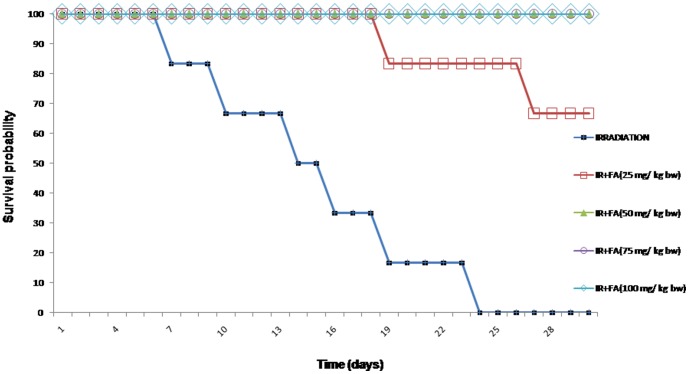
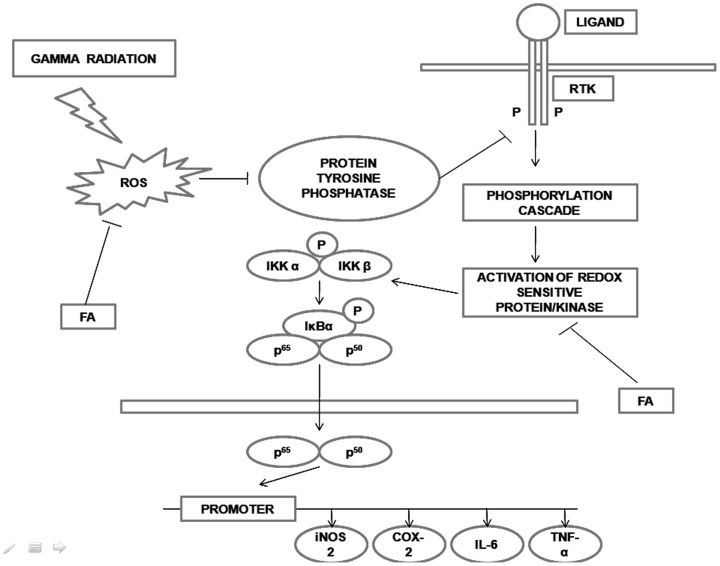
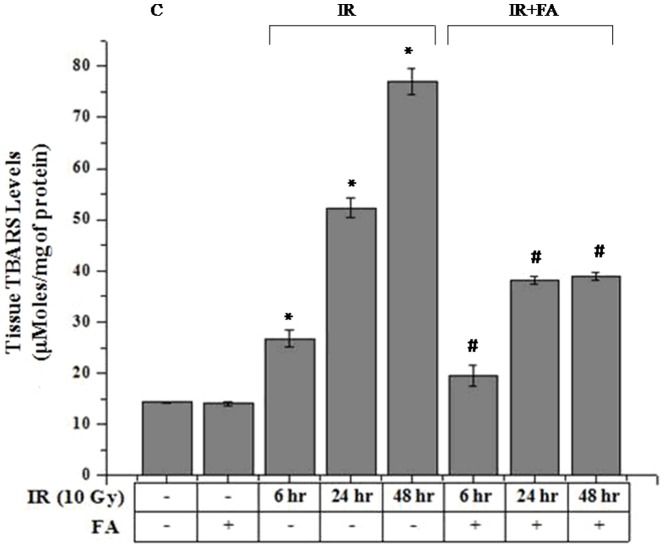
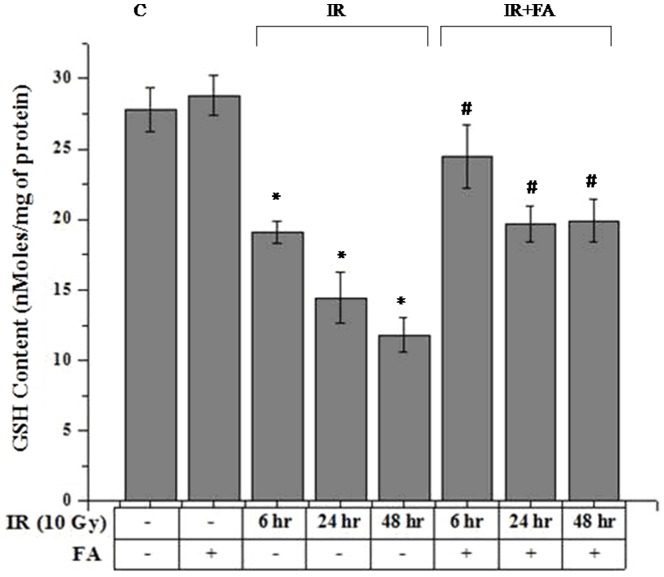
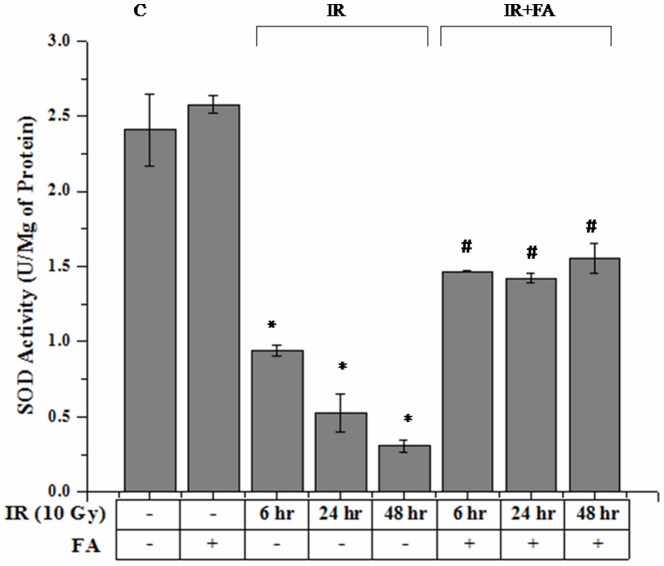
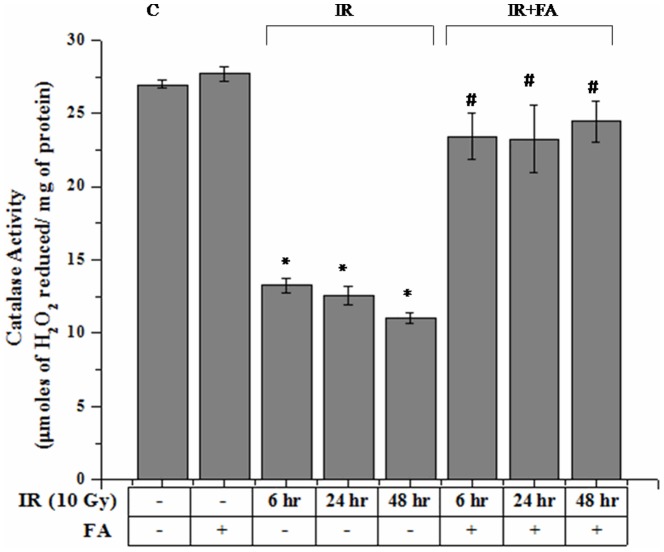
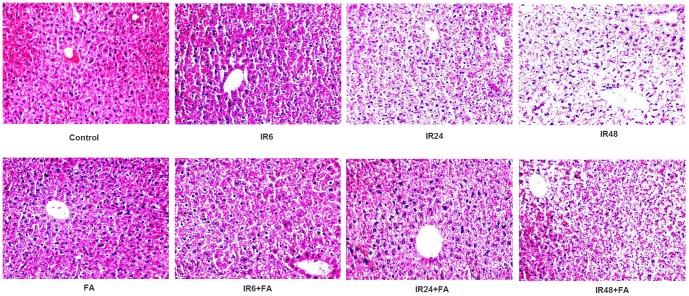
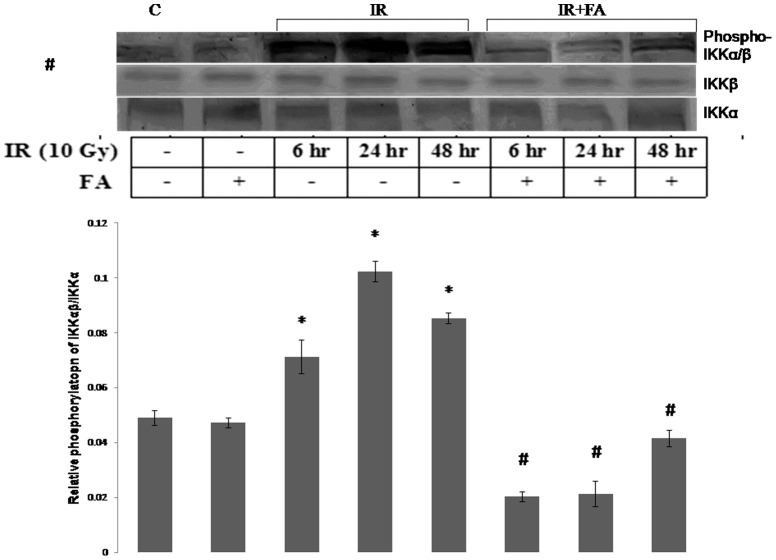
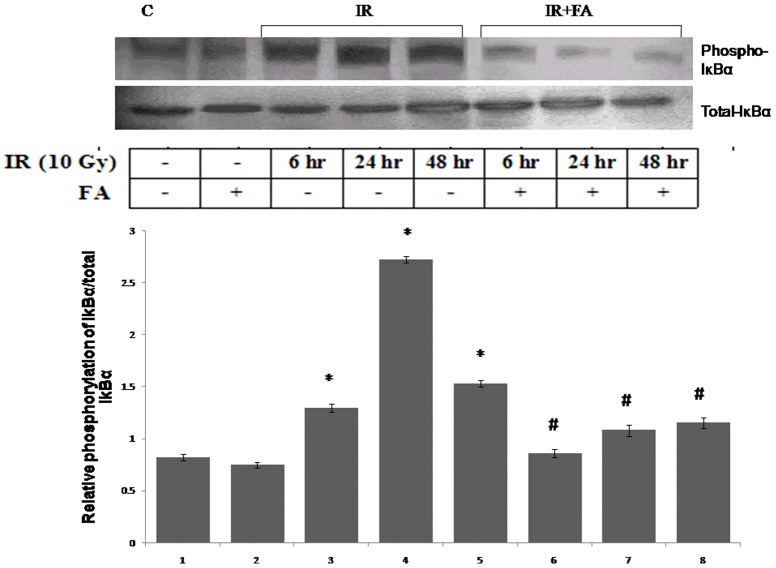
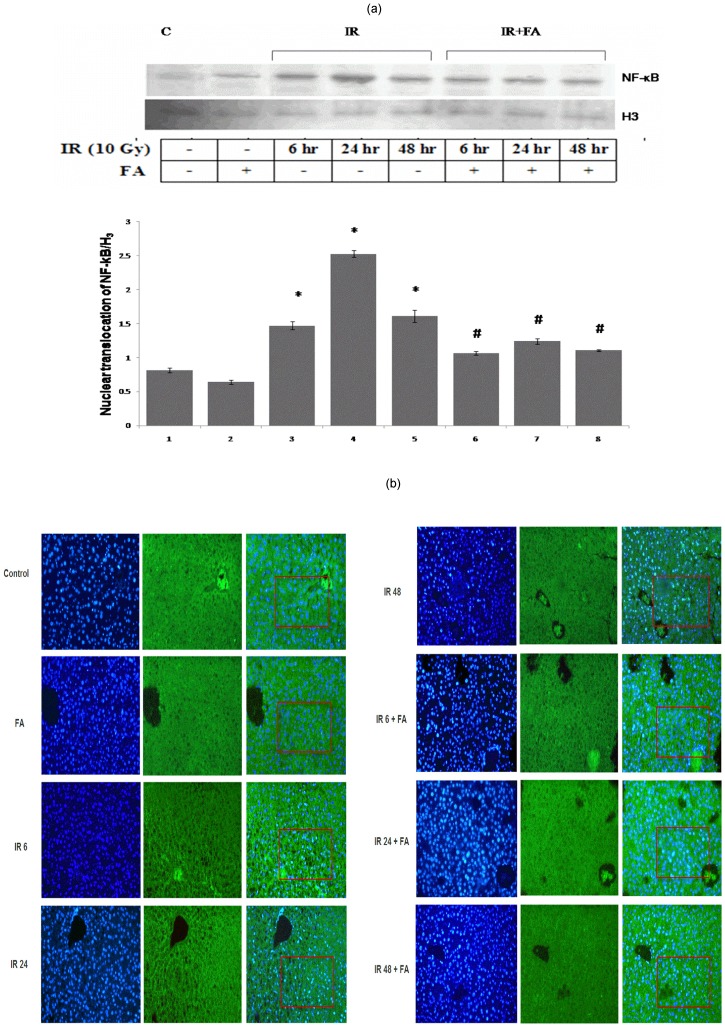
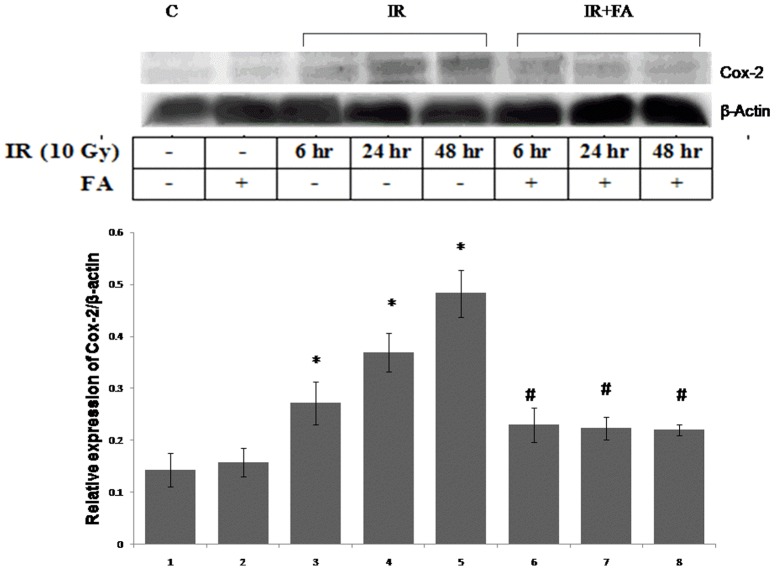
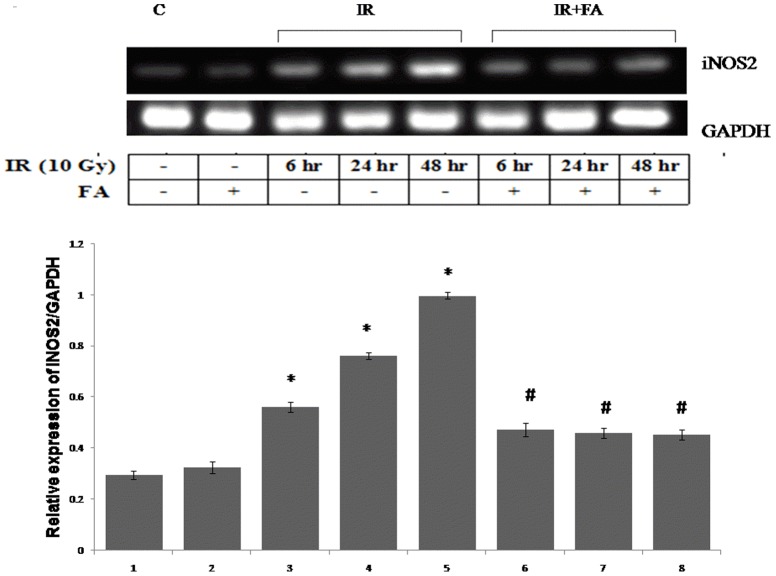
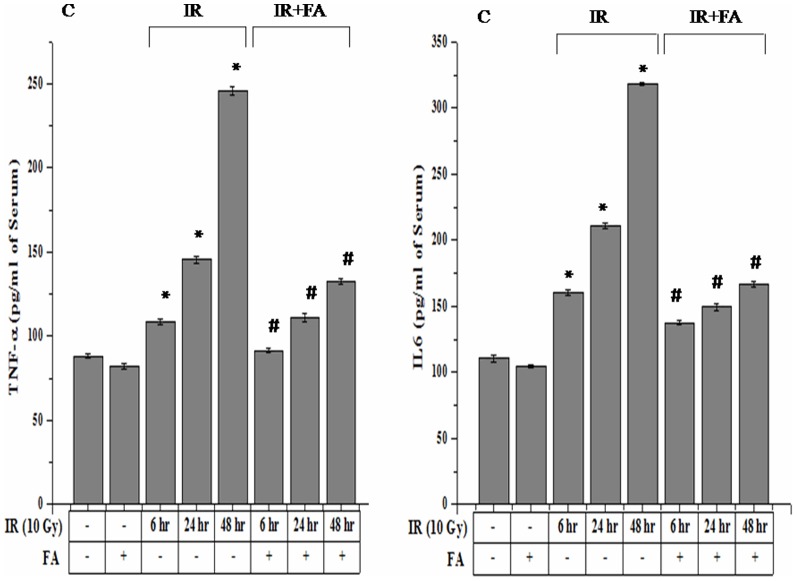
Ionizing radiation is responsible for oxidative stress by generating reactive oxygen species (ROS), which alters the cellular redox potential. This change activates several redox sensitive enzymes which are crucial in activating signaling pathways at molecular level and can lead to oxidative stress induced inflammation. Therefore, the present study was intended to assess the anti-inflammatory role of ferulic acid (FA), a plant flavonoid, against radiation-induced oxidative stress with a novel mechanistic viewpoint. FA was administered (50 mg/kg body wt) to Swiss albino mice for five consecutive days prior to exposing them to a single dose of 10 Gy 60Co γ-irradiation. The dose of FA was optimized from the survival experiment and 50 mg/kg body wt dose showed optimum effect. FA significantly ameliorated the radiation induced inflammatory response such as phosphorylation of IKKα/β and IκBα and consequent nuclear translocation of nuclear factor kappa B (NF-κB). FA also prevented the increase of cycloxygenase-2 (Cox-2) protein, inducible nitric oxide synthase-2 (iNOS-2) gene expression, lipid peroxidation in liver and the increase of tumor necrosis factor-alpha (TNF-α) and interleukin-6 (IL-6) in serum. It was observed that exposure to radiation results in decreased activity of superoxide dismutase (SOD), catalase (CAT) and the pool of reduced glutathione (GSH) content. However, FA treatment prior to irradiation increased the activities of the same endogenous antioxidants. Thus, pretreatment with FA offers protection against gamma radiation induced inflammation.
电离辐射通过产生活性氧(ROS)导致氧化应激,这会改变细胞的氧化还原电位。这种变化会激活几种氧化还原敏感酶,这些酶在分子水平激活信号通路中至关重要,并可导致氧化应激诱导的炎症。因此,本研究旨在从新的机制角度评估植物类黄酮阿魏酸(FA)对辐射诱导的氧化应激的抗炎作用。在将瑞士白化小鼠暴露于单次10 Gy 60Co γ射线照射之前,连续五天给其施用FA(50 mg/kg体重)。FA的剂量从生存实验中优化得出,50 mg/kg体重剂量显示出最佳效果。FA显著改善了辐射诱导的炎症反应,如IKKα/β和IκBα的磷酸化以及随后核因子κB(NF-κB)的核转位。FA还阻止了环氧合酶-2(Cox-2)蛋白的增加、诱导型一氧化氮合酶-2(iNOS-2)基因表达、肝脏中的脂质过氧化以及血清中肿瘤坏死因子-α(TNF-α)和白细胞介素-6(IL-6)的增加。观察到暴露于辐射会导致超氧化物歧化酶(SOD)、过氧化氢酶(CAT)的活性降低以及还原型谷胱甘肽(GSH)含量的减少。然而,照射前的FA处理增加了相同内源性抗氧化剂的活性。因此,FA预处理可提供针对γ辐射诱导炎症的保护作用。