Peaper David R, Landry Marie L
Department of Laboratory Medicine, Yale University School of Medicine, 333 Cedar Street, New Haven, CT, USA; Section of Pathology and Laboratory Medicine, VA Connecticut Healthcare System, 950 Campbell Avenue, West Haven, CT 06516, USA.
Department of Laboratory Medicine, Yale University School of Medicine, 333 Cedar Street, New Haven, CT, USA; Department of Internal Medicine, Yale University School of Medicine, 333 Cedar Street, New Haven, CT, USA.
Clin Lab Med. 2014 Jun;34(2):365-85. doi: 10.1016/j.cll.2014.02.009.
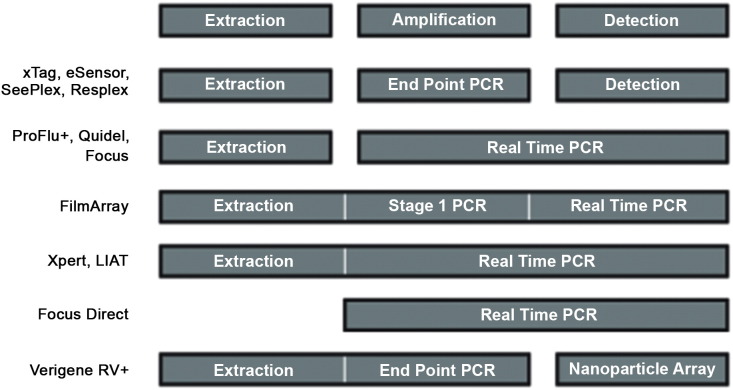
Much effort has been expended developing testing modalities for influenza viruses that are capable of providing rapid results to clinicians. Antigen-detection techniques, historically the only methods able to deliver results quickly, are still widely used despite concerns about sensitivity. Recently, nucleic acid amplification tests (NAATs), which can achieve rapid turnaround times and high sensitivity, have become available. In addition, NAATs can detect other respiratory pathogens. Although there are many theoretical advantages to rapid influenza testing, the clinical impact of testing in various patient populations must be considered against the cost and the analytical performance of the tests.
人们付出了很多努力来开发针对流感病毒的检测方法,以便能够为临床医生提供快速检测结果。抗原检测技术一直是唯一能够快速得出结果的方法,尽管对其敏感性存在担忧,但仍被广泛使用。最近,能够实现快速周转时间和高灵敏度的核酸扩增检测(NAATs)已经出现。此外,NAATs还可以检测其他呼吸道病原体。虽然快速流感检测在理论上有很多优点,但在考虑检测成本和分析性能的情况下,必须权衡其在不同患者群体中的临床影响。