Pereira Dora I A, Couto Irving Susana S, Lomer Miranda C E, Powell Jonathan J
MRC Human Nutrition Research, Elsie Widdowson Laboratory, CB1 9NL Cambridge, UK.
BMC Gastroenterol. 2014 Jun 4;14:103. doi: 10.1186/1471-230X-14-103.
Oral iron supplementation is often associated with rapid onset of gastrointestinal side-effects. The aim of this study was to develop and trial a short, simple questionnaire to capture these early side-effects and to determine which symptoms are more discriminating.
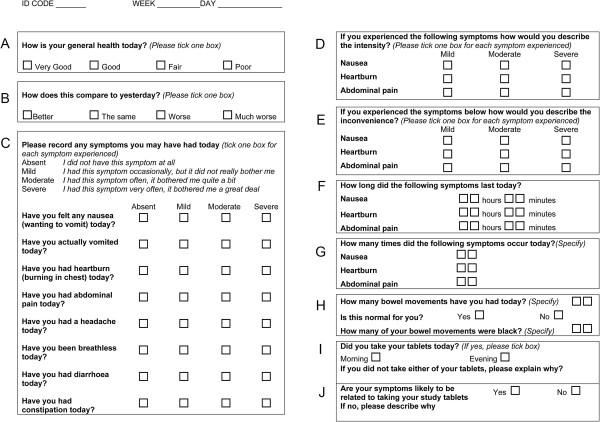
The study was a double-blind placebo-controlled randomized parallel trial with one week treatment followed by one week wash-out. Subjects were randomized into two treatment groups (n = 10/group) to receive either ferrous sulphate (200 mg capsules containing 65 mg of iron) or placebo, both to be taken at mealtimes twice daily during the treatment period. Subjects completed the questionnaires daily for 14 days. The questionnaire included gastrointestinal symptoms commonly reported to be associated with the oral intake of ferrous iron salts (i.e. nausea, vomiting, heartburn, abdominal pain, diarrhoea, and constipation).
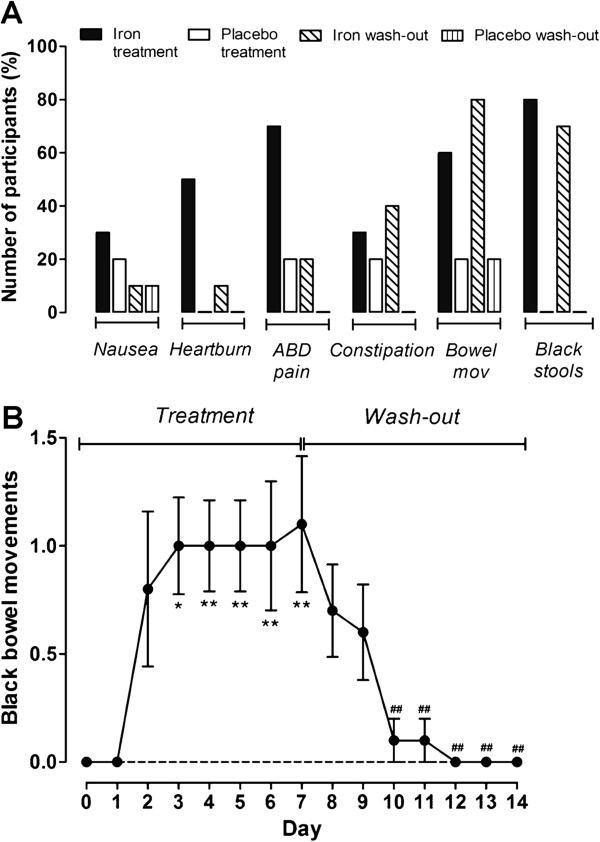
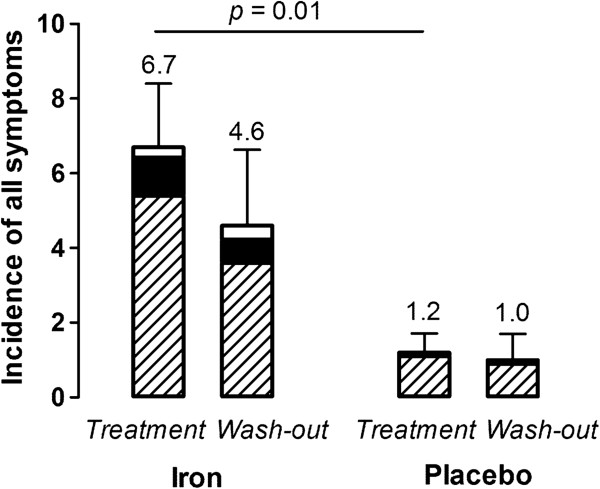
Seventy five per cent of participants reporting the presence of one or more symptoms in the first week of the study were in the ferrous sulphate group. In the second week of the study (i.e. wash-out), 67% of the participants reporting one or more symptom(s) were in the ferrous sulphate group. In the first week of the study (treatment) the number of symptoms reported by participants in the ferrous sulphate group (mean ± SEM = 6.7 ± 1.7) was significantly higher than that for participants in the placebo group (1.2 ± 0.5) (p = 0.01). In the second week of the study (wash-out) the number of symptoms reported by participants in the ferrous sulphate group (4.6 ± 2.0) appeared higher than for participants in the placebo group (1.0 ± 0.7) although this did not reach significance (p = 0.12). Events for which the gastrointestinal symptom questionnaire was most discriminatory between ferrous sulphate and placebo groups were: heartburn, abdominal pain and the presence of black stools (all p ≤ 0.03).
A tool for the detection of commonly-occurring side effects should not require large study numbers to be effective. With just 10 subjects per group (iron or placebo), this simple questionnaire measures gastrointestinal side-effects associated with oral iron (ferrous sulphate) supplementation, and would be appropriate for use in intervention studies or clinical trials.
ClinicalTrials.gov Identifier: NCT02146053 (21/05/2014).
口服铁剂补充剂常常与胃肠道副作用的迅速出现相关。本研究的目的是开发并试用一份简短、简单的问卷,以捕捉这些早期副作用,并确定哪些症状更具区分性。
本研究为双盲安慰剂对照随机平行试验,为期一周的治疗,随后是一周的洗脱期。受试者被随机分为两个治疗组(每组n = 10),分别接受硫酸亚铁(含65毫克铁的200毫克胶囊)或安慰剂,在治疗期间均每日两次随餐服用。受试者连续14天每天填写问卷。问卷包括通常报告与口服亚铁盐相关的胃肠道症状(即恶心、呕吐、烧心、腹痛、腹泻和便秘)。
在研究的第一周报告出现一种或多种症状的参与者中,75%在硫酸亚铁组。在研究的第二周(即洗脱期),报告一种或多种症状的参与者中,67%在硫酸亚铁组。在研究的第一周(治疗期),硫酸亚铁组参与者报告的症状数量(平均值±标准误 = 6.7±1.7)显著高于安慰剂组参与者(1.2±0.5)(p = 0.01)。在研究的第二周(洗脱期),硫酸亚铁组参与者报告的症状数量(4.6±2.0)似乎高于安慰剂组参与者(1.0±0.7),尽管未达到显著差异(p = 0.12)。胃肠道症状问卷在硫酸亚铁组和安慰剂组之间区分度最高的症状有:烧心、腹痛和黑便(所有p≤0.03)。
一种用于检测常见副作用的工具不应需要大量研究对象才能有效。每组仅10名受试者(铁剂或安慰剂),这份简单的问卷就能测量与口服铁剂(硫酸亚铁)补充相关的胃肠道副作用,适用于干预研究或临床试验。
ClinicalTrials.gov标识符:NCT02146053(2014年5月21日)。