• 文献检索
  • 文档翻译
  • 深度研究
  • 学术资讯
  • Suppr Zotero 插件Zotero 插件
  • 邀请有礼
  • 套餐&价格
  • 历史记录
应用&插件
Suppr Zotero 插件Zotero 插件浏览器插件Mac 客户端Windows 客户端微信小程序
定价
高级版会员购买积分包购买API积分包
服务
文献检索文档翻译深度研究API 文档MCP 服务
关于我们
关于 Suppr公司介绍联系我们用户协议隐私条款
关注我们

Suppr 超能文献

核心技术专利:CN118964589B侵权必究
粤ICP备2023148730 号-1Suppr @ 2026

文献检索

告别复杂PubMed语法,用中文像聊天一样搜索,搜遍4000万医学文献。AI智能推荐,让科研检索更轻松。

立即免费搜索

文件翻译

保留排版,准确专业,支持PDF/Word/PPT等文件格式,支持 12+语言互译。

免费翻译文档

深度研究

AI帮你快速写综述,25分钟生成高质量综述,智能提取关键信息,辅助科研写作。

立即免费体验

甜蜜的谎言:神经、视觉和行为测量揭示了体重相关女性在食物选择过程中缺乏自我控制冲突。

Sweet lies: neural, visual, and behavioral measures reveal a lack of self-control conflict during food choice in weight-concerned women.

作者信息

van der Laan Laura N, de Ridder Denise T D, Charbonnier Lisette, Viergever Max A, Smeets Paul A M

机构信息

Image Sciences Institute, University Medical Center Utrecht Utrecht, Netherlands.

Department of Clinical and Health Psychology, Utrecht University Utrecht, Netherlands.

出版信息

Front Behav Neurosci. 2014 May 22;8:184. doi: 10.3389/fnbeh.2014.00184. eCollection 2014.

DOI:10.3389/fnbeh.2014.00184
PMID:24904336
原文链接:https://pmc.ncbi.nlm.nih.gov/articles/PMC4033222/
Abstract

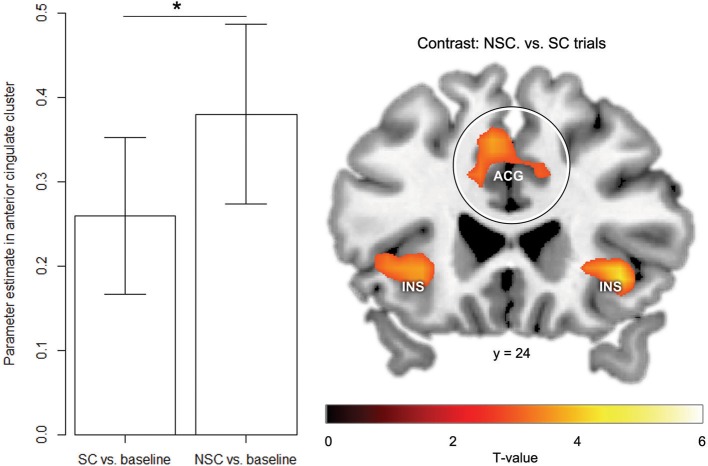
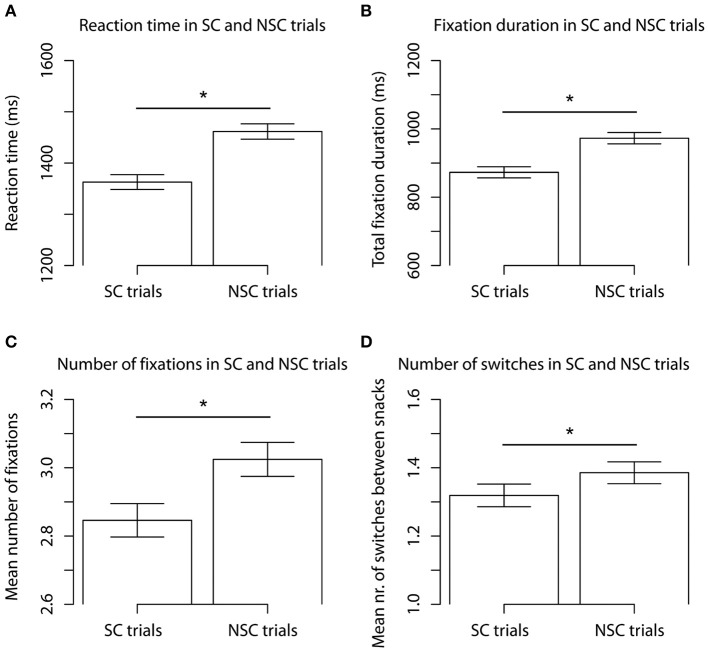
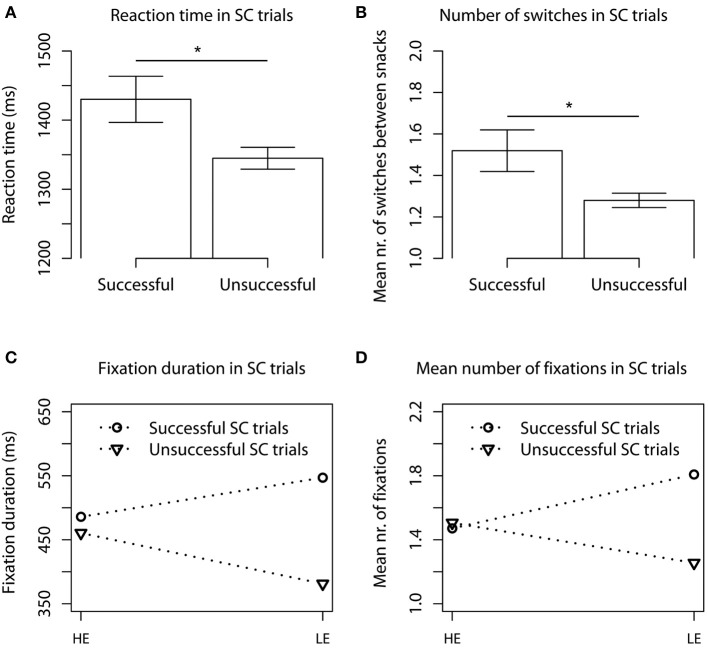
Despite their intentions, weight-concerned individuals generally fail to control their eating behavior. However, it is unknown whether this failure is due to a lack of effortful self-control, or to not experiencing an internal conflict between weight goals and food temptations. The present study used fMRI, eye tracking and reaction times to assess the degree of conflict experienced by weight-concerned women during food choices that posed either a self-control dilemma (i.e., requiring a choice between healthy and palatable foods), or not. Contrary to the common assumption in self-control theory that food choices posing a self-control dilemma evoke internal conflict, we found that choices requiring self-control induced no conflict, as demonstrated by lower reaction times, fixation durations, number of gaze switches between snacks, and lower activation of the anterior cingulate cortex. Our results suggest that self-control failure might be due to a lack of experienced conflict, rather than to failing to act upon the perception of such conflict. This implies that effectiveness of weight maintenance interventions might be improved if they also focus on increasing the ability to detect a self-control dilemma, in addition to the current focus on increasing self-regulatory capacity.

摘要

尽管有这样的意图,但关注体重的人通常无法控制自己的饮食行为。然而,尚不清楚这种失败是由于缺乏努力的自我控制,还是由于没有经历体重目标与食物诱惑之间的内心冲突。本研究使用功能磁共振成像(fMRI)、眼动追踪和反应时间来评估关注体重的女性在面临自我控制困境(即需要在健康食品和美味食品之间做出选择)或未面临这种困境的食物选择过程中所经历的冲突程度。与自我控制理论中的常见假设相反,即认为构成自我控制困境的食物选择会引发内心冲突,我们发现需要自我控制的选择并未引发冲突,这表现为反应时间更短、注视持续时间更短、在零食之间的目光切换次数更少以及前扣带回皮层的激活程度更低。我们的研究结果表明,自我控制失败可能是由于缺乏经历过的冲突,而不是未能对这种冲突的感知采取行动。这意味着,如果体重维持干预措施除了当前关注提高自我调节能力之外,还注重提高察觉自我控制困境的能力,那么其效果可能会得到改善。
https://cdn.ncbi.nlm.nih.gov/pmc/blobs/70ad/4033222/59362076fa5d/fnbeh-08-00184-g0005.jpg
https://cdn.ncbi.nlm.nih.gov/pmc/blobs/70ad/4033222/d7aea8319864/fnbeh-08-00184-g0001.jpg
https://cdn.ncbi.nlm.nih.gov/pmc/blobs/70ad/4033222/873714225b6a/fnbeh-08-00184-g0002.jpg
https://cdn.ncbi.nlm.nih.gov/pmc/blobs/70ad/4033222/13760595b4f5/fnbeh-08-00184-g0003.jpg
https://cdn.ncbi.nlm.nih.gov/pmc/blobs/70ad/4033222/852d96ff8f0a/fnbeh-08-00184-g0004.jpg
https://cdn.ncbi.nlm.nih.gov/pmc/blobs/70ad/4033222/59362076fa5d/fnbeh-08-00184-g0005.jpg
https://cdn.ncbi.nlm.nih.gov/pmc/blobs/70ad/4033222/d7aea8319864/fnbeh-08-00184-g0001.jpg
https://cdn.ncbi.nlm.nih.gov/pmc/blobs/70ad/4033222/873714225b6a/fnbeh-08-00184-g0002.jpg
https://cdn.ncbi.nlm.nih.gov/pmc/blobs/70ad/4033222/13760595b4f5/fnbeh-08-00184-g0003.jpg
https://cdn.ncbi.nlm.nih.gov/pmc/blobs/70ad/4033222/852d96ff8f0a/fnbeh-08-00184-g0004.jpg
https://cdn.ncbi.nlm.nih.gov/pmc/blobs/70ad/4033222/59362076fa5d/fnbeh-08-00184-g0005.jpg

相似文献

1
Sweet lies: neural, visual, and behavioral measures reveal a lack of self-control conflict during food choice in weight-concerned women.甜蜜的谎言:神经、视觉和行为测量揭示了体重相关女性在食物选择过程中缺乏自我控制冲突。
Front Behav Neurosci. 2014 May 22;8:184. doi: 10.3389/fnbeh.2014.00184. eCollection 2014.
2
Lack of conflict during food choice is associated with the failure of restrained eating.在食物选择过程中缺乏冲突与克制饮食的失败有关。
Eat Behav. 2019 Aug;34:101309. doi: 10.1016/j.eatbeh.2019.101309. Epub 2019 Jul 6.
3
Activation in inhibitory brain regions during food choice correlates with temptation strength and self-regulatory success in weight-concerned women.在关注体重的女性进行食物选择时,大脑抑制区域的活动与诱惑强度和自我调节成功相关。
Front Neurosci. 2014 Sep 30;8:308. doi: 10.3389/fnins.2014.00308. eCollection 2014.
4
How chocolate keeps you slim. The effect of food temptations on weight watching goal importance, intentions, and eating behavior.巧克力如何让你保持苗条。食物诱惑对体重观察目标重要性、意图和饮食行为的影响。
Appetite. 2009 Dec;53(3):430-3. doi: 10.1016/j.appet.2009.08.002. Epub 2009 Aug 8.
5
Implementation of a New Food Picture Database in the Context of fMRI and Visual Cognitive Food-Choice Task in Healthy Volunteers.在健康志愿者的功能磁共振成像(fMRI)和视觉认知食物选择任务背景下实施新的食物图片数据库
Front Psychol. 2019 Nov 26;10:2620. doi: 10.3389/fpsyg.2019.02620. eCollection 2019.
6
Spoiling the pleasure of success: Emotional reactions to the experience of self-control conflict in the eating domain.破坏成功的喜悦:饮食领域自我控制冲突体验的情绪反应。
Emotion. 2019 Dec;19(8):1377-1395. doi: 10.1037/emo0000526. Epub 2018 Oct 18.
7
Conflict-related dorsomedial frontal cortex activation during healthy food decisions is associated with increased cravings for high-fat foods.冲突相关的背内侧前额叶皮层在健康食品决策时的激活与对高脂肪食物的渴望增加有关。
Brain Imaging Behav. 2018 Jun;12(3):685-696. doi: 10.1007/s11682-017-9726-7.
8
More restriction, more overeating: conflict monitoring ability is impaired by food-thought suppression among restrained eaters.限制越多,吃得越多:在节食者中,食物思维抑制会损害冲突监测能力。
Brain Imaging Behav. 2021 Aug;15(4):2069-2080. doi: 10.1007/s11682-020-00401-8. Epub 2020 Oct 8.
9
Allured or alarmed: counteractive control responses to food temptations in the brain.被吸引或被警告:大脑对食物诱惑的反向控制反应。
Behav Brain Res. 2013 Jul 1;248:41-5. doi: 10.1016/j.bbr.2013.03.041. Epub 2013 Apr 8.
10
Why most dieters fail but some succeed: a goal conflict model of eating behavior.为什么大多数节食者会失败,但有些人会成功:饮食行为的目标冲突模型。
Psychol Rev. 2013 Jan;120(1):110-38. doi: 10.1037/a0030849. Epub 2012 Dec 10.

引用本文的文献

1
Using lickometry to infer differential contributions of salience network regions during compulsion-like alcohol drinking.利用舔舐测量法推断强迫性饮酒过程中突显网络区域的不同贡献。
Addict Neurosci. 2023 Sep;7. doi: 10.1016/j.addicn.2023.100102. Epub 2023 May 4.
2
More restriction, more overeating: conflict monitoring ability is impaired by food-thought suppression among restrained eaters.限制越多,吃得越多:在节食者中,食物思维抑制会损害冲突监测能力。
Brain Imaging Behav. 2021 Aug;15(4):2069-2080. doi: 10.1007/s11682-020-00401-8. Epub 2020 Oct 8.
3
Implementation of a New Food Picture Database in the Context of fMRI and Visual Cognitive Food-Choice Task in Healthy Volunteers.

本文引用的文献

1
Who diets? Most people and especially when they worry about food.谁节食?大多数人,尤其是当他们担心食物的时候。
Appetite. 2014 Sep;80:103-8. doi: 10.1016/j.appet.2014.05.011. Epub 2014 May 15.
2
Differences in cerebral cortical anatomy of left- and right-handers.左撇子和右撇子大脑皮质解剖结构的差异。
Front Psychol. 2014 Mar 28;5:261. doi: 10.3389/fpsyg.2014.00261. eCollection 2014.
3
An overview of human handedness in twins.双胞胎中人类用手习惯概述。
在健康志愿者的功能磁共振成像(fMRI)和视觉认知食物选择任务背景下实施新的食物图片数据库
Front Psychol. 2019 Nov 26;10:2620. doi: 10.3389/fpsyg.2019.02620. eCollection 2019.
4
Relationships Among Dietary Cognitive Restraint, Food Preferences, and Reaction Times.饮食认知抑制、食物偏好与反应时间之间的关系。
Front Psychol. 2019 Oct 9;10:2256. doi: 10.3389/fpsyg.2019.02256. eCollection 2019.
5
Path Tortuosity in Virtual Reality: A Novel Approach for Quantifying Behavioral Process in a Food Choice Context.虚拟现实中的路径曲折:一种用于量化食物选择情境中行为过程的新方法。
Cyberpsychol Behav Soc Netw. 2019 Jul;22(7):486-493. doi: 10.1089/cyber.2018.0644. Epub 2019 Jun 26.
6
The dynamics of self-control: within-participant modeling of binary food choices and underlying decision processes as a function of restrained eating.自我控制的动态变化:作为约束性进食的函数,对二元食物选择和潜在决策过程进行的参与者内模型分析。
Psychol Res. 2020 Oct;84(7):1777-1788. doi: 10.1007/s00426-019-01185-3. Epub 2019 Apr 19.
7
Good practice in food-related neuroimaging.食品相关神经影像学的良好实践。
Am J Clin Nutr. 2019 Mar 1;109(3):491-503. doi: 10.1093/ajcn/nqy344.
8
Neurocognitive effects of umami: association with eating behavior and food choice.鲜味的神经认知效应:与饮食行为和食物选择的关联。
Neuropsychopharmacology. 2018 Sep;43(10):2009-2016. doi: 10.1038/s41386-018-0044-6. Epub 2018 Mar 30.
9
Gender Differences in Food Choice: Effects of Superior Temporal Sulcus Stimulation.食物选择中的性别差异:颞上沟刺激的影响。
Front Hum Neurosci. 2017 Dec 7;11:597. doi: 10.3389/fnhum.2017.00597. eCollection 2017.
10
General and Food-Specific Inhibitory Control As Moderators of the Effects of the Impulsive Systems on Food Choices.作为冲动系统对食物选择影响调节因素的一般及特定食物抑制控制
Front Psychol. 2017 May 24;8:802. doi: 10.3389/fpsyg.2017.00802. eCollection 2017.
Front Psychol. 2014 Jan 24;5:10. doi: 10.3389/fpsyg.2014.00010. eCollection 2014.
4
Self-regulatory depletion enhances neural responses to rewards and impairs top-down control.自我调节资源损耗会增强神经对奖励的反应,并损害自上而下的控制。
Psychol Sci. 2013 Nov 1;24(11):2262-71. doi: 10.1177/0956797613492985. Epub 2013 Sep 11.
5
Allured or alarmed: counteractive control responses to food temptations in the brain.被吸引或被警告:大脑对食物诱惑的反向控制反应。
Behav Brain Res. 2013 Jul 1;248:41-5. doi: 10.1016/j.bbr.2013.03.041. Epub 2013 Apr 8.
6
Piece of cake. Cognitive reappraisal of food craving.小菜一碟。对食物渴望的认知重评。
Appetite. 2013 May;64:56-61. doi: 10.1016/j.appet.2012.12.020. Epub 2013 Jan 9.
7
Turning a blind eye to temptation: how cognitive load can facilitate self-regulation.视而不见的诱惑:认知负荷如何促进自我调节。
J Pers Soc Psychol. 2013 Mar;104(3):427-43. doi: 10.1037/a0031262. Epub 2012 Dec 31.
8
Double trouble: restrained eaters do not eat less and feel worse.双重困境:节制饮食者吃得不少,感觉却更糟。
Psychol Health. 2013;28(6):686-700. doi: 10.1080/08870446.2012.751106. Epub 2012 Dec 17.
9
Prevalence and correlates of dieting in college women: a cross sectional study.大学生女性节食的流行率及其相关因素:一项横断面研究。
Int J Womens Health. 2012;4:405-11. doi: 10.2147/IJWH.S33920. Epub 2012 Aug 13.
10
Do implicit measures of attitudes incrementally predict snacking behaviour over explicit affect-related measures?内隐态度测量是否比外显与情绪相关的测量更能渐进地预测零食行为?
Appetite. 2012 Jun;58(3):835-41. doi: 10.1016/j.appet.2012.01.019. Epub 2012 Feb 2.