Chen Mingmin, Cao Hongxia, Peng Huasong, Hu Hongbo, Wang Wei, Zhang Xuehong
State Key Laboratory of Microbial Metabolism, School of Life Sciences and Biotechnology, Shanghai Jiao Tong University, Shanghai, People's Republic of China.
PLoS One. 2014 Jun 6;9(6):e98537. doi: 10.1371/journal.pone.0098537. eCollection 2014.
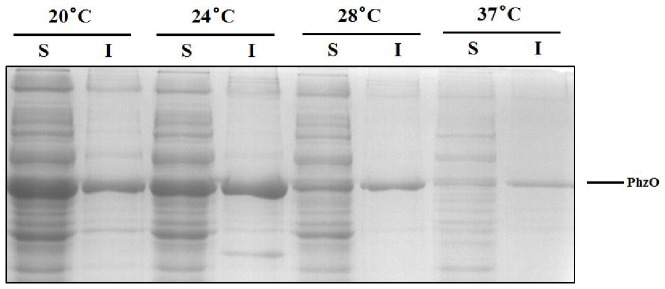
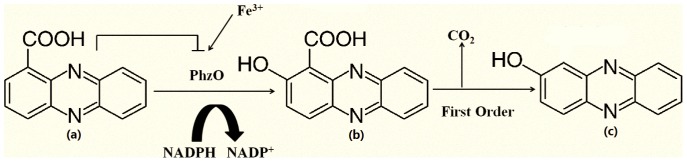
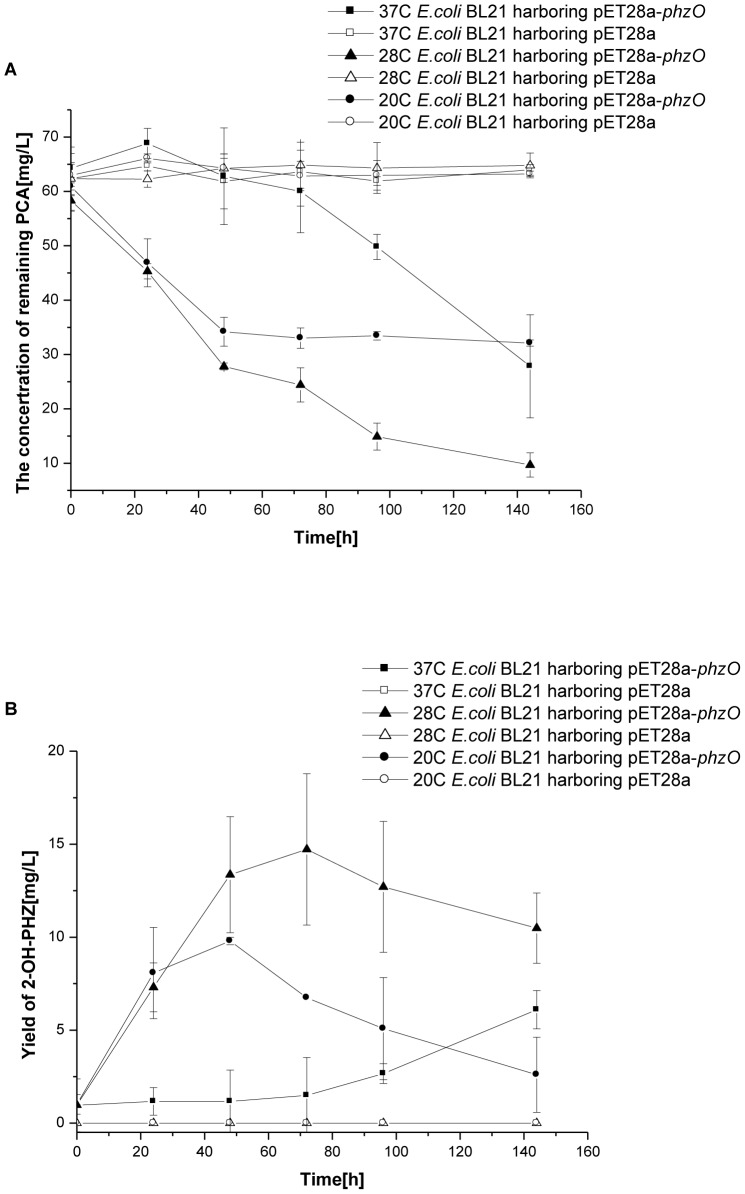
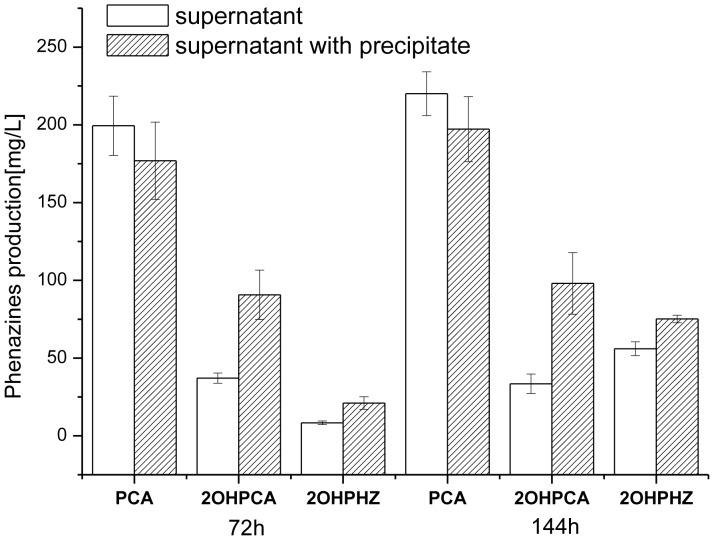
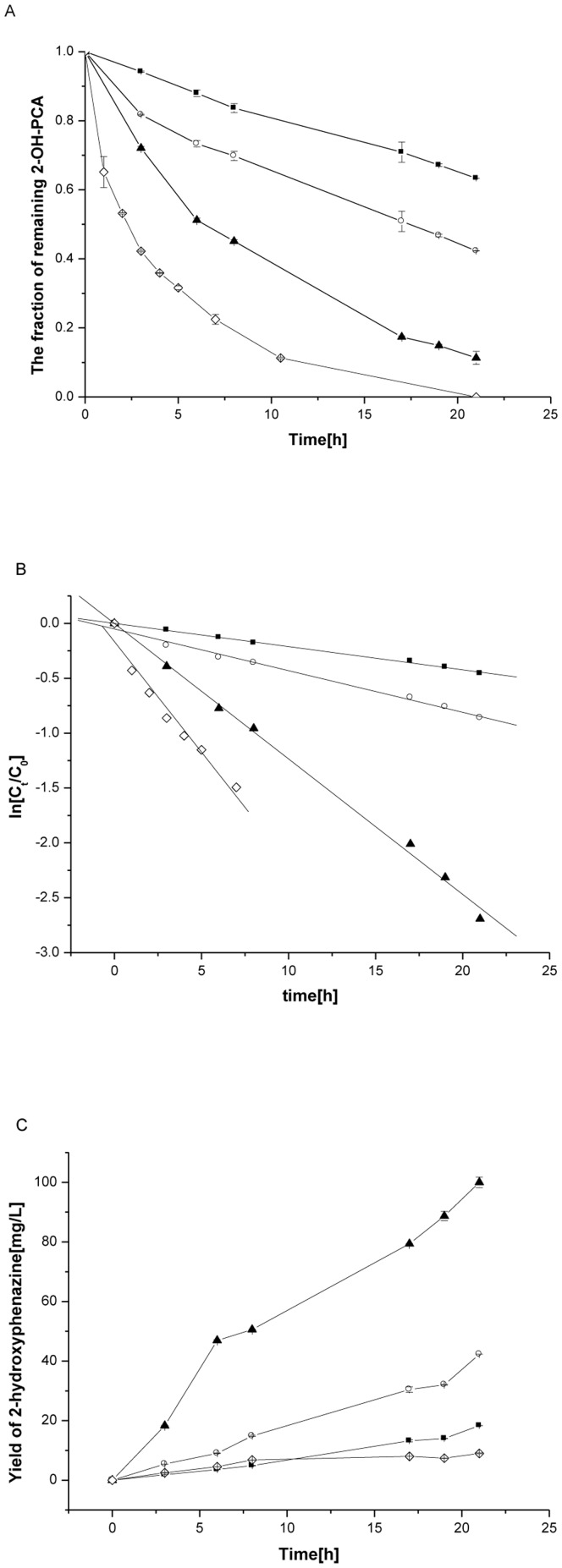
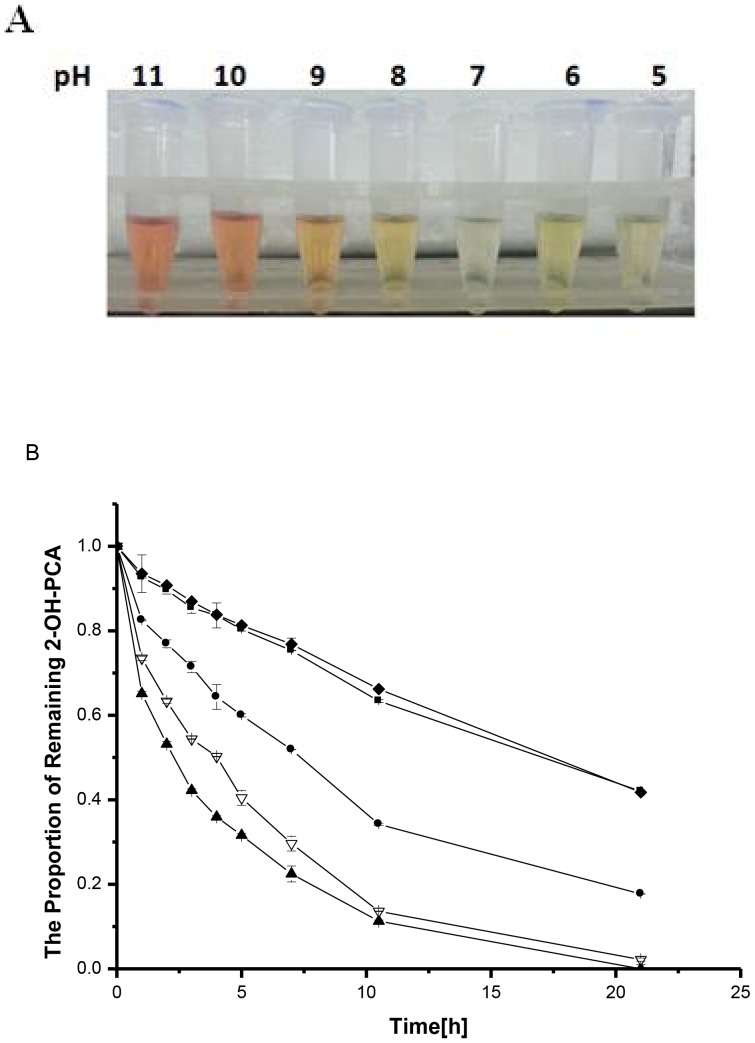
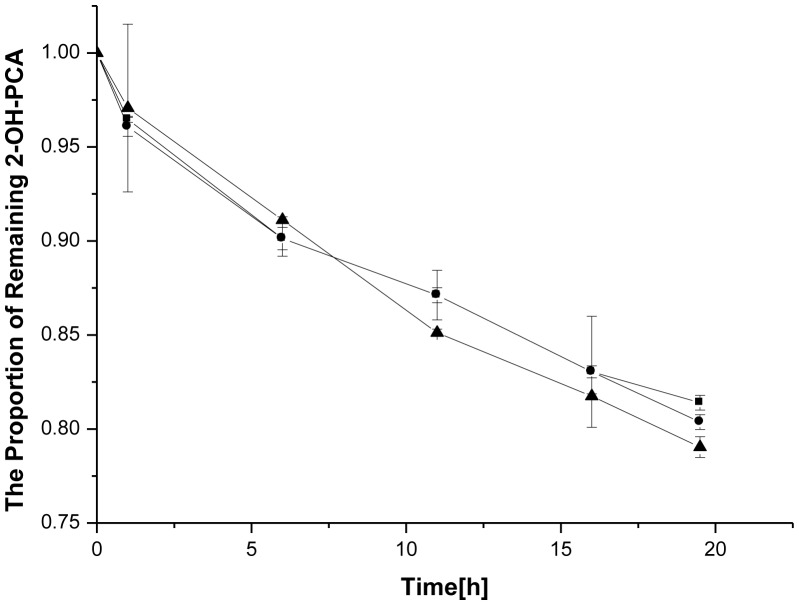
The phenazine derivative 2-hydroxyphenazine (2-OH-PHZ) plays an important role in the biocontrol of plant diseases, and exhibits stronger bacteriostatic and fungistatic activity than phenazine-1-carboxylic acid (PCA) toward some pathogens. PhzO has been shown to be responsible for the conversion of PCA to 2-OH-PHZ, however the kinetics of the reaction have not been systematically studied. Further, the yield of 2-OH-PHZ in fermentation culture is quite low and enhancement in our understanding of the reaction kinetics may contribute to improvements in large-scale, high-yield production of 2-OH-PHZ for biological control and other applications. In this study we confirmed previous reports that free PCA is converted to 2-hydroxy-phenazine-1-carboxylic acid (2-OH-PCA) by the action of a single enzyme PhzO, and particularly demonstrate that this reaction is dependent on NADP(H) and Fe3+. Fe3+ enhanced the conversion from PCA to 2-OH-PHZ and 28°C was a optimum temperature for the conversion. However, PCA added in excess to the culture inhibited the production of 2-OH-PHZ. 2-OH-PCA was extracted and purified from the broth, and it was confirmed that the decarboxylation of 2-OH-PCA could occur without the involvement of any enzyme. A kinetic analysis of the conversion of 2-OH-PCA to 2-OH-PHZ in the absence of enzyme and under different temperatures and pHs in vitro, revealed that the conversion followed first-order reaction kinetics. In the fermentation, the concentration of 2-OH-PCA increased to about 90 mg/L within a red precipitate fraction, as compared to 37 mg/L within the supernatant. The results of this study elucidate the reaction kinetics involved in the biosynthesis of 2-OH-PHZ and provide insights into in vitro methods to enhance yields of 2-OH-PHZ.
吩嗪衍生物2-羟基吩嗪(2-OH-PHZ)在植物病害生物防治中发挥着重要作用,并且对某些病原体表现出比吩嗪-1-羧酸(PCA)更强的抑菌和抑真菌活性。PhzO已被证明负责将PCA转化为2-OH-PHZ,然而该反应的动力学尚未得到系统研究。此外,发酵培养中2-OH-PHZ的产量相当低,深入了解反应动力学可能有助于改进2-OH-PHZ的大规模、高产生产,以用于生物防治和其他应用。在本研究中,我们证实了先前的报道,即游离PCA通过单一酶PhzO的作用转化为2-羟基吩嗪-1-羧酸(2-OH-PCA),并且特别证明该反应依赖于NADP(H)和Fe3+。Fe3+增强了从PCA到2-OH-PHZ的转化,28°C是该转化的最佳温度。然而,向培养物中过量添加PCA会抑制2-OH-PHZ的产生。从肉汤中提取并纯化了2-OH-PCA,并且证实2-OH-PCA的脱羧反应可以在没有任何酶参与的情况下发生。对在无酶条件下以及在不同温度和pH值的体外条件下2-OH-PCA转化为2-OH-PHZ的动力学分析表明,该转化遵循一级反应动力学。在发酵过程中,红色沉淀部分内2-OH-PCA的浓度增加到约90 mg/L,而上清液中的浓度为37 mg/L。本研究结果阐明了2-OH-PHZ生物合成中涉及的反应动力学,并为提高2-OH-PHZ产量的体外方法提供了见解。