MRC/CSO Institute of Hearing Research-Scottish Section, Glasgow Royal Infirmary, Glasgow, UK School of Psychological Sciences & Health, University of Strathclyde, Glasgow, UK
MRC/CSO Institute of Hearing Research-Scottish Section, Glasgow Royal Infirmary, Glasgow, UK.
Trends Hear. 2014 Jun 6;18:2331216514537722. doi: 10.1177/2331216514537722.
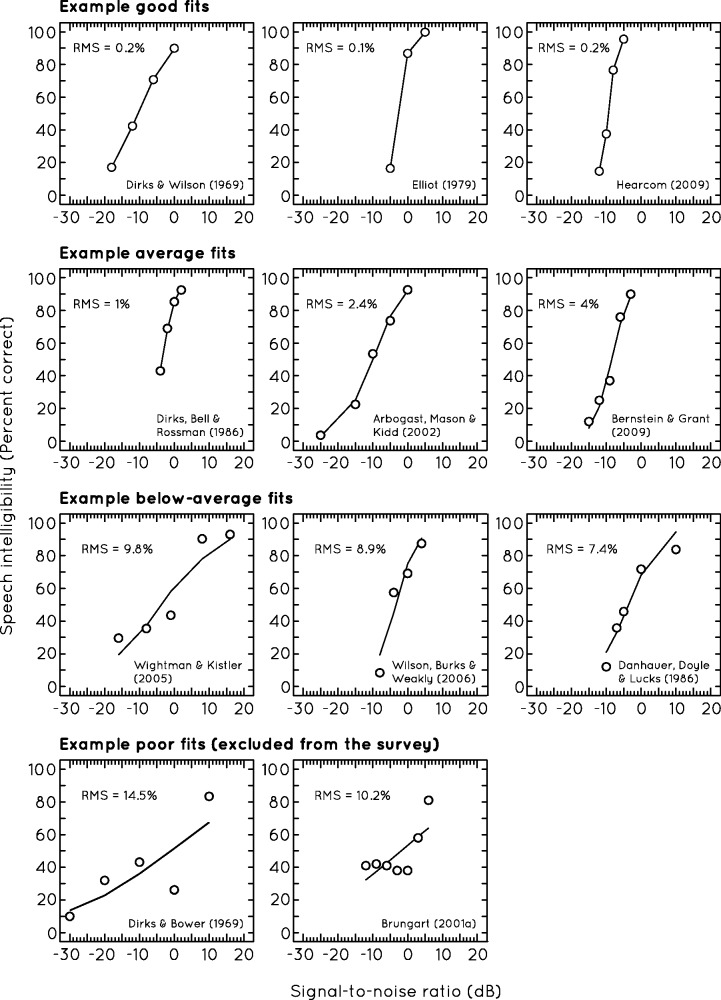
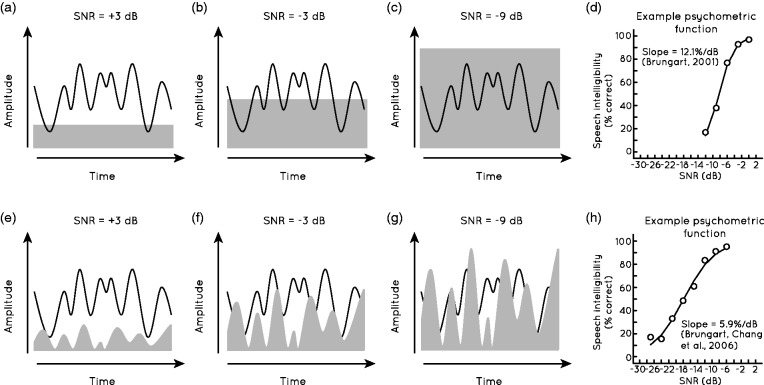
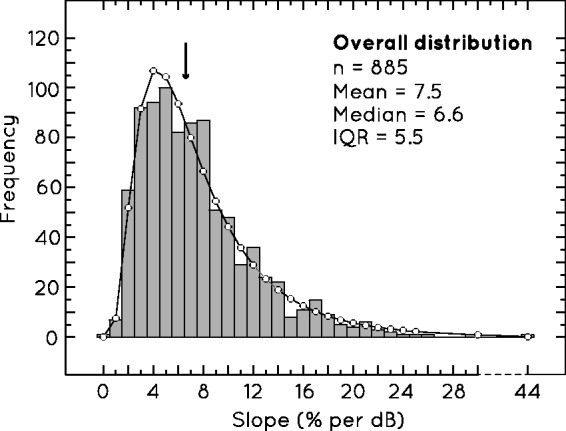
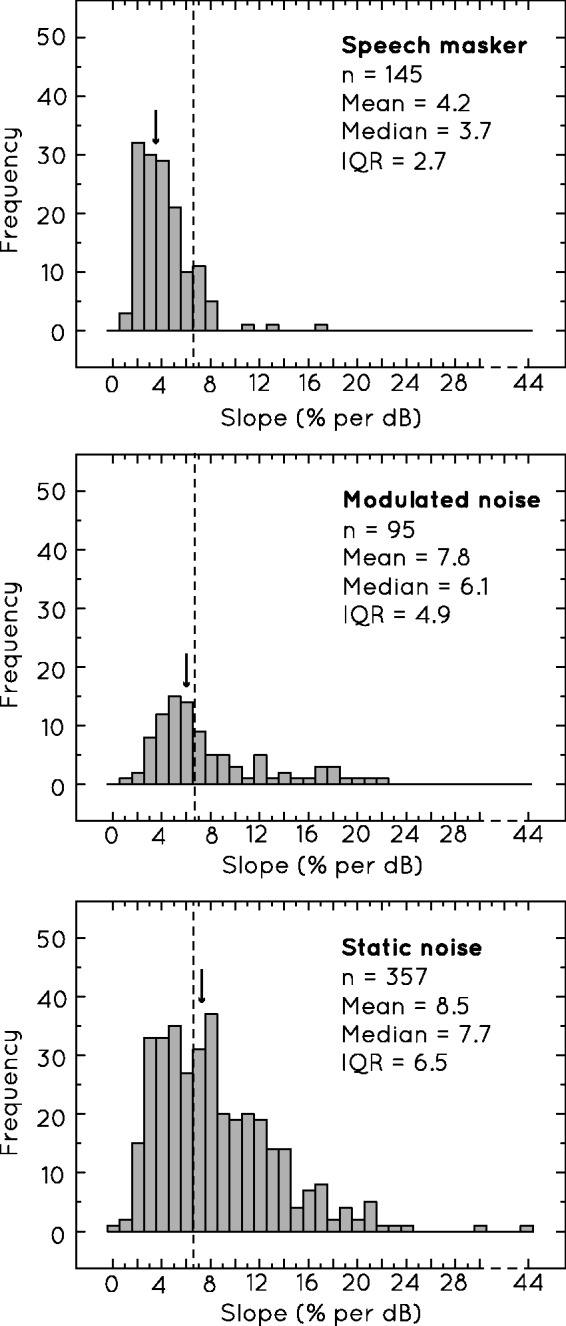
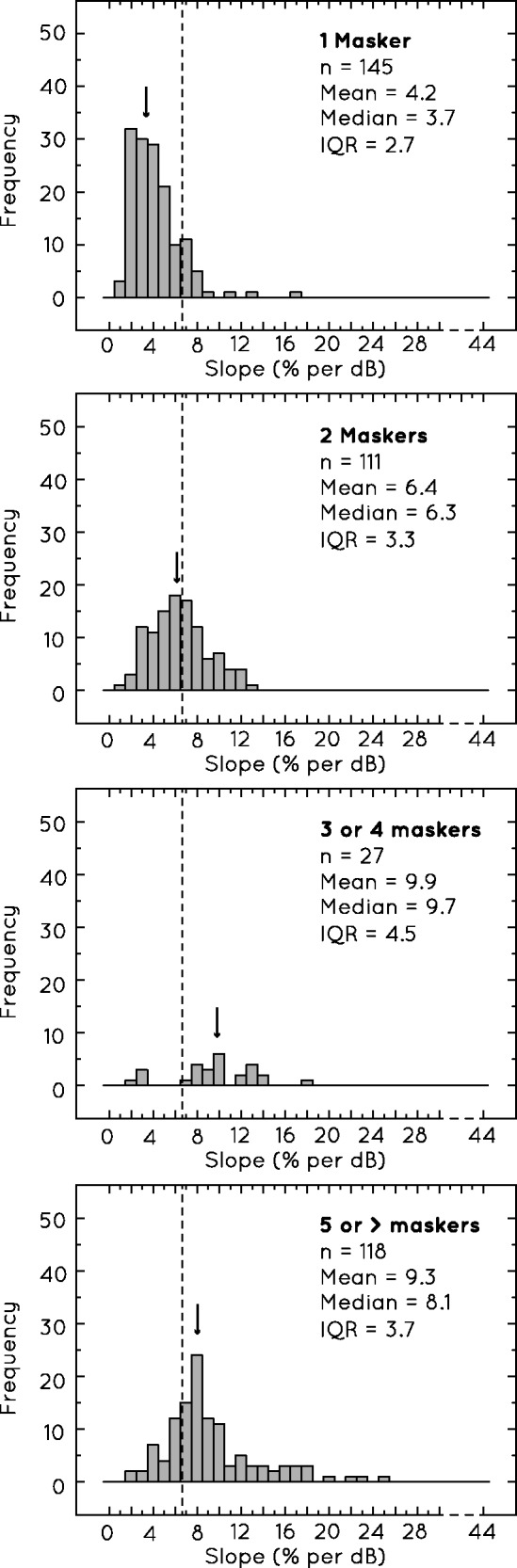
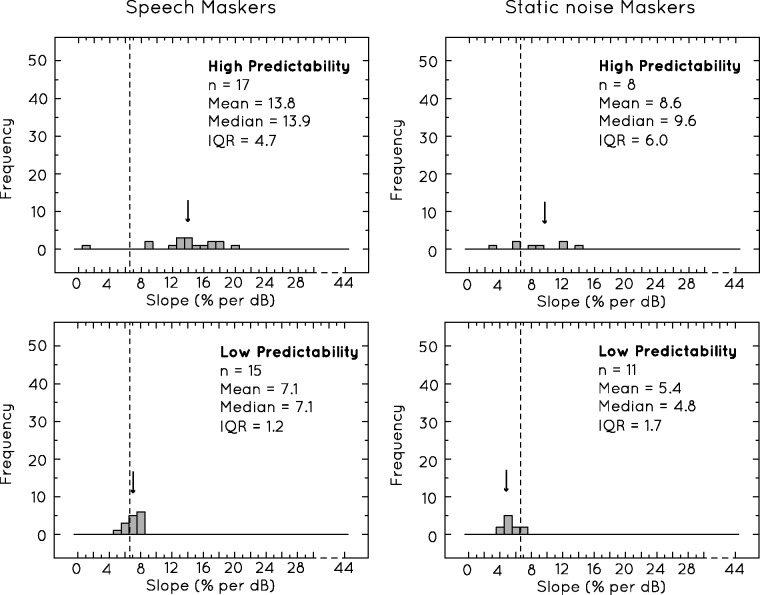
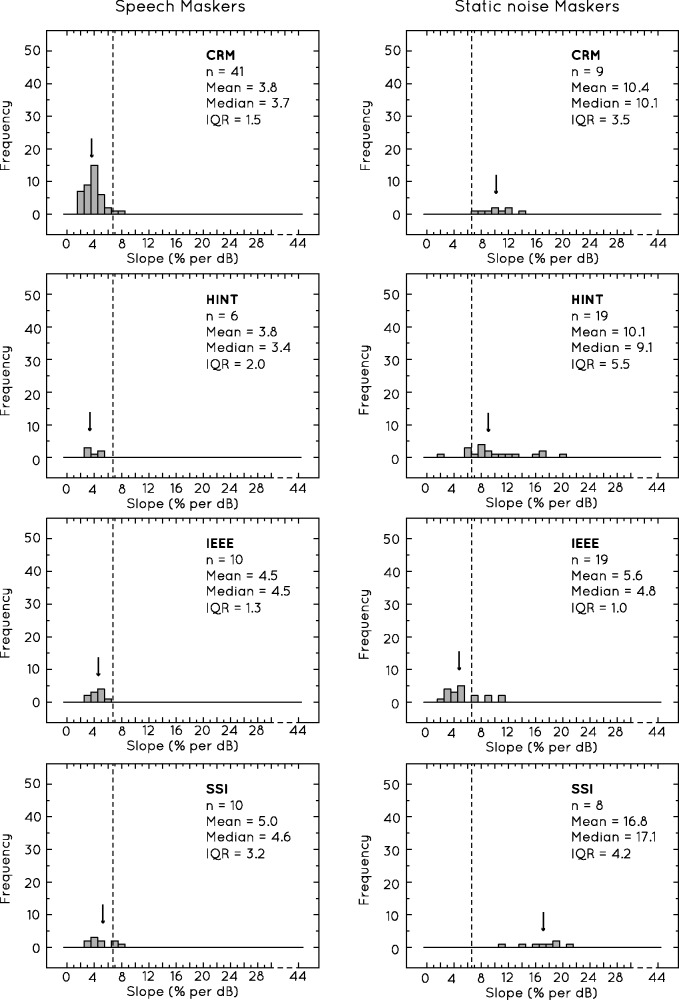
Although many studies have looked at the effects of different listening conditions on the intelligibility of speech, their analyses have often concentrated on changes to a single value on the psychometric function, namely, the threshold. Far less commonly has the slope of the psychometric function, that is, the rate at which intelligibility changes with level, been considered. The slope of the function is crucial because it is the slope, rather than the threshold, that determines the improvement in intelligibility caused by any given improvement in signal-to-noise ratio by, for instance, a hearing aid. The aim of the current study was to systematically survey and reanalyze the psychometric function data available in the literature in an attempt to quantify the range of slope changes across studies and to identify listening conditions that affect the slope of the psychometric function. The data for 885 individual psychometric functions, taken from 139 different studies, were fitted with a common logistic equation from which the slope was calculated. Large variations in slope across studies were found, with slope values ranging from as shallow as 1% per dB to as steep as 44% per dB (median = 6.6% per dB), suggesting that the perceptual benefit offered by an improvement in signal-to-noise ratio depends greatly on listening environment. The type and number of maskers used were found to be major factors on the value of the slope of the psychometric function while other minor effects of target predictability, target corpus, and target/masker similarity were also found.
尽管许多研究都着眼于不同聆听条件对言语可懂度的影响,但它们的分析通常集中在心理测量函数上单个值的变化,即阈值。很少有研究关注心理测量函数的斜率,即可懂度随水平变化的速率。函数的斜率至关重要,因为它是决定任何给定信噪比改善(例如,助听器)所带来的可懂度提高的斜率,而不是阈值。本研究的目的是系统地调查和重新分析文献中可用的心理测量函数数据,试图量化研究之间斜率变化的范围,并确定影响心理测量函数斜率的聆听条件。从 139 项不同研究中获取了 885 个个体心理测量函数的数据,并使用通用逻辑方程对其进行拟合,从中计算出斜率。研究发现,斜率在研究之间存在很大差异,斜率值从每分贝 1%到每分贝 44%不等(中位数为每分贝 6.6%),这表明信噪比改善带来的感知收益在很大程度上取决于聆听环境。使用的掩蔽类型和数量被发现是心理测量函数斜率值的主要因素,而目标可预测性、目标语料库和目标/掩蔽相似度等其他较小的影响也被发现。