Sujada Nikhom, Sungthong Rungroch, Lumyong Saisamorn
Department of Biology, Faculty of Science, Chiang Mai University.
Microbes Environ. 2014;29(2):211-9. doi: 10.1264/jsme2.me13183. Epub 2014 Jun 6.
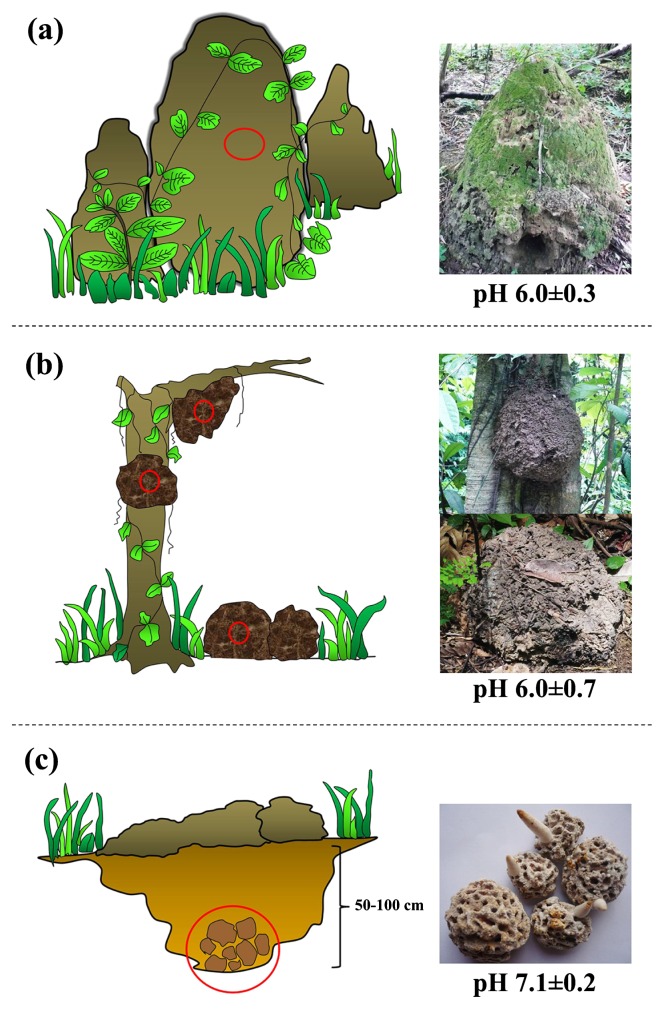
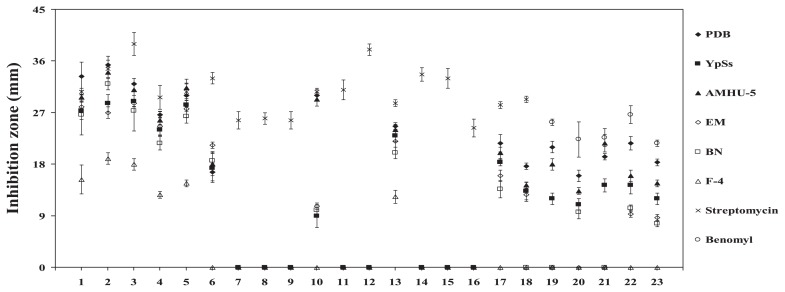
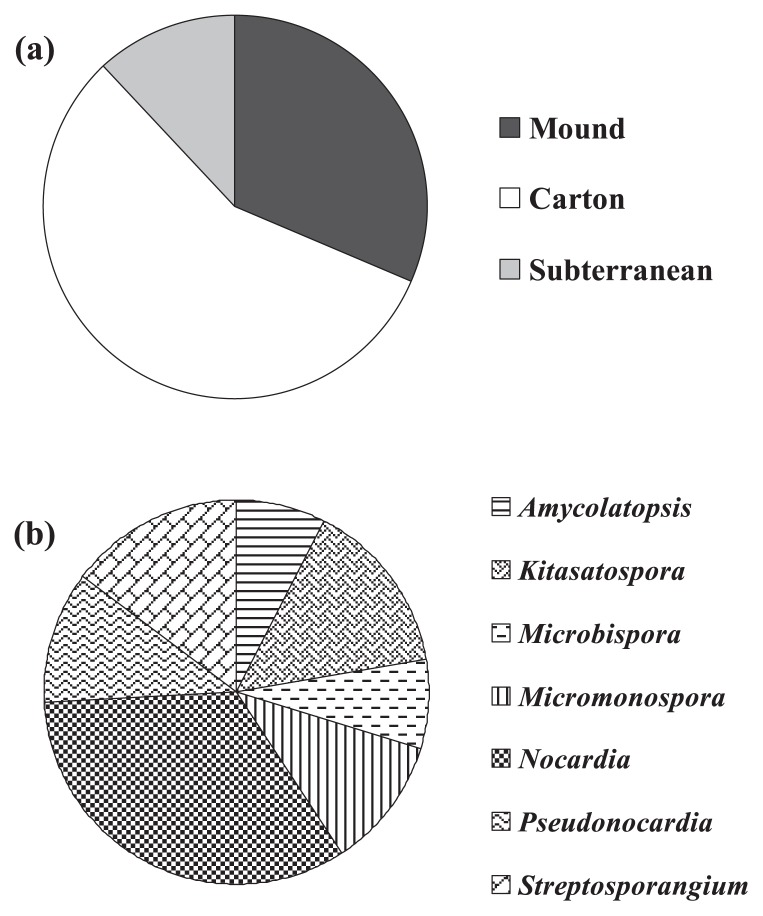
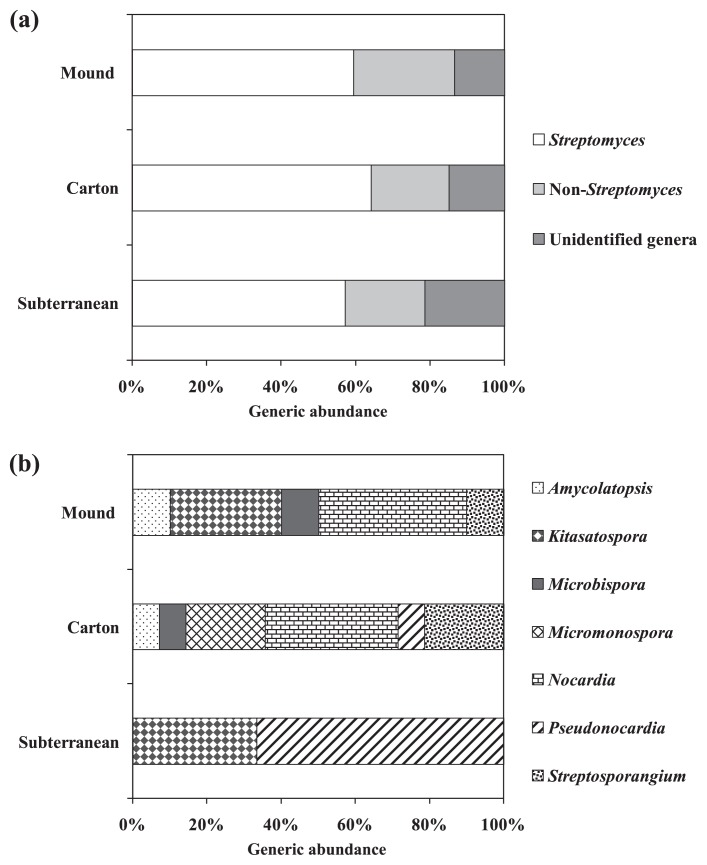
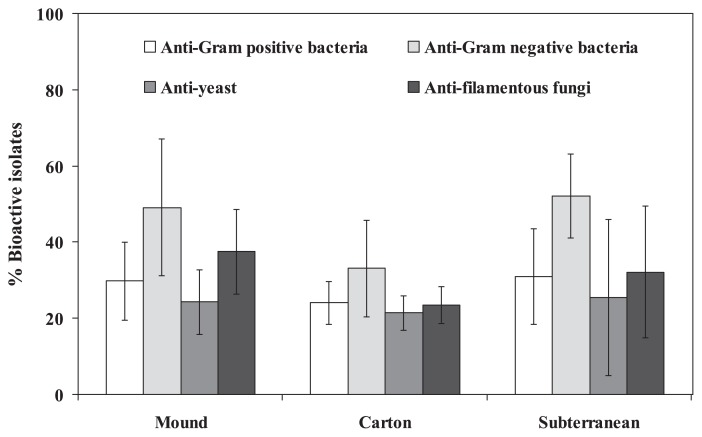
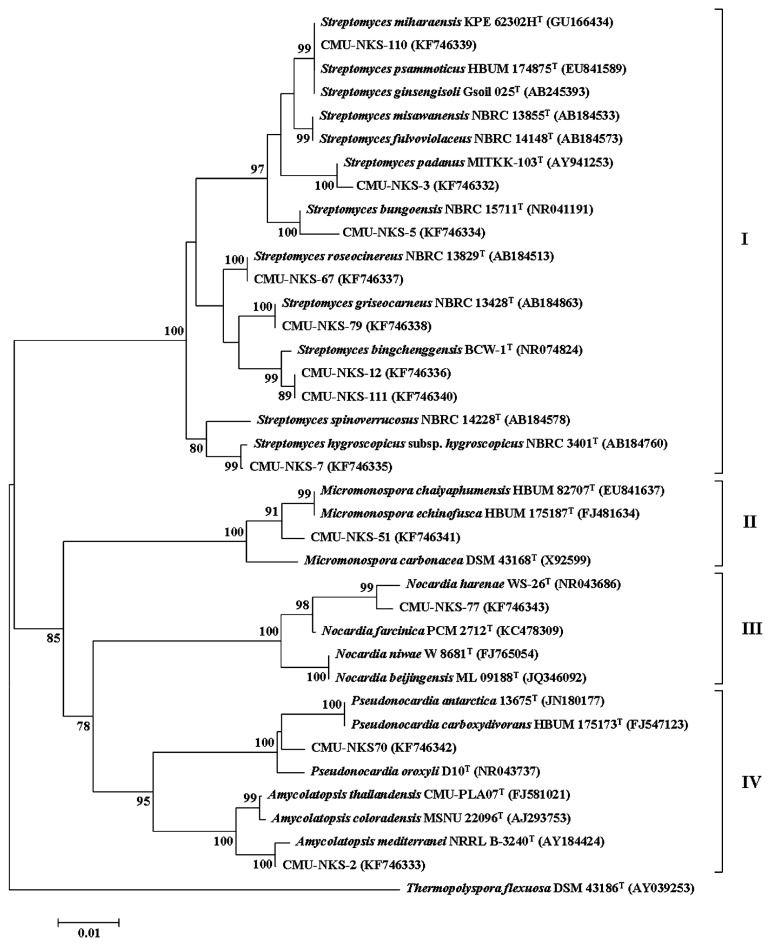
A total of 118 actinobacterial isolates were collected from the three types of termite nests (mound, carton, and subterranean nests) to evaluate their potential as a source of bioactive actinobacteria with antimicrobial activity. The highest number (67 isolates) and generic abundance (7 known genera) of actinobacterial isolates were obtained from carton nests. Streptomyces was the dominant genus in each type of termite nest. In the non-Streptomyces group, Nocardia was the dominant genus detected in mound and carton nests, while Pseudonocardia was the dominant genus in subterranean nests. A discovery trend of novel species (<99% similarity in the 16S rRNA gene sequence) was also observed in the termite nests examined. Each type of termite nest housed >20% of bioactive actinobacteria that could inhibit the growth of at least one test organism, while 12 isolates, belonging to the genera Streptomyces, Amycolatopsis, Pseudonocardia, Micromonospora and Nocardia, exhibited distinct antimicrobial activities. Streptomyces sp. CMU-NKS-3 was the most distinct bioactive isolate. It was closely related to S. padanus MITKK-103T, which was confirmed by 99% similarities in their 16S rRNA gene sequences. The highest level of extracellular antimicrobial substances was produced by the isolate CMU-NKS-3, which was grown in potato dextrose broth and exhibited a wide range (6.10×10(-4)-1.25 mg mL(-1)) of minimum inhibitory concentrations against diverse pathogens. We concluded that termite nests are an abundant source of bioactive strains of cultivable actinobacteria for future biotechnological needs.
从三种类型的白蚁巢(土丘巢、纸质巢和地下巢)中总共收集了118株放线菌分离株,以评估它们作为具有抗菌活性的生物活性放线菌来源的潜力。从纸质巢中获得的放线菌分离株数量最多(67株),属的丰富度也最高(7个已知属)。链霉菌是每种类型白蚁巢中的优势属。在非链霉菌组中,诺卡氏菌是在土丘巢和纸质巢中检测到的优势属,而假诺卡氏菌是地下巢中的优势属。在所检查的白蚁巢中还观察到新物种(16S rRNA基因序列相似度<99%)的发现趋势。每种类型的白蚁巢中都有>20%的生物活性放线菌能够抑制至少一种测试生物体的生长,而属于链霉菌属、拟无枝酸菌属、假诺卡氏菌属、小单孢菌属和诺卡氏菌属的12株分离株表现出明显的抗菌活性。链霉菌CMU-NKS-3是最具独特生物活性的分离株。它与帕达诺链霉菌MITKK-103T密切相关,这通过它们16S rRNA基因序列99%的相似度得到证实。分离株CMU-NKS-3产生的细胞外抗菌物质水平最高,该菌株在马铃薯葡萄糖肉汤中生长,对多种病原体表现出广泛的(6.10×10(-4)-1.25 mg mL(-1))最低抑菌浓度。我们得出结论,白蚁巢是未来生物技术需求中可培养放线菌生物活性菌株的丰富来源。