Zallot Rémi, Brochier-Armanet Céline, Gaston Kirk W, Forouhar Farhad, Limbach Patrick A, Hunt John F, de Crécy-Lagard Valérie
Department of Microbiology and Cell Science, University of Florida , Gainesville, Florida 32611, United States.
ACS Chem Biol. 2014 Aug 15;9(8):1812-25. doi: 10.1021/cb500278k. Epub 2014 Jun 17.
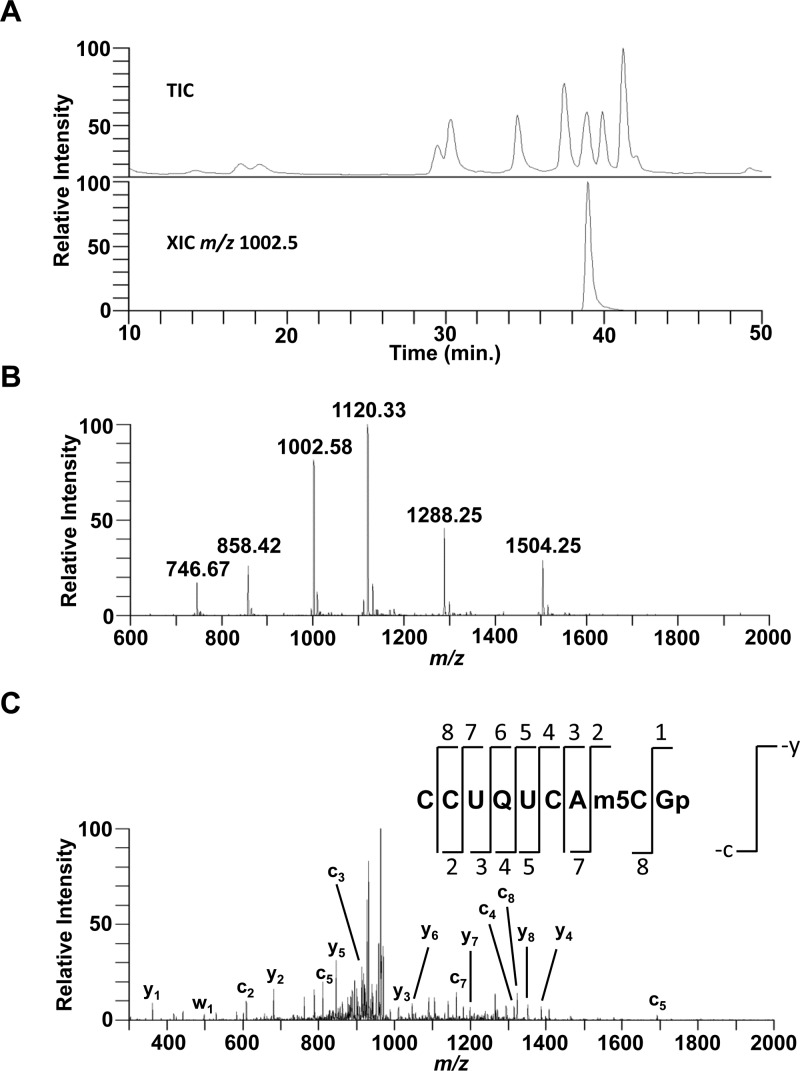
Queuosine (Q) is a modification found at the wobble position of tRNAs with GUN anticodons. Although Q is present in most eukaryotes and bacteria, only bacteria can synthesize Q de novo. Eukaryotes acquire queuine (q), the free base of Q, from diet and/or microflora, making q an important but under-recognized micronutrient for plants, animals, and fungi. Eukaryotic type tRNA-guanine transglycosylases (eTGTs) are composed of a catalytic subunit (QTRT1) and a homologous accessory subunit (QTRTD1) forming a complex that catalyzes q insertion into target tRNAs. Phylogenetic analysis of eTGT subunits revealed a patchy distribution pattern in which gene losses occurred independently in different clades. Searches for genes co-distributing with eTGT family members identified DUF2419 as a potential Q salvage protein family. This prediction was experimentally validated in Schizosaccharomyces pombe by confirming that Q was present by analyzing tRNA(Asp) with anticodon GUC purified from wild-type cells and by showing that Q was absent from strains carrying deletions in the QTRT1 or DUF2419 encoding genes. DUF2419 proteins occur in most Eukarya with a few possible cases of horizontal gene transfer to bacteria. The universality of the DUF2419 function was confirmed by complementing the S. pombe mutant with the Zea mays (maize), human, and Sphaerobacter thermophilus homologues. The enzymatic function of this family is yet to be determined, but structural similarity with DNA glycosidases suggests a ribonucleoside hydrolase activity.
Queuosine (Q)是一种在带有GUN反密码子的tRNA摆动位置发现的修饰。虽然Q存在于大多数真核生物和细菌中,但只有细菌能够从头合成Q。真核生物从饮食和/或微生物群中获取Q的游离碱queuine (q),这使得q成为植物、动物和真菌中一种重要但未得到充分认识的微量营养素。真核型tRNA-鸟嘌呤转糖基酶(eTGTs)由一个催化亚基(QTRT1)和一个同源辅助亚基(QTRTD1)组成,形成一个复合物,催化q插入到目标tRNA中。对eTGT亚基的系统发育分析揭示了一种斑驳的分布模式,其中基因丢失在不同的进化枝中独立发生。对与eTGT家族成员共分布的基因的搜索确定DUF2419为一个潜在的Q挽救蛋白家族。这一预测在粟酒裂殖酵母中通过实验得到了验证,即通过分析从野生型细胞中纯化的带有反密码子GUC的tRNA(Asp)来确认Q的存在,并通过显示在QTRT1或DUF2419编码基因中携带缺失的菌株中不存在Q来验证。DUF2419蛋白存在于大多数真核生物中,少数可能存在水平基因转移到细菌的情况。通过用玉米、人类和嗜热球形杆菌的同源物补充粟酒裂殖酵母突变体,证实了DUF2419功能的普遍性。该家族的酶功能尚未确定,但与DNA糖苷酶的结构相似性表明其具有核糖核苷水解酶活性。