Goodson J Max, Kantarci Alpdogan, Hartman Mor-Li, Denis Gerald V, Stephens Danielle, Hasturk Hatice, Yaskell Tina, Vargas Jorel, Wang Xiaoshan, Cugini Maryann, Barake Roula, Alsmadi Osama, Al-Mutawa Sabiha, Ariga Jitendra, Soparkar Pramod, Behbehani Jawad, Behbehani Kazem, Welty Francine
Department of Applied Oral Sciences, the Forsyth Research Institute, Cambridge, Massachusetts, United States of America.
Cancer Research Center, Boston University School of Medicine, Boston, Massachusetts, United States of America.
PLoS One. 2014 Jun 10;9(6):e98799. doi: 10.1371/journal.pone.0098799. eCollection 2014.
The study of obesity-related metabolic syndrome or Type 2 diabetes (T2D) in children is particularly difficult because of fear of needles. We tested a non-invasive approach to study inflammatory parameters in an at-risk population of children to provide proof-of-principle for future investigations of vulnerable subjects.
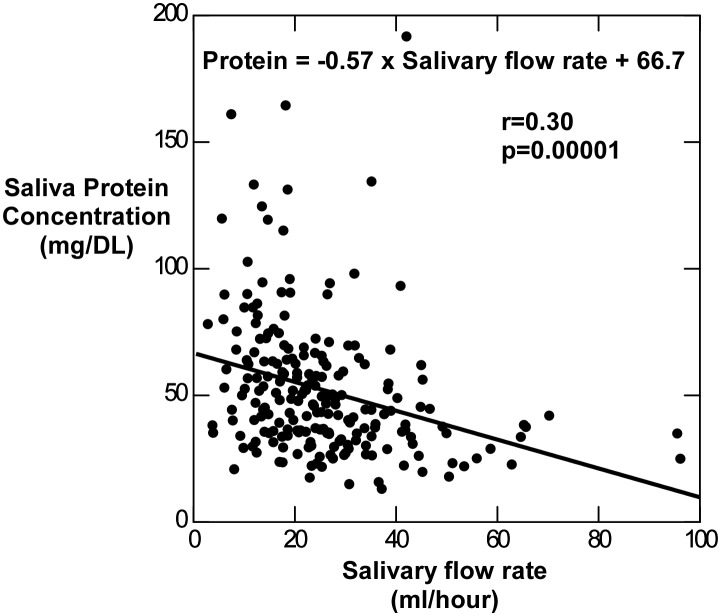
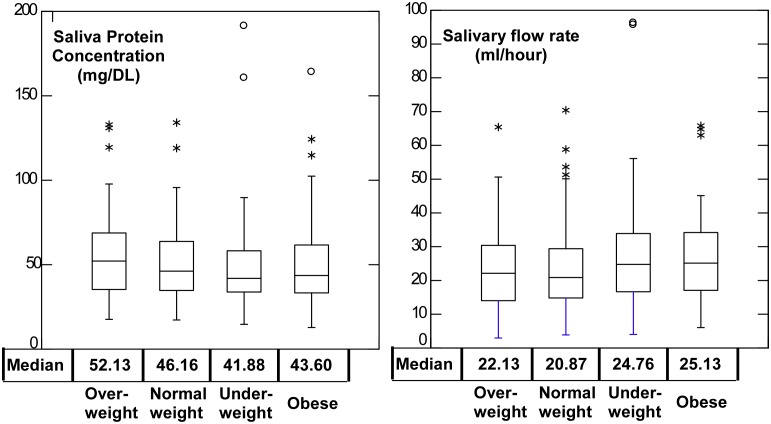
We evaluated metabolic differences in 744, 11-year old children selected from underweight, normal healthy weight, overweight and obese categories by analyzing fasting saliva samples for 20 biomarkers. Saliva supernatants were obtained following centrifugation and used for analyses.
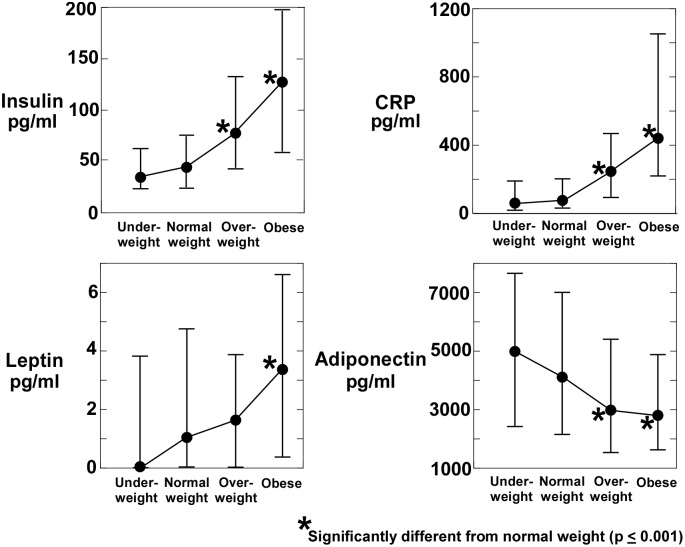
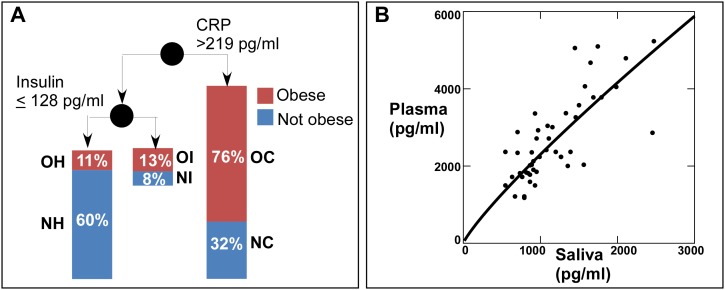
Salivary C-reactive protein (CRP) was 6 times higher, salivary insulin and leptin were 3 times higher, and adiponectin was 30% lower in obese children compared to healthy normal weight children (all P<0.0001). Categorical analysis suggested that there might be three types of obesity in children. Distinctly inflammatory characteristics appeared in 76% of obese children while in 13%, salivary insulin was high but not associated with inflammatory mediators. The remaining 11% of obese children had high insulin and reduced adiponectin. Forty percent of the non-obese children were found in groups which, based on biomarker characteristics, may be at risk for becoming obese.
Significantly altered levels of salivary biomarkers in obese children from a high-risk population, suggest the potential for developing non-invasive screening procedures to identify T2D-vulnerable individuals and a means to test preventative strategies.
由于担心打针,对儿童肥胖相关代谢综合征或2型糖尿病(T2D)的研究特别困难。我们测试了一种非侵入性方法来研究高危儿童群体的炎症参数,为未来对易感人群的研究提供原理证明。
我们通过分析744名11岁儿童的空腹唾液样本中的20种生物标志物,评估了从体重过轻、正常健康体重、超重和肥胖类别中选取的儿童的代谢差异。唾液上清液经离心后获得并用于分析。
与健康正常体重儿童相比,肥胖儿童的唾液C反应蛋白(CRP)高6倍,唾液胰岛素和瘦素高3倍,脂联素低30%(所有P<0.0001)。分类分析表明儿童肥胖可能有三种类型。76%的肥胖儿童表现出明显的炎症特征,而13%的儿童唾液胰岛素水平高但与炎症介质无关。其余11%的肥胖儿童胰岛素水平高且脂联素降低。在非肥胖儿童中,40%的儿童根据生物标志物特征分组,可能有肥胖风险。
来自高危人群的肥胖儿童唾液生物标志物水平显著改变,提示有可能开发非侵入性筛查程序来识别T2D易感个体,并作为测试预防策略的一种手段。