Mor Michal, Mulla Wesam, Elyagon Sigal, Gabay Hovav, Dror Shani, Etzion Yoram, Liel-Cohen Noah
Cardiac Arrhythmia Research Laboratory, Department of Physiology and Cell Biology, Faculty of Health Sciences, Ben-Gurion University of the Negev, Beer-Sheva, Israel.
Cardiac Arrhythmia Research Laboratory, Department of Physiology and Cell Biology, Faculty of Health Sciences, Ben-Gurion University of the Negev, Beer-Sheva, Israel; Department of Emergency Medicine, Recanati School for Community Health Professions, Faculty of Health Sciences and PREPARED Center for Emergency Response Research, Ben-Gurion University of the Negev, Beer-Sheva, Israel.
PLoS One. 2014 Jun 10;9(6):e99191. doi: 10.1371/journal.pone.0099191. eCollection 2014.
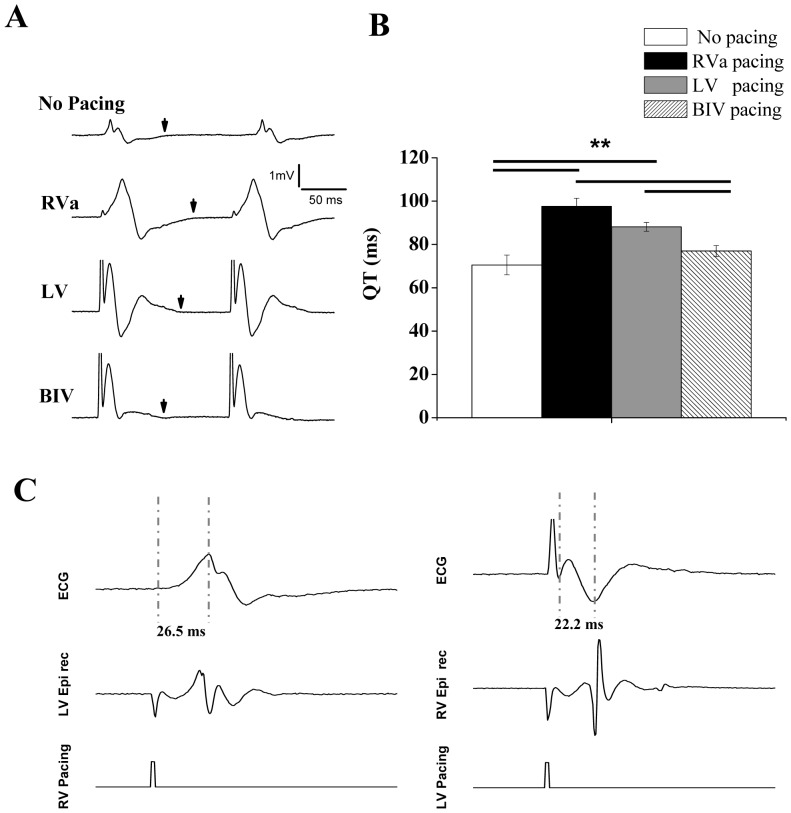
Right ventricular (RV) pacing generates regional disparities in electrical activation and mechanical function (ventricular dyssynchrony). In contrast, left ventricular (LV) or biventricular (BIV) pacing can improve cardiac efficiency in the setting of ventricular dyssynchrony, constituting the rationale for cardiac resynchronization therapy (CRT). Animal models of ventricular dyssynchrony and CRT currently relay on large mammals which are expensive and not readily available to most researchers. We developed a methodology for double-site epicardial pacing in conscious rats. Here, following post-operative recovery, we compared the effects of various pacing modes on LV dyssynchrony in normal rats and in rats with ischemic cardiomyopathy.
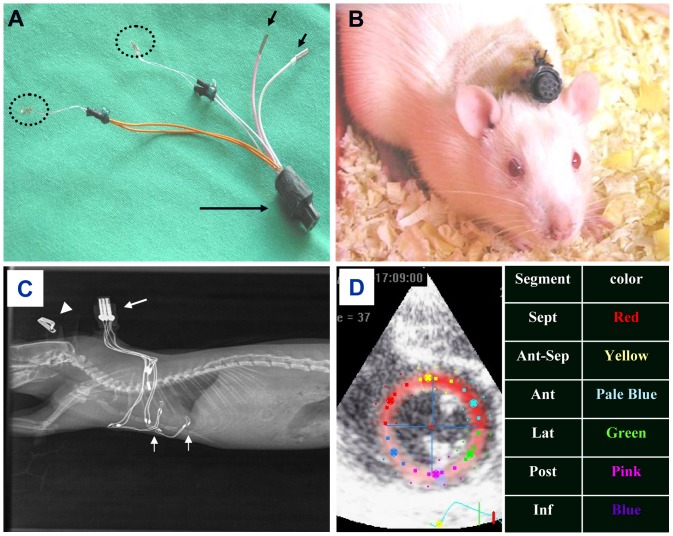
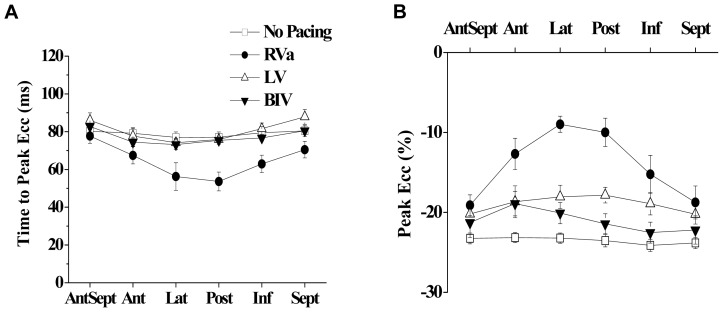
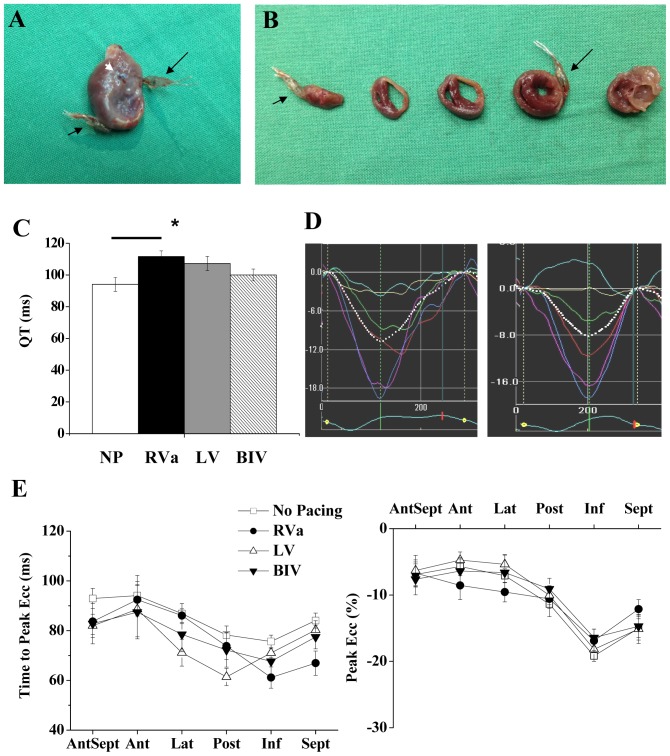
Two bipolar electrodes were implanted in rats as follows: Group A (n = 6) right atrial (RA) and RV sites; Group B (n = 7) RV and LV sites; Group C (n = 8) as in group B in combination with left coronary artery ligation. Electrodes were exteriorized through the back. Following post-operative recovery, two-dimensional transthoracic echocardiography was performed during pacing through the different electrodes. Segmental systolic circumferential strain (Ecc) was used to evaluate LV dyssynchrony.
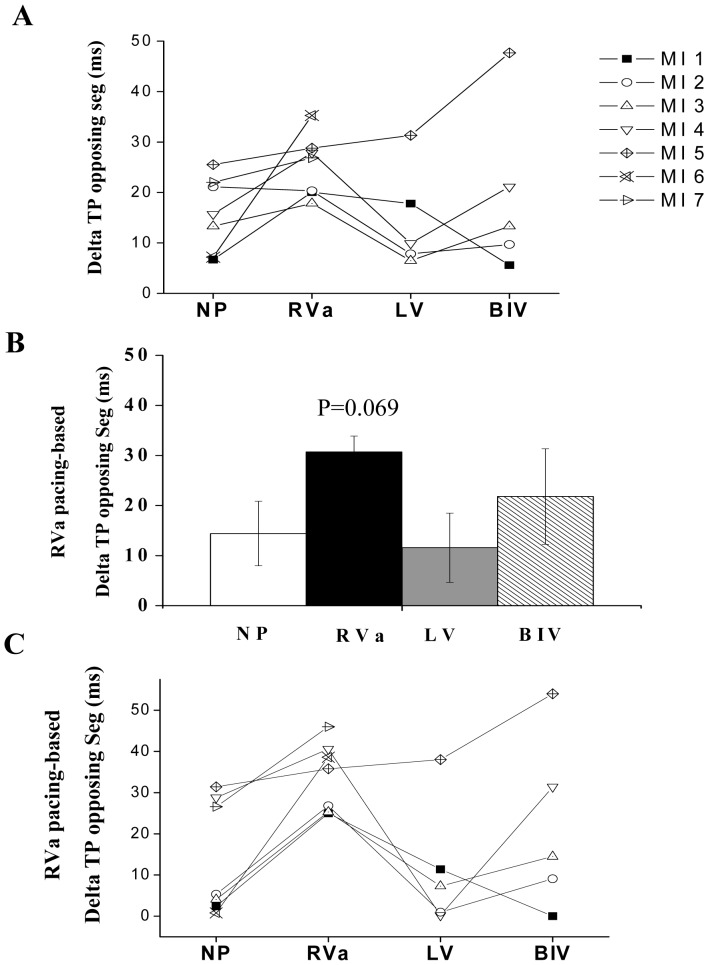
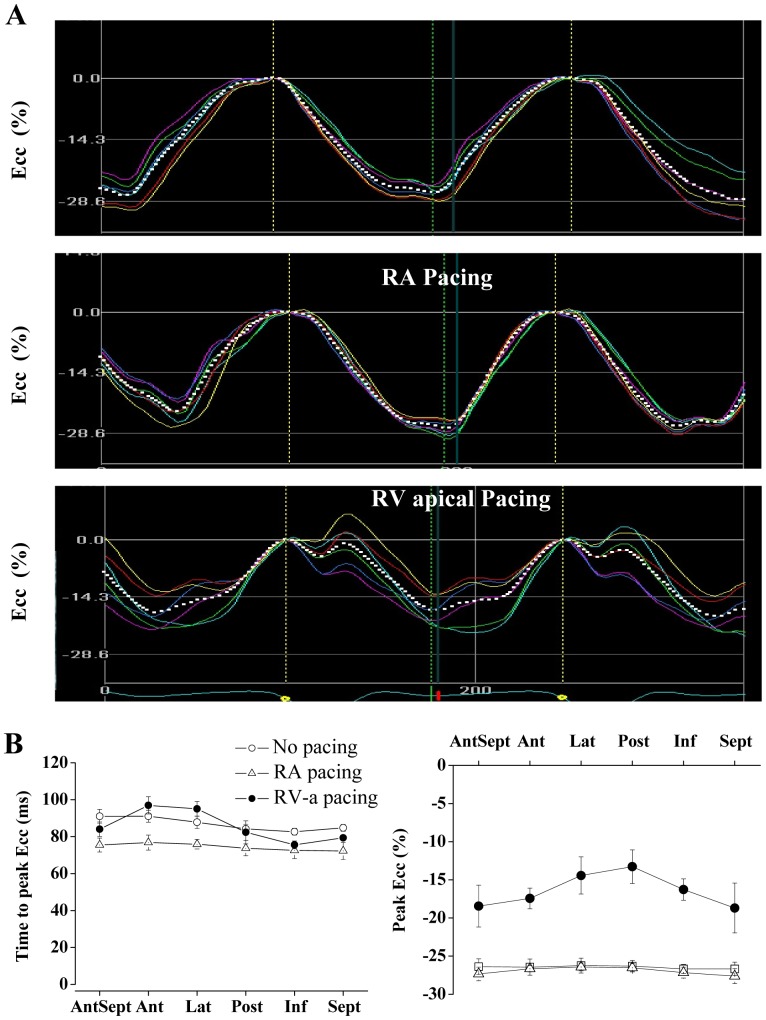
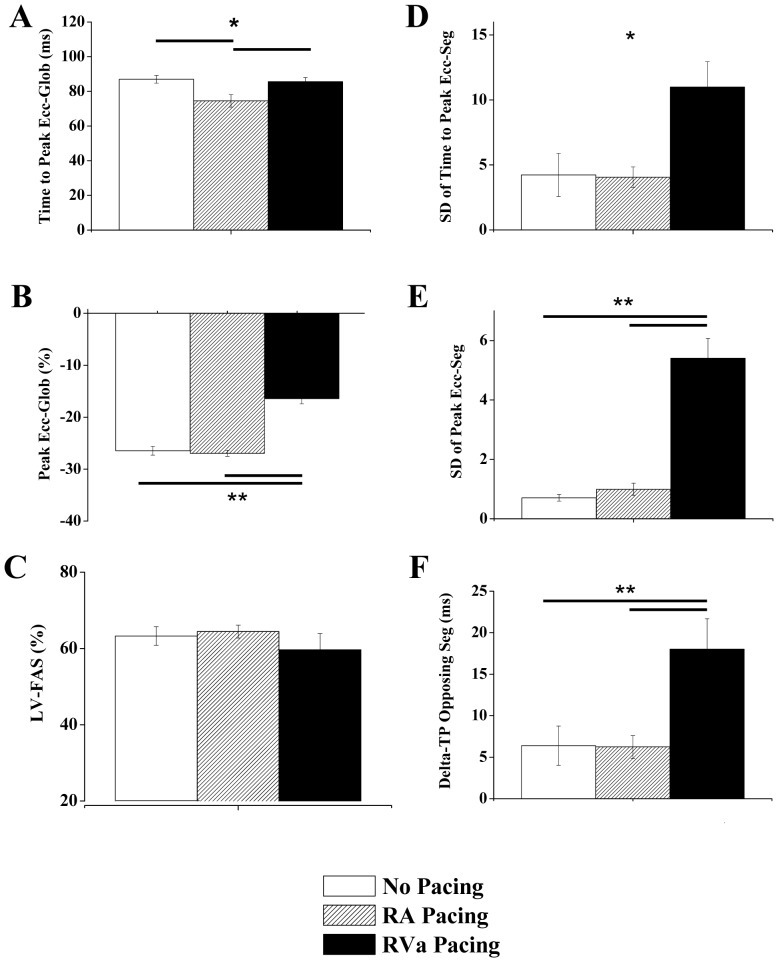
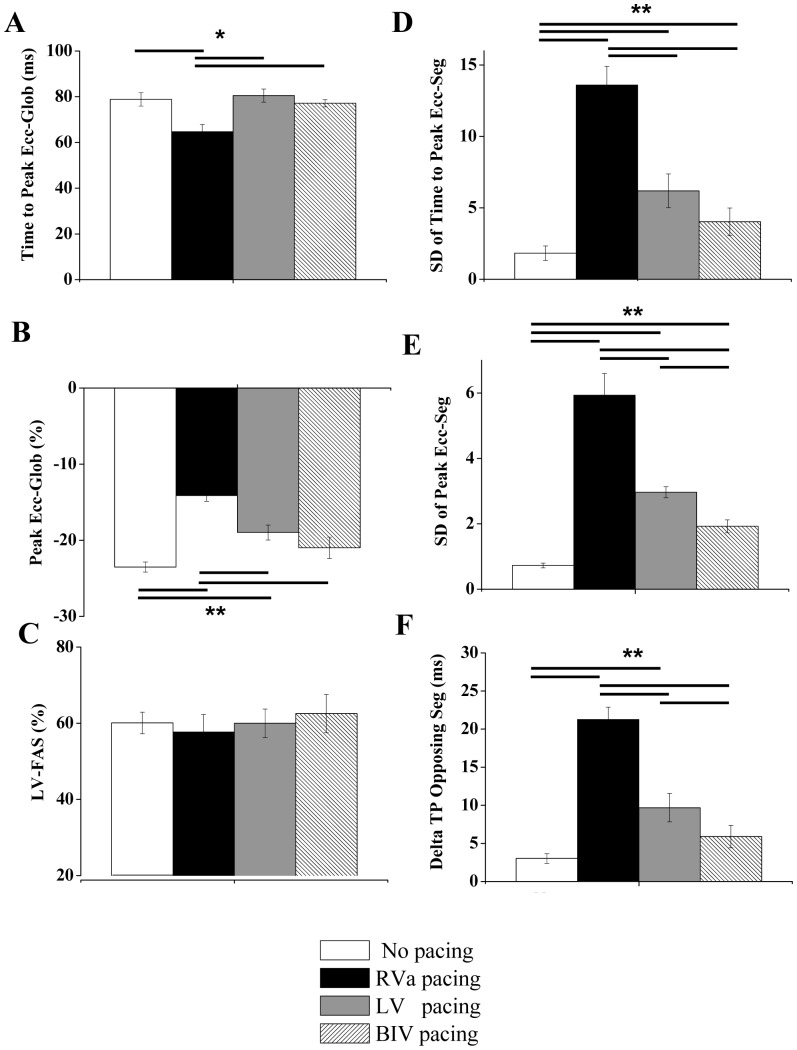
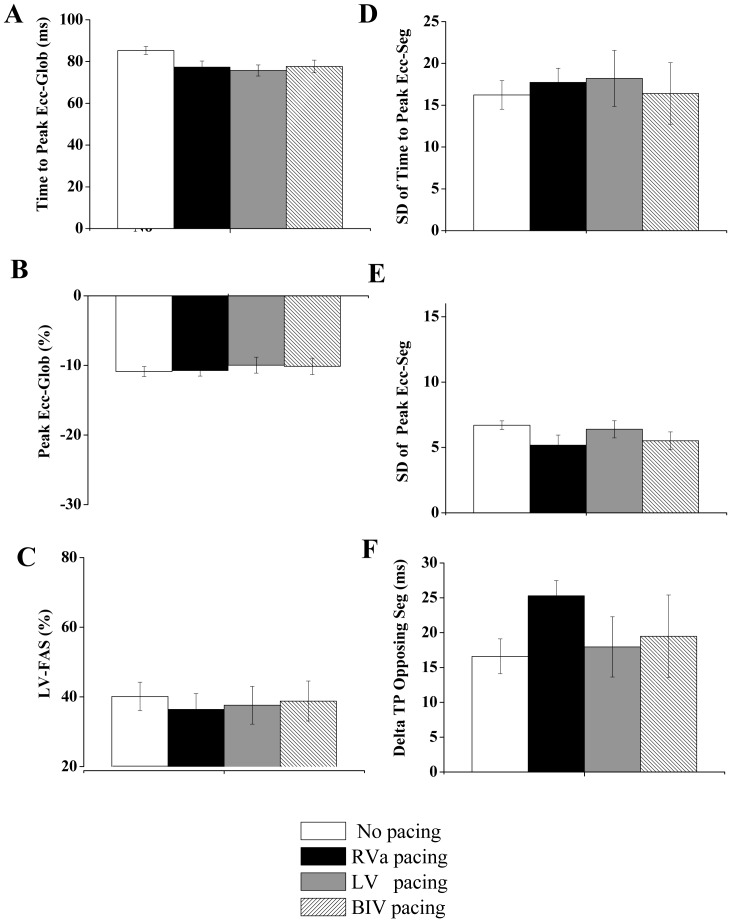
In normal rats, RV pacing induced marked LV dyssynchrony compared to RA pacing or sinus rhythm, as measured by the standard deviation (SD) of segmental time to peak Ecc, SD of peak Ecc, and the average delay between opposing ventricular segments. LV pacing and, to a greater extend BIV pacing diminished the LV dyssynchrony compared to RV pacing. In rats with extensive MI, the effects of LV and BIV pacing were markedly attenuated, and the response of individual animals was variable.
Rodent cardiac pacing mimics important features seen in humans. This model may be developed as a simple new tool to study the pathophysiology of ventricular dyssynchrony and CRT.
右心室(RV)起搏会导致电激活和机械功能出现区域差异(心室不同步)。相比之下,左心室(LV)或双心室(BIV)起搏可在心室不同步的情况下提高心脏效率,这构成了心脏再同步治疗(CRT)的理论基础。目前,心室不同步和CRT的动物模型依赖于大型哺乳动物,这些动物成本高昂,大多数研究人员难以获得。我们开发了一种在清醒大鼠中进行双部位心外膜起搏的方法。在此,术后恢复后,我们比较了不同起搏模式对正常大鼠和缺血性心肌病大鼠左心室不同步的影响。
在大鼠体内植入两个双极电极,如下所示:A组(n = 6)右心房(RA)和右心室部位;B组(n = 7)右心室和左心室部位;C组(n = 8)与B组相同,但联合左冠状动脉结扎。电极通过背部引出。术后恢复后,在通过不同电极起搏期间进行二维经胸超声心动图检查。节段性收缩期圆周应变(Ecc)用于评估左心室不同步。
在正常大鼠中,与RA起搏或窦性心律相比,RV起搏诱导了明显的左心室不同步,通过节段性Ecc峰值时间的标准差(SD)、Ecc峰值的SD以及相对心室节段之间的平均延迟来衡量。与RV起搏相比,LV起搏以及在更大程度上的BIV起搏减少了左心室不同步。在广泛心肌梗死的大鼠中,LV和BIV起搏的效果明显减弱,且个体动物的反应存在差异。
啮齿动物心脏起搏模拟了人类中观察到的重要特征。该模型可被开发为一种简单的新工具,用于研究心室不同步和CRT的病理生理学。