Arenaccio Claudia, Chiozzini Chiara, Columba-Cabezas Sandra, Manfredi Francesco, Federico Maurizio
National AIDS Center, Istituto Superiore di Sanità, Viale Regina Elena, 299, Rome 00161, Italy.
Retrovirology. 2014 Jun 12;11:46. doi: 10.1186/1742-4690-11-46.
A relevant burden of defective HIV-1 genomes populates PBMCs from HIV-1 infected patients, especially during HAART treatment. These viral genomes, although unable to codify for infectious viral particles, can express viral proteins which may affect functions of host cells as well as bystander ones. Cells expressing defective HIV-1 have a lifespan longer than that of cells producing infectious particles. Hence, their interaction with other cell types, including resting lymphocytes, is expected to occur frequently in tissues where HIV actively replicates. We investigated the effects of the expression of a prototype of functionally defective HIV-1 on bystander, unstimulated CD4+ T lymphocytes.
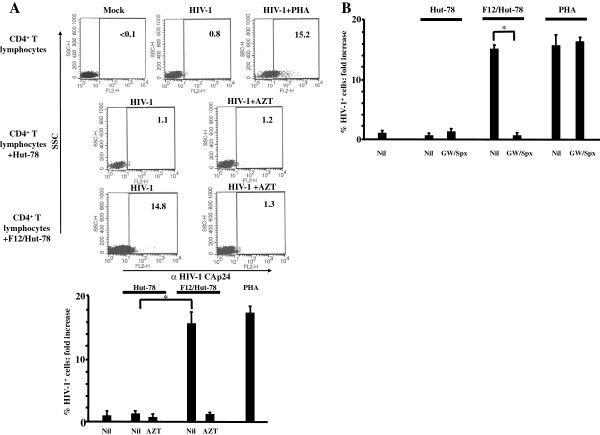
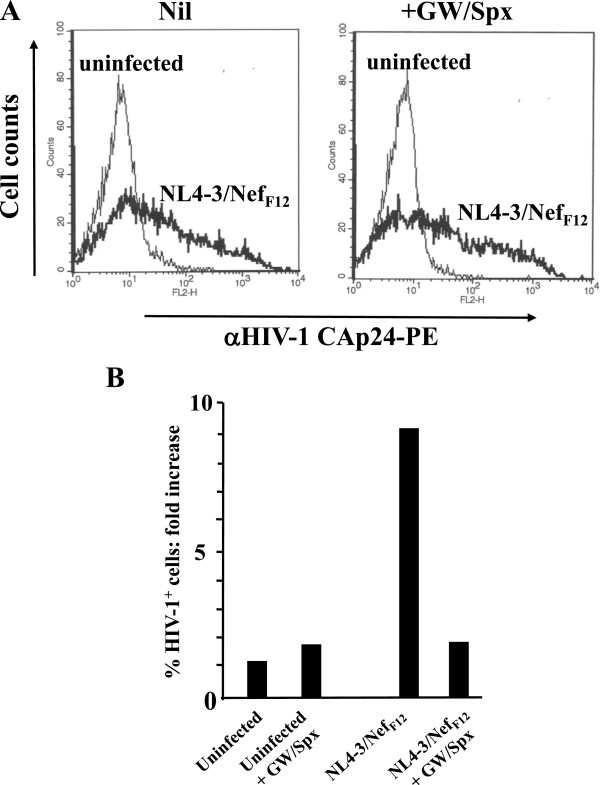
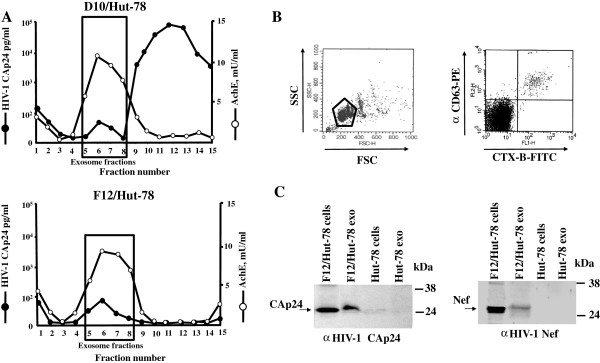
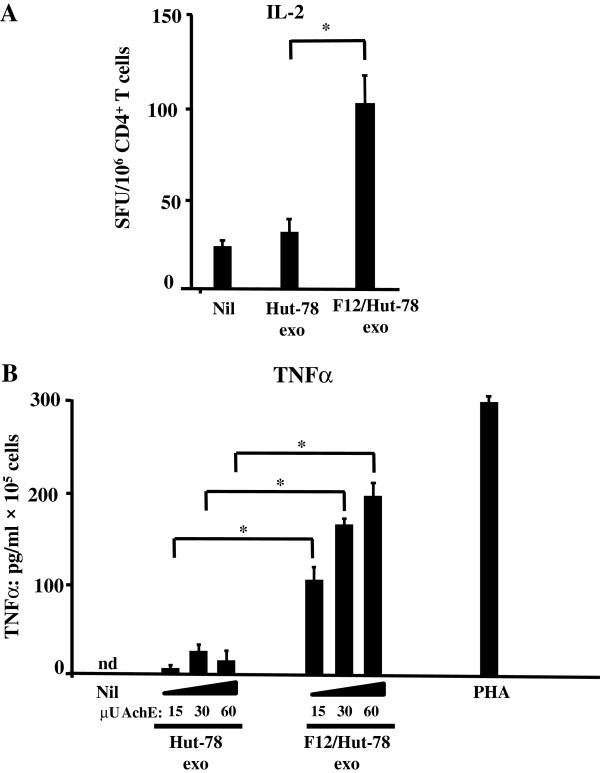
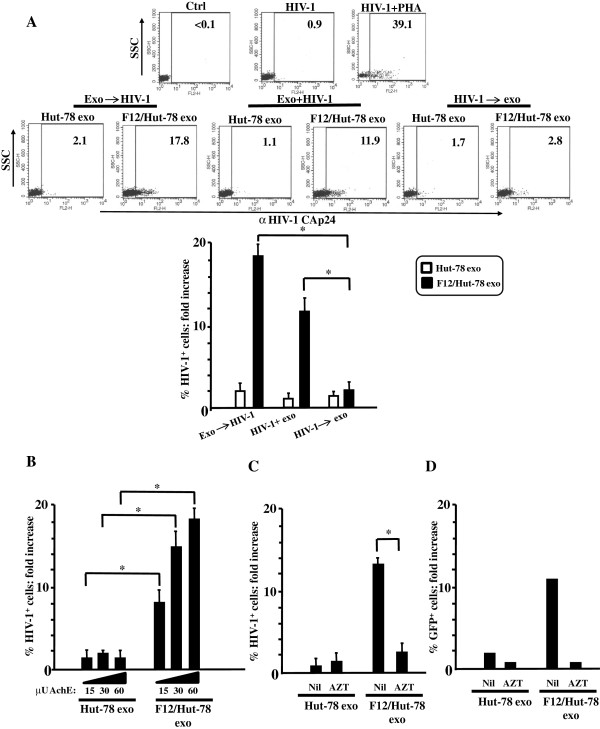
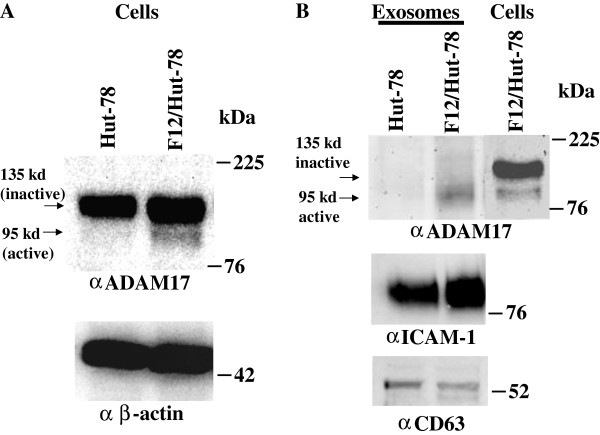
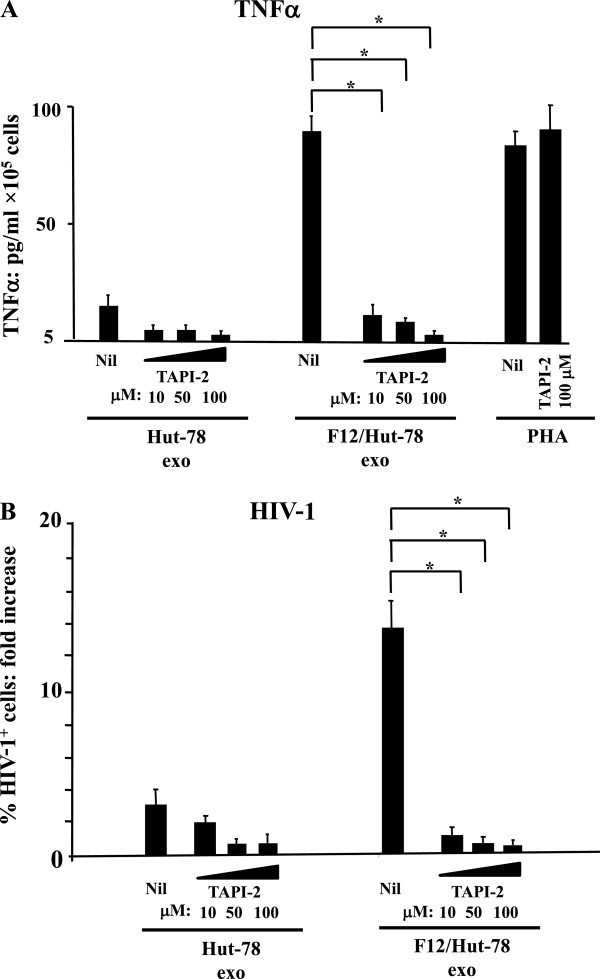
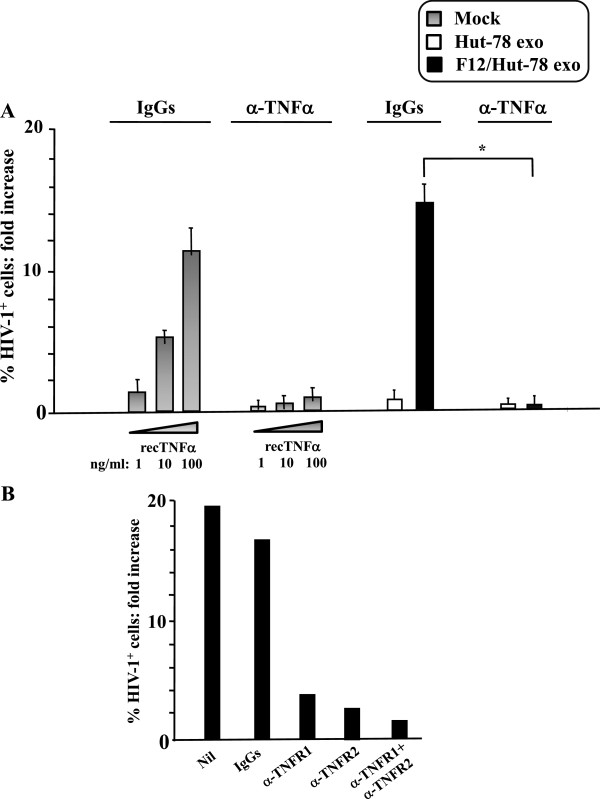
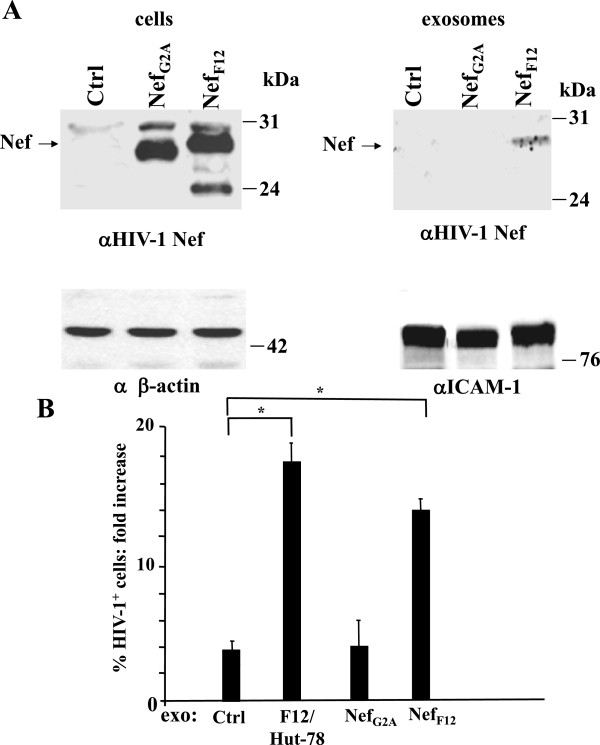
We observed that unstimulated human primary CD4+ T lymphocytes were activated and became permissive for HIV-1 replication when co-cultivated with cells expressing a functionally defective HIV-1 (F12/Hut-78 cells). This effect depended on the presence in F12/Hut-78 supernatants of nanovesicles we identified as exosomes. By inspecting the underlying mechanism, we found that ADAM17, i.e., a disintegrin and metalloprotease converting pro-TNF-α in its mature form, associated with exosomes from F12/Hut-78 cells, and played a key role in the HIV-1 replication in unstimulated CD4+ T lymphocytes. In fact, the treatment with an inhibitor of ADAM17 abolished both activation and HIV-1 replication in unstimulated CD4+ T lymphocytes. TNF-α appeared to be the downstream effector of ADAM17 since the treatment of unstimulated lymphocytes with antibodies against TNF-α or its receptors blocked the HIV-1 replication. Finally, we found that the expression of NefF12 in exosome-producing cells was sufficient to induce the susceptibility to HIV-1 infection in unstimulated CD4+ T lymphocytes.
Exosomes from cells expressing a functionally defective mutant can induce cell activation and HIV-1 susceptibility in unstimulated CD4+ T lymphocytes. This evidence highlights the relevance for AIDS pathogenesis of the expression of viral products from defective HIV-1 genomes.
有缺陷的HIV-1基因组在HIV-1感染患者的外周血单核细胞(PBMC)中大量存在,尤其是在高效抗逆转录病毒治疗(HAART)期间。这些病毒基因组虽然无法编码感染性病毒颗粒,但可以表达病毒蛋白,这些蛋白可能会影响宿主细胞以及旁观者细胞的功能。表达缺陷型HIV-1的细胞寿命比产生感染性颗粒的细胞长。因此,预计它们与其他细胞类型(包括静息淋巴细胞)的相互作用会在HIV活跃复制的组织中频繁发生。我们研究了功能缺陷型HIV-1原型的表达对旁观者、未刺激的CD4+T淋巴细胞的影响。
我们观察到,未刺激的人原代CD4+T淋巴细胞在与表达功能缺陷型HIV-1的细胞(F12/Hut-78细胞)共培养时被激活,并变得易于感染HIV-1复制 。这种效应取决于我们鉴定为外泌体的纳米囊泡在F12/Hut-78上清液中的存在。通过研究潜在机制,我们发现ADAM17,即一种将前体肿瘤坏死因子-α转化为成熟形式的去整合素和金属蛋白酶,与F12/Hut-78细胞的外泌体相关,并在未刺激CD4+T淋巴细胞的HIV-1复制中起关键作用 事实上,用ADAM17抑制剂处理可消除未刺激CD4+T淋巴细胞的激活和HIV-1复制。肿瘤坏死因子-α似乎是ADAM17的下游效应物,因为用抗肿瘤坏死因子-α或其受体的抗体处理未刺激的淋巴细胞可阻断HIV-1复制。最后,我们发现外泌体产生细胞中NefF12的表达足以诱导未刺激的CD4+T淋巴细胞对HIV-1感染的易感性。
表达功能缺陷型突变体的细胞产生的外泌体可诱导未刺激的CD4+T淋巴细胞发生细胞激活和HIV-1易感性。这一证据突出了缺陷型HIV-1基因组中病毒产物表达在艾滋病发病机制中的相关性。