Brancato Anna, Plescia Fulvio, Marino Rosa Anna Maria, Maniaci Giuseppe, Navarra Michele, Cannizzaro Carla
Department of Sciences for Health Promotion and Mother and Child Care "G. D'Alessandro", University of Palermo, Palermo, Italy.
Department of Drug Sciences and Products for Health, University of Messina, Messina, Italy.
PLoS One. 2014 Jun 13;9(6):e99454. doi: 10.1371/journal.pone.0099454. eCollection 2014.
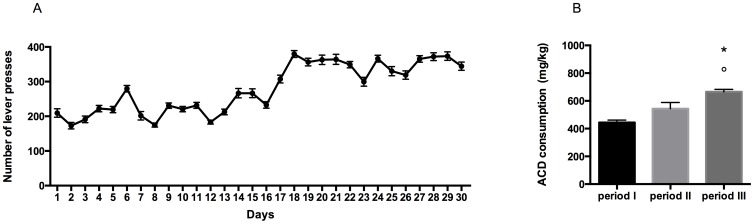
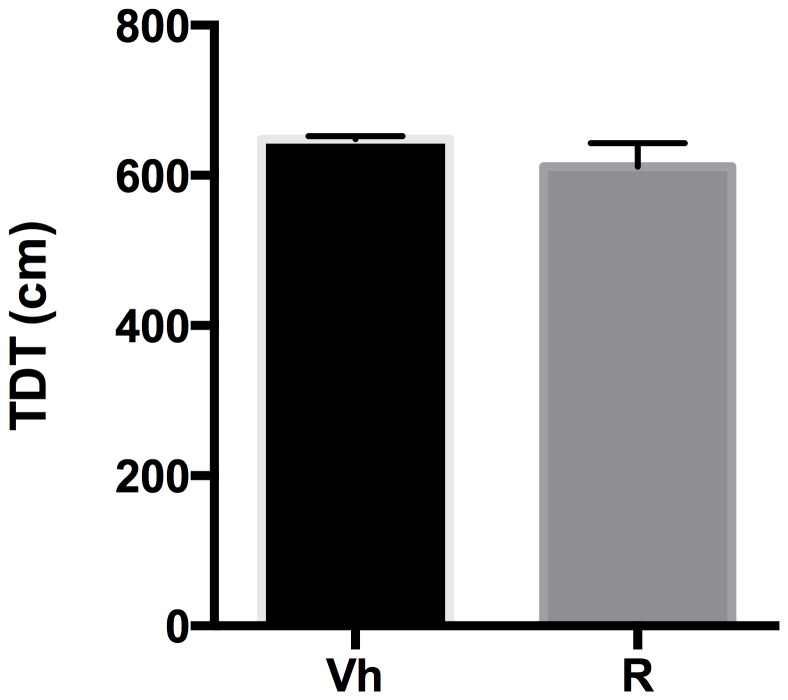
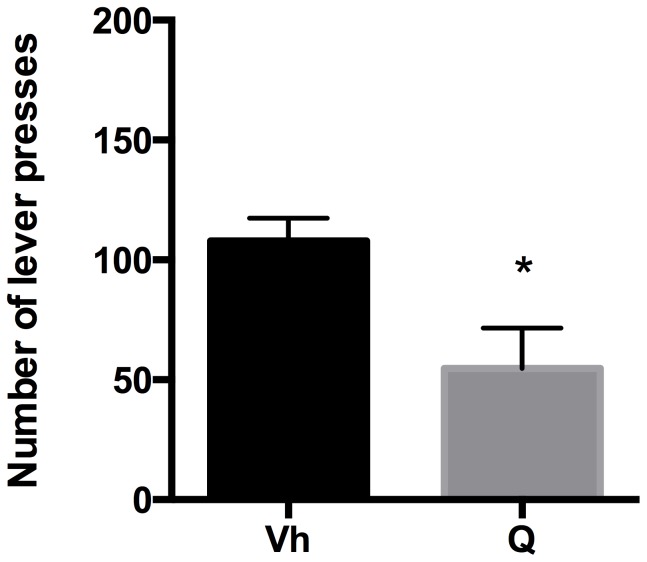
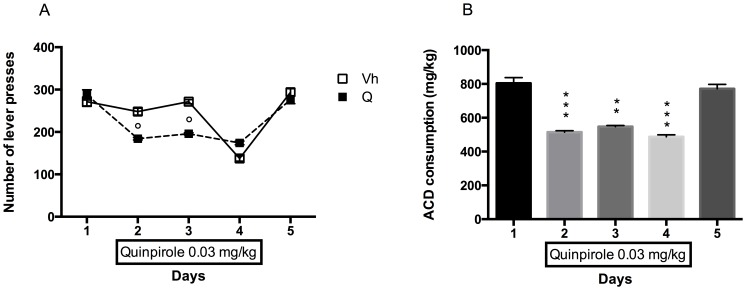
Acetaldehyde, the first metabolite of ethanol, is active in the central nervous system, where it exerts motivational properties. Acetaldehyde is able to induce drinking behaviour in operant-conflict paradigms that resemble the core features of the addictive phenotype: drug-intake acquisition and maintenance, drug-seeking, relapse and drug use despite negative consequences. Since acetaldehyde directly stimulates dopamine neuronal firing in the mesolimbic system, the aim of this study was the investigation of dopamine D2-receptors' role in the onset of the operant drinking behaviour for acetaldehyde in different functional stages, by the administration of two different D2-receptor agonists, quinpirole and ropinirole. Our results show that acetaldehyde was able to induce and maintain a drug-taking behaviour, displaying an escalation during training, and a reinstatement behaviour after 1-week forced abstinence. Acetaldehyde operant drinking behaviour involved D2-receptor signalling: in particular, quinpirole administration at 0.03 mg/kg, induced a significant decrease in the number of lever presses both in extinction and in relapse. Ropinirole, administered at 0.03 mg/kg during extinction, did not produce any modification but, when administered during abstinence, induced a strong decrease in acetaldehyde intake in the following relapse session. Taken together, our data suggest that acetaldehyde exerts its own motivational properties, involving the dopaminergic transmission: indeed, activation of pre-synaptic D2-receptors by quinpirole, during extinction and relapse, negatively affects operant behaviour for acetaldehyde, likely decreasing acetaldehyde-induced dopamine release. The activation of post-synaptic D2-receptors by ropinirole, during abstinence, decreases the motivation to the consecutive reinstatement of acetaldehyde drinking behaviour, likely counteracting the reduction in the dopaminergic tone typical of withdrawal. These data further strengthen the evidence that acetaldehyde may play a crucial role as mediator of ethanol's central effects.
乙醛是乙醇的首个代谢产物,在中枢神经系统中具有活性,可发挥激发作用。在类似于成瘾表型核心特征的操作性冲突范式中,乙醛能够诱发饮酒行为:药物摄取的习得与维持、觅药行为、复吸以及不顾负面后果继续使用药物。由于乙醛直接刺激中脑边缘系统中的多巴胺神经元放电,本研究旨在通过给予两种不同的D2受体激动剂喹吡罗和罗匹尼罗,研究多巴胺D2受体在不同功能阶段乙醛操作性饮酒行为起始过程中的作用。我们的研究结果表明,乙醛能够诱发并维持药物摄取行为,在训练过程中呈现递增趋势,且在1周强制戒断后出现复吸行为。乙醛操作性饮酒行为涉及D2受体信号传导:具体而言,给予0.03mg/kg的喹吡罗,在消退期和复吸期均导致杠杆按压次数显著减少。在消退期给予0.03mg/kg的罗匹尼罗未产生任何变化,但在戒断期给予时,会导致随后复吸期乙醛摄入量大幅减少。综上所述,我们的数据表明,乙醛发挥其自身的激发作用,涉及多巴胺能传递:实际上,在消退期和复吸期,喹吡罗对突触前D2受体的激活会对乙醛的操作性行为产生负面影响,可能会减少乙醛诱导的多巴胺释放。在戒断期,罗匹尼罗对突触后D2受体的激活会降低对乙醛饮酒行为连续复吸的动机,可能会抵消戒断过程中典型的多巴胺能张力降低的影响。这些数据进一步证明,乙醛可能作为乙醇中枢效应的介导者发挥关键作用。