Huong Luu Quynh, Forslund Anita, Madsen Henry, Dalsgaard Anders
National Institute of Veterinary Research, 86 Truong Chinh Road, Dong Da District, Hanoi, Viet Nam; Department of Veterinary Disease Biology, Faculty of Health and Medical Sciences, University of Copenhagen, Grønnegårdsvej 15, DK-1870 Frederiksberg C, Denmark.
Department of Veterinary Disease Biology, Faculty of Health and Medical Sciences, University of Copenhagen, Grønnegårdsvej 15, DK-1870 Frederiksberg C, Denmark.
Int J Hyg Environ Health. 2014 Sep;217(7):785-95. doi: 10.1016/j.ijheh.2014.04.004. Epub 2014 May 2.
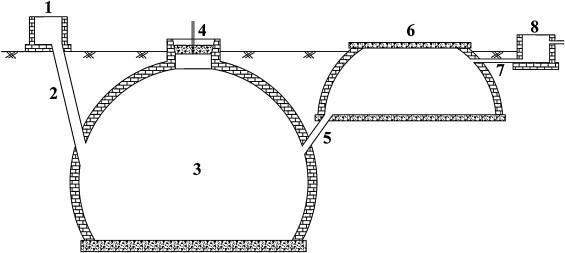
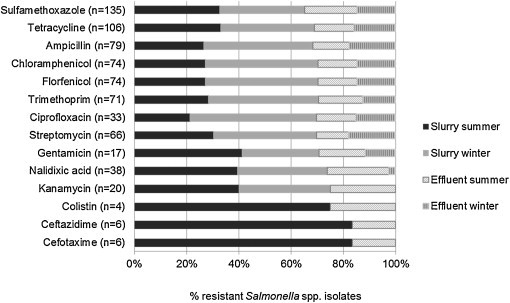
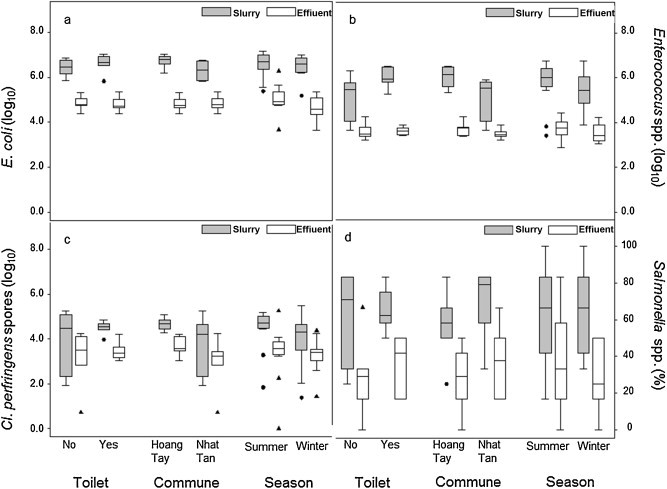
Small-scale biogas digesters are widely promoted worldwide as a sustainable technology to manage livestock manure. In Vietnam, pig slurry is commonly applied to biogas digesters for production of gas for electricity and cooking with the effluent being used to fertilize field crops, vegetables and fish ponds. Slurry may contain a variety of zoonotic pathogens, e.g. Salmonella spp., which are able to cause disease in humans either through direct contact with slurry or by fecal contamination of water and foods. The objective of this study was to evaluate the survival of Salmonella spp. and the fecal indicator bacteria, enterococci, E. coli, and spores of Clostridium perfringens in biogas digesters operated by small-scale Vietnamese pig farmers. The serovar and antimicrobial susceptibility of the Salmonella spp. isolated were also established. The study was conducted in 12 farms (6 farms with and 6 farms without toilet connected) located in Hanam province, Vietnam. Sampling of pig slurry and biogas effluent was done during two seasons. Results showed that the concentration of enterococci, E. coli, and Clostridium perfringens spores was overall reduced by only 1-2 log10-units in the biogas digesters when comparing raw slurry and biogas effluent. Salmonella spp. was found in both raw slurry and biogas effluent. A total of 19 Salmonella serovars were identified, with the main serovars being Salmonella Typhimurium (55/138), Salmonella enterica serovar 4,[5],12:i:- (19/138), Salmonella Weltevreden (9/138) and Salmonella Rissen (9/138). The Salmonella serovars showed similar antimicrobial resistance patterns to those previously reported from Vietnam. When promoting biogas, farmers should be made aware that effluent should only be used as fertilizer for crops not consumed raw and that indiscriminate discharge of effluent are likely to contaminate water recipients, e.g. drinking water sources, with pathogens. Relevant authorities should promote safe animal manure management practices to farmers and regulations be updated to ensure food safety and public health.
小型沼气池作为一种处理牲畜粪便的可持续技术在全球范围内得到广泛推广。在越南,猪粪通常被用于沼气池以生产用于发电和烹饪的气体,而沼液则用于给大田作物、蔬菜和鱼塘施肥。猪粪可能含有多种人畜共患病原体,例如沙门氏菌属,它们能够通过直接接触猪粪或通过粪便污染水和食物而导致人类患病。本研究的目的是评估越南小规模养猪农户使用的沼气池中沙门氏菌属以及粪便指示菌肠球菌、大肠杆菌和产气荚膜梭菌孢子的存活情况。还确定了分离出的沙门氏菌属的血清型和抗菌药敏性。该研究在越南河南省的12个农场(6个有连接厕所的农场和6个没有连接厕所的农场)进行。在两个季节对猪粪和沼液进行了采样。结果表明,与原猪粪相比,沼气池中的肠球菌、大肠杆菌和产气荚膜梭菌孢子的浓度总体仅降低了1-2个对数单位。原猪粪和沼液中均发现了沙门氏菌属。共鉴定出19种沙门氏菌血清型,主要血清型为鼠伤寒沙门氏菌(55/138)、肠炎沙门氏菌血清型4,[5],12:i:-(19/138)、韦尔泰文沙门氏菌(9/138)和里森沙门氏菌(9/138)。这些沙门氏菌血清型显示出与越南先前报道的相似的抗菌耐药模式。在推广沼气时,应让农民意识到沼液只能用作未生食作物的肥料,随意排放沼液可能会使受纳水体(例如饮用水源)受到病原体污染。相关当局应向农民推广安全的动物粪便管理做法,并更新法规以确保食品安全和公众健康。