Demarchi Beatrice, O'Connor Sonia, de Lima Ponzoni Andre, de Almeida Rocha Ponzoni Raquel, Sheridan Alison, Penkman Kirsty, Hancock Y, Wilson Julie
BioArCh, Department of Archaeology, University of York, York, United Kingdom.
School of Life Sciences, University of Bradford, Bradford, United Kingdom.
PLoS One. 2014 Jun 17;9(6):e99839. doi: 10.1371/journal.pone.0099839. eCollection 2014.
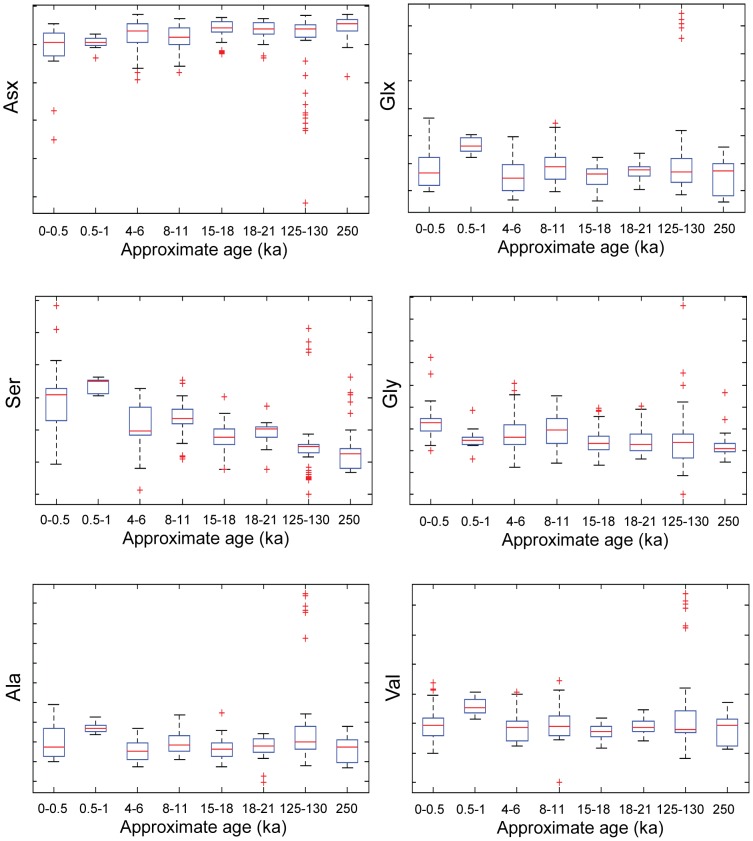
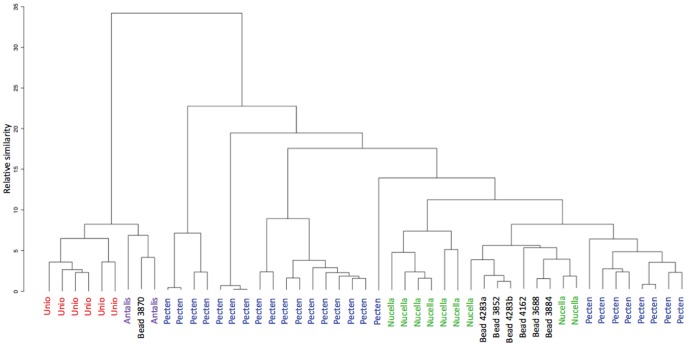
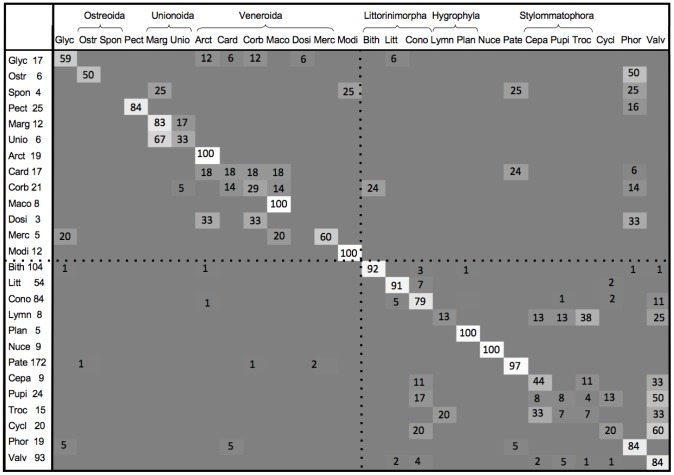
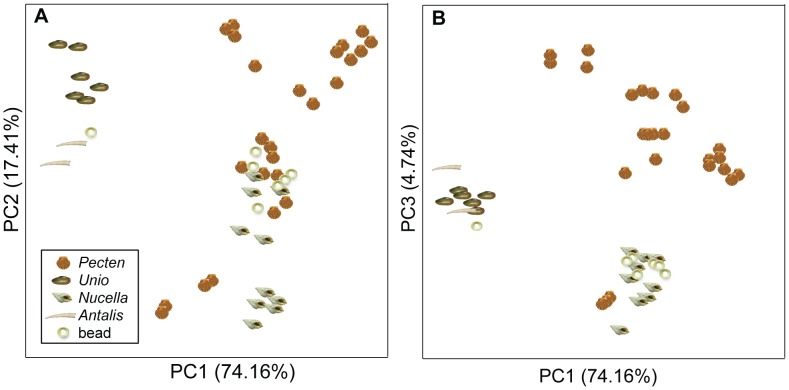
Shell beads appear to have been one of the earliest examples of personal adornments. Marine shells identified far from the shore evidence long-distance transport and imply networks of exchange and negotiation. However, worked beads lose taxonomic clues to identification, and this may be compounded by taphonomic alteration. Consequently, the significance of this key early artefact may be underestimated. We report the use of bulk amino acid composition of the stable intra-crystalline proteins preserved in shell biominerals and the application of pattern recognition methods to a large dataset (777 samples) to demonstrate that taxonomic identification can be achieved at genus level. Amino acid analyses are fast (<2 hours per sample) and micro-destructive (sample size <2 mg). Their integration with non-destructive techniques provides a valuable and affordable tool, which can be used by archaeologists and museum curators to gain insight into early exploitation of natural resources by humans. Here we combine amino acid analyses, macro- and microstructural observations (by light microscopy and scanning electron microscopy) and Raman spectroscopy to try to identify the raw material used for beads discovered at the Early Bronze Age site of Great Cornard (UK). Our results show that at least two shell taxa were used and we hypothesise that these were sourced locally.
贝壳珠子似乎是最早的个人装饰品之一。在远离海岸的地方发现的海洋贝壳证明了长途运输,也意味着存在交换和谈判网络。然而,经过加工的珠子失去了用于鉴定的分类线索,而且这种情况可能会因埋藏学改变而更加复杂。因此,这种关键的早期人工制品的重要性可能被低估了。我们报告了利用贝壳生物矿物中保存的稳定晶内蛋白质的整体氨基酸组成,并将模式识别方法应用于一个大型数据集(777个样本),以证明可以在属的层面上实现分类鉴定。氨基酸分析速度快(每个样本<2小时)且具有微破坏性(样本量<2毫克)。它们与非破坏性技术相结合,提供了一种有价值且经济实惠的工具,考古学家和博物馆馆长可以用它来深入了解人类早期对自然资源的开发利用情况。在这里,我们结合氨基酸分析、宏观和微观结构观察(通过光学显微镜和扫描电子显微镜)以及拉曼光谱,试图鉴定在英国大科纳德的青铜时代早期遗址发现的珠子所使用的原材料。我们的结果表明至少使用了两种贝壳分类群,并且我们推测这些是当地获取的。