Myles Ian A
Bacterial Pathogenesis Unit, Laboratory of Clinical Infectious Diseases, National Institute of Allergy and Infectious Diseases, National Institutes of Health, 9000 Rockville Pike Building 33, Room 2W10A, Bethesda, MD, 20892, Maryland.
Nutr J. 2014 Jun 17;13:61. doi: 10.1186/1475-2891-13-61.
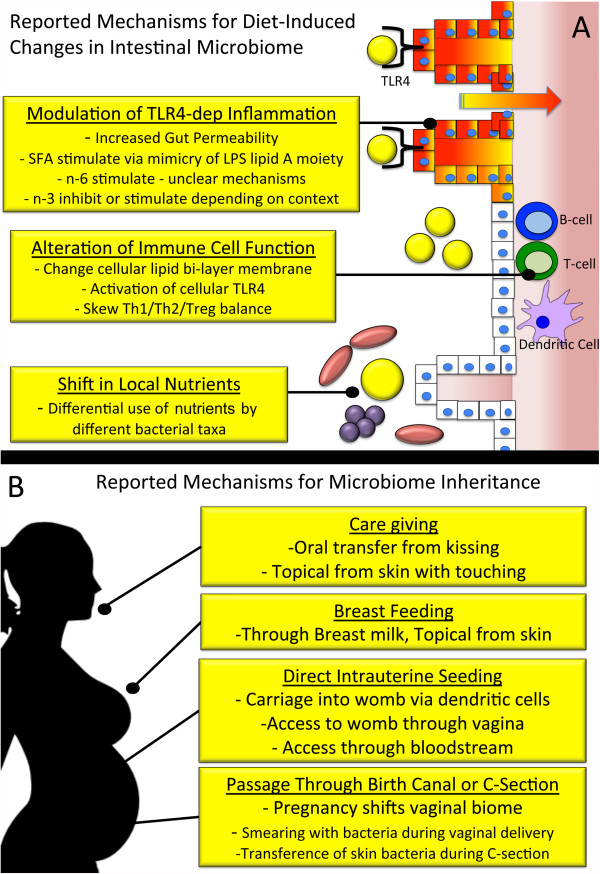
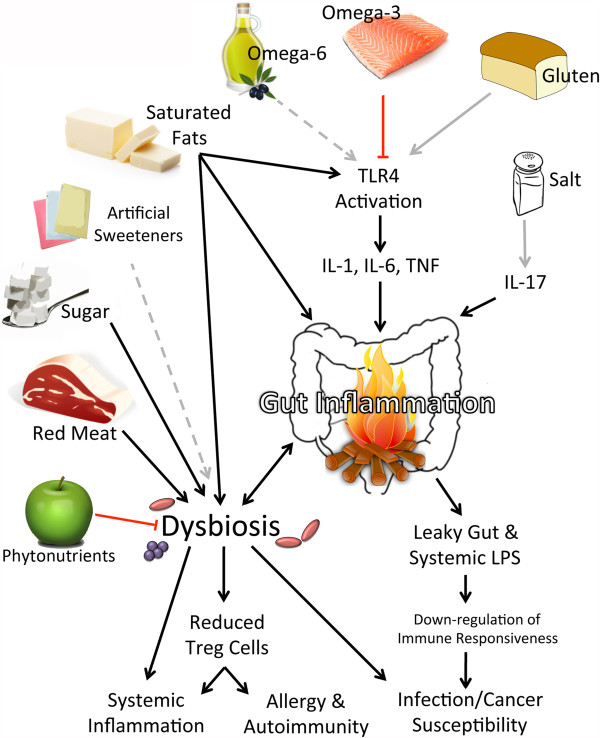
While numerous changes in human lifestyle constitute modern life, our diet has been gaining attention as a potential contributor to the increase in immune-mediated diseases. The Western diet is characterized by an over consumption and reduced variety of refined sugars, salt, and saturated fat. Herein our objective is to detail the mechanisms for the Western diet's impact on immune function. The manuscript reviews the impacts and mechanisms of harm for our over-indulgence in sugar, salt, and fat, as well as the data outlining the impacts of artificial sweeteners, gluten, and genetically modified foods; attention is given to revealing where the literature on the immune impacts of macronutrients is limited to either animal or in vitro models versus where human trials exist. Detailed attention is given to the dietary impact on the gut microbiome and the mechanisms by which our poor dietary choices are encoded into our gut, our genes, and are passed to our offspring. While today's modern diet may provide beneficial protection from micro- and macronutrient deficiencies, our over abundance of calories and the macronutrients that compose our diet may all lead to increased inflammation, reduced control of infection, increased rates of cancer, and increased risk for allergic and auto-inflammatory disease.
尽管人类生活方式的诸多变化构成了现代生活,但我们的饮食作为免疫介导疾病增加的一个潜在因素,一直备受关注。西方饮食的特点是精制糖、盐和饱和脂肪的过度摄入以及种类减少。在此,我们的目标是详细阐述西方饮食对免疫功能影响的机制。本文综述了我们过度摄入糖、盐和脂肪所造成的危害及其机制,以及概述人工甜味剂、麸质和转基因食品影响的数据;重点关注揭示关于宏量营养素对免疫影响的文献在哪些方面仅限于动物或体外模型,而哪些方面存在人体试验。我们详细关注了饮食对肠道微生物群的影响,以及我们不良饮食选择在肠道、基因中编码并传递给后代的机制。虽然当今的现代饮食可能为预防微量和宏量营养素缺乏提供有益的保护,但我们摄入的过多热量以及构成我们饮食的宏量营养素都可能导致炎症增加、感染控制能力下降、癌症发病率上升以及过敏和自身炎症性疾病风险增加。