Cheng Yi, Yan Zhi, Liu Yin, Liang Chengbai, Xia Hong, Feng Junming, Zheng Guorong, Luo Hesheng
Department of Gastroenterology, Remin Hospital of Wuhan University, Wuhan, Hubei 430060, P.R. China ; Department of Gastroenterology, Wuhan General Hospital of Guangzhou Command, Wuhan, Hubei 430070, P.R. China.
Department of Gastroenterology, Wuhan General Hospital of Guangzhou Command, Wuhan, Hubei 430070, P.R. China.
Oncol Lett. 2014 Apr;7(4):1021-1026. doi: 10.3892/ol.2014.1838. Epub 2014 Jan 29.
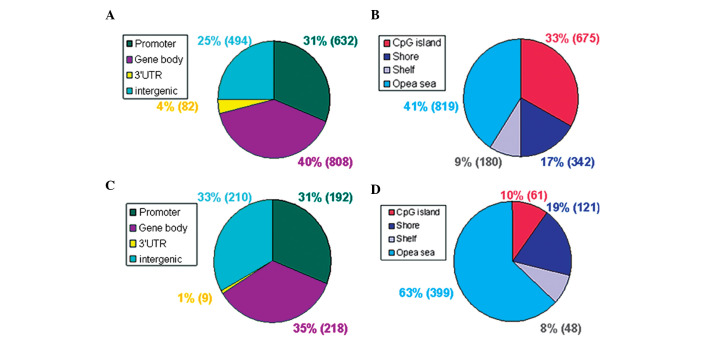
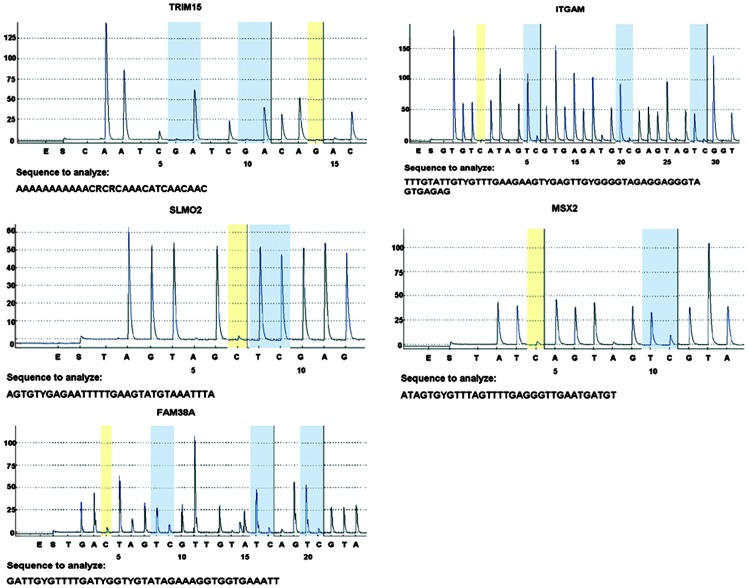
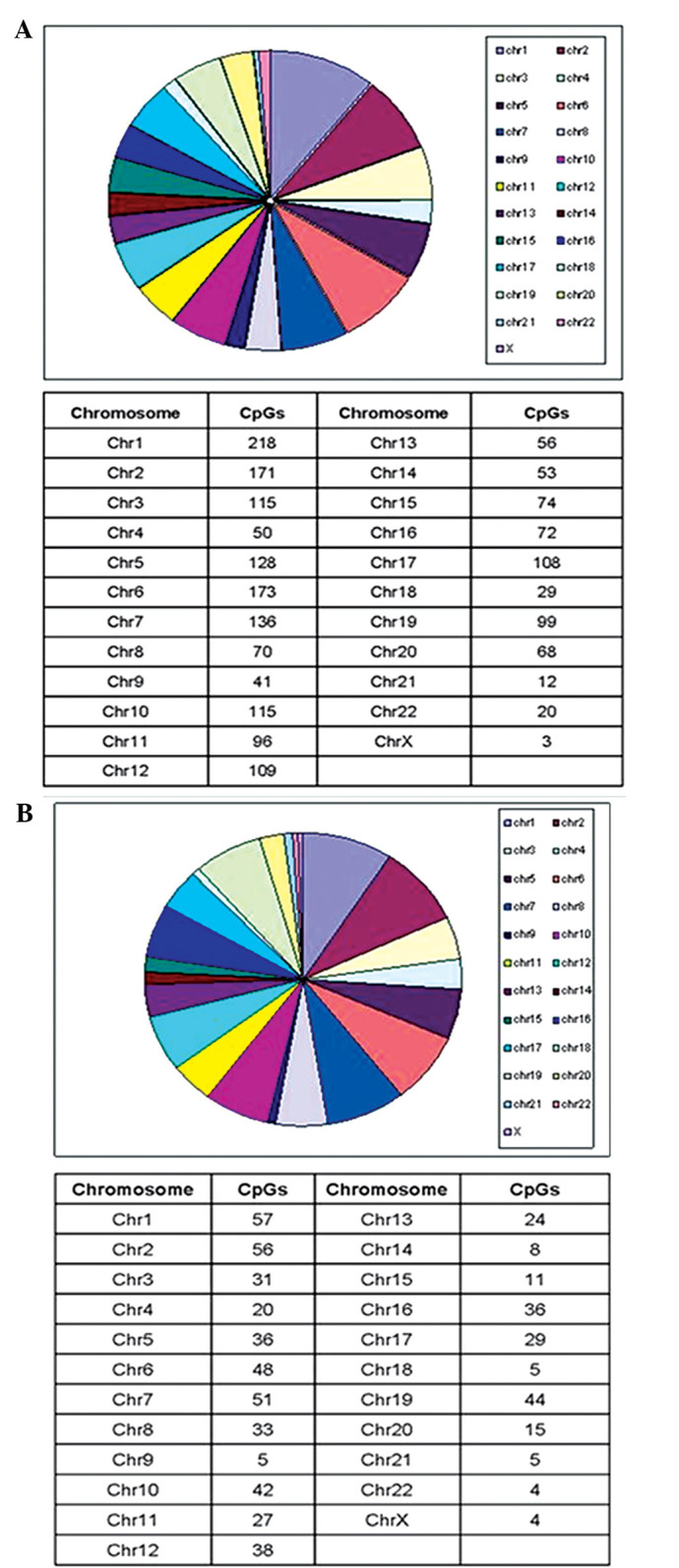
The objective of the current study was to investigate the characteristics of DNA methylation patterns associated with the gastric cancer genome and to identify clinically useful diagnostic markers and therapeutic targets for gastric cancer. The Infinium 450K methylation microarray was used to compare differential DNA methylation sites of gastric cancer tissue with that of normal gastric tissue. The results of the DNA microarray analysis were confirmed by pyrosequencing. Functional analysis of the differential genes was performed using the GO software. The effect of candidate site methylation on gene expression was monitored using quantitative polymerase chain reaction analysis. Of the 2,645 differential methylation sites identified in gastric cancer tissues, 2,016 were hypermethylated sites, 629 were hypomethylated sites, 826 were located in promoter regions and 1,024 were located within genes. These differential sites were associated with 1,352 genes. In total, five sites were selected and pyrosequencing verified the results of the microarray analysis in five of the sites. Change in gastric cancer DNA methylation pattern was a common occurrence. Differential methylation sites appeared more often in non-promoter regions. The associated genes were involved in multiple signaling pathways, and hypermethylated and hypomethylated sites were involved in roughly the same signaling pathways. Methylation of the genome promoted gene expression. and may be candidate genes for diagnosing gastric cancer.
本研究的目的是调查与胃癌基因组相关的DNA甲基化模式特征,并确定胃癌临床上有用的诊断标志物和治疗靶点。使用Infinium 450K甲基化微阵列比较胃癌组织与正常胃组织的差异DNA甲基化位点。DNA微阵列分析结果通过焦磷酸测序得到证实。使用GO软件对差异基因进行功能分析。使用定量聚合酶链反应分析监测候选位点甲基化对基因表达的影响。在胃癌组织中鉴定出的2645个差异甲基化位点中,2016个是高甲基化位点,629个是低甲基化位点,826个位于启动子区域,1024个位于基因内。这些差异位点与1352个基因相关。总共选择了5个位点,焦磷酸测序验证了其中5个位点的微阵列分析结果。胃癌DNA甲基化模式的改变很常见。差异甲基化位点在非启动子区域出现得更频繁。相关基因参与多个信号通路,高甲基化和低甲基化位点参与大致相同的信号通路。基因组甲基化促进基因表达。 和 可能是诊断胃癌的候选基因。