Anderson Breeana G, Stivers James T
Department of Pharmacology and Molecular Sciences, The Johns Hopkins University School of Medicine , 725 North Wolfe Street, Baltimore, Maryland 21205-2185, United States.
Biochemistry. 2014 Jul 8;53(26):4302-15. doi: 10.1021/bi500571q. Epub 2014 Jun 26.
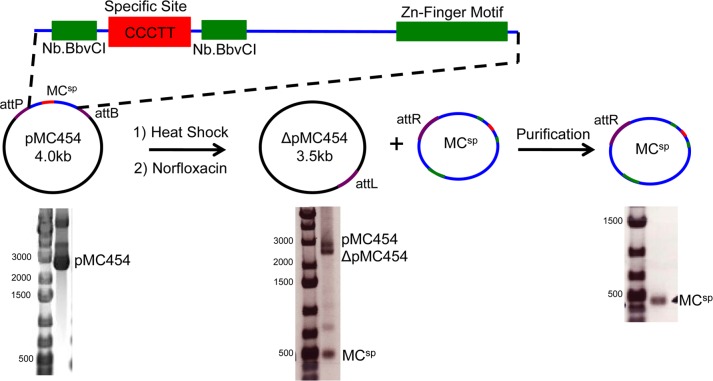
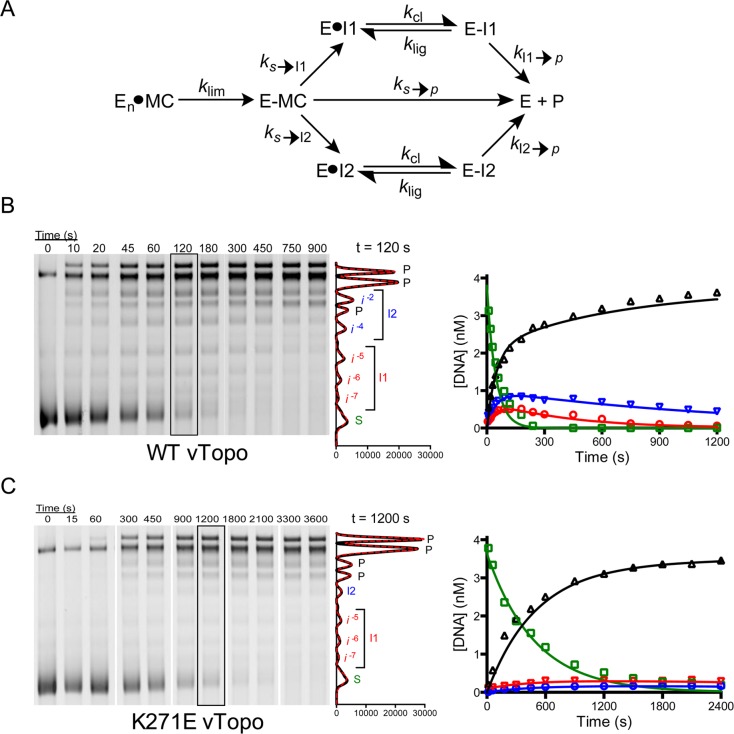
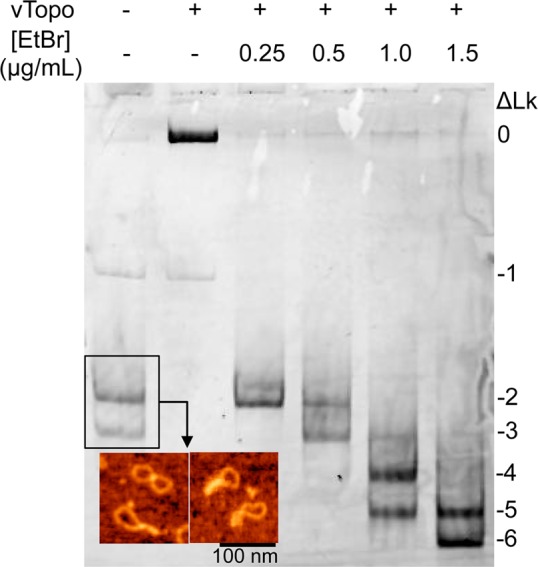
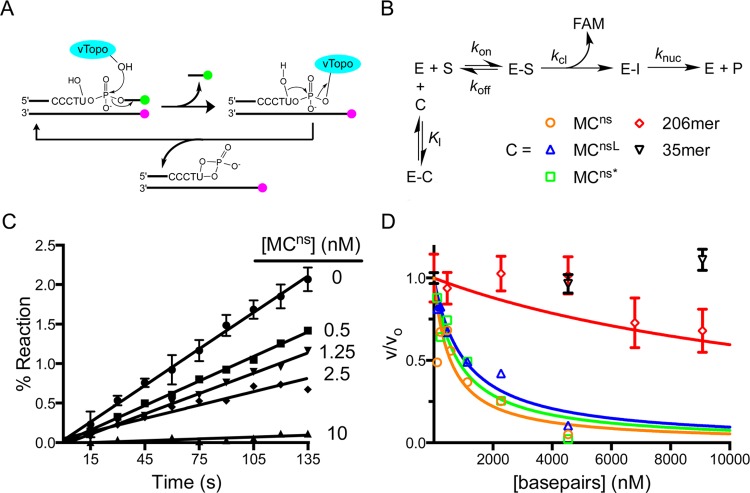
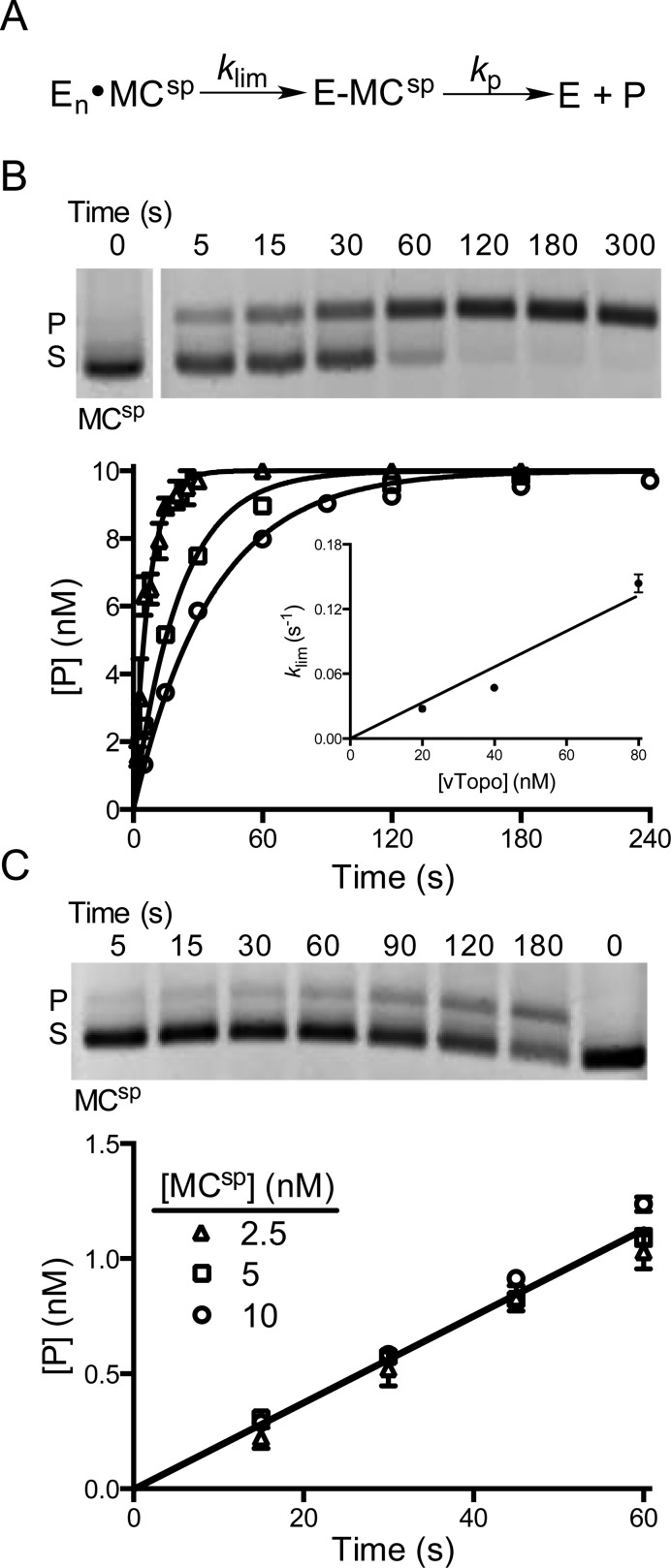
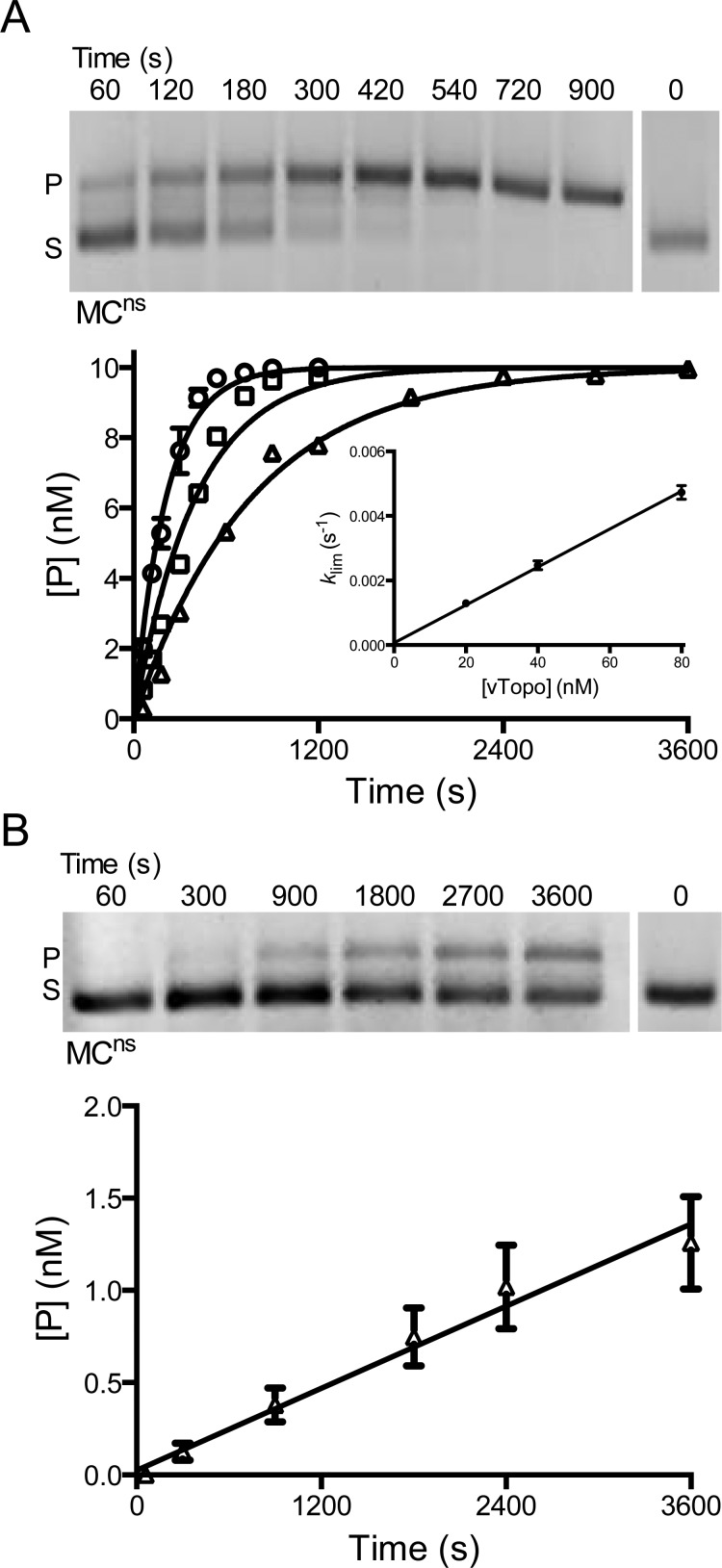
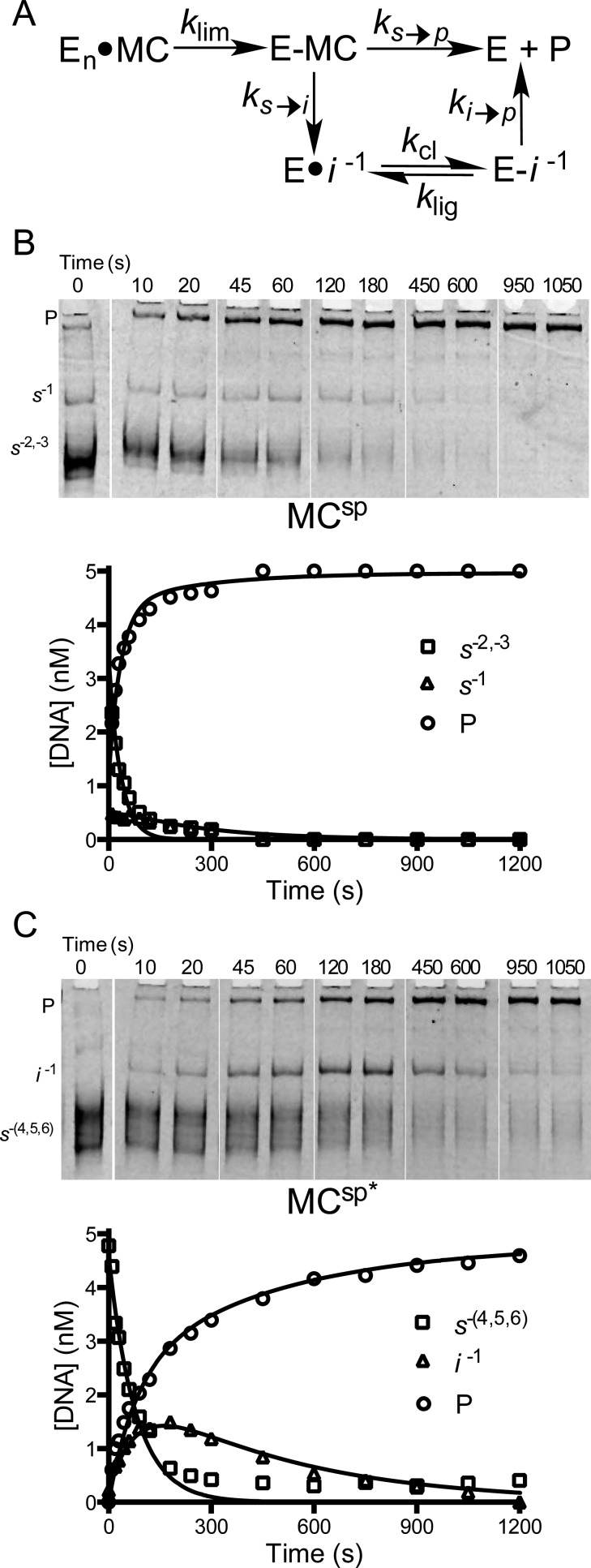
Type IB topoisomerases unwind positive and negative DNA supercoils and play a key role in removing supercoils that would otherwise accumulate at replication and transcription forks. An interesting question is whether topoisomerase activity is regulated by the topological state of the DNA, thereby providing a mechanism for targeting the enzyme to highly supercoiled DNA domains in genomes. The type IB enzyme from variola virus (vTopo) has proven to be useful in addressing mechanistic questions about topoisomerase function because it forms a reversible 3'-phosphotyrosyl adduct with the DNA backbone at a specific target sequence (5'-CCCTT-3') from which DNA unwinding can proceed. We have synthesized supercoiled DNA minicircles (MCs) containing a single vTopo target site that provides highly defined substrates for exploring the effects of supercoil density on DNA binding, strand cleavage and ligation, and unwinding. We observed no topological dependence for binding of vTopo to these supercoiled MC DNAs, indicating that affinity-based targeting to supercoiled DNA regions by vTopo is unlikely. Similarly, the cleavage and religation rates of the MCs were not topologically dependent, but topoisomers with low superhelical densities were found to unwind more slowly than highly supercoiled topoisomers, suggesting that reduced torque at low superhelical densities leads to an increased number of cycles of cleavage and ligation before a successful unwinding event. The K271E charge reversal mutant has an impaired interaction with the rotating DNA segment that leads to an increase in the number of supercoils that were unwound per cleavage event. This result provides evidence that interactions of the enzyme with the rotating DNA segment can restrict the number of supercoils that are unwound. We infer that both superhelical density and transient contacts between vTopo and the rotating DNA determine the efficiency of supercoil unwinding. Such determinants are likely to be important in regulating the steady-state superhelical density of DNA domains in the cell.
IB型拓扑异构酶可解开正、负DNA超螺旋,在消除复制叉和转录叉处可能累积的超螺旋方面发挥关键作用。一个有趣的问题是,拓扑异构酶活性是否受DNA拓扑状态的调节,从而为将该酶靶向基因组中高度超螺旋的DNA区域提供一种机制。来自天花病毒的IB型酶(vTopo)已被证明有助于解决有关拓扑异构酶功能的机制问题,因为它在特定靶序列(5'-CCCTT-3')处与DNA主链形成可逆的3'-磷酸酪氨酸加合物,由此可进行DNA解旋。我们合成了含有单个vTopo靶位点的超螺旋DNA微环(MC),这些微环为探索超螺旋密度对DNA结合、链切割与连接以及解旋的影响提供了高度明确的底物。我们观察到vTopo与这些超螺旋MC DNA的结合不存在拓扑依赖性,这表明vTopo不太可能通过基于亲和力的方式靶向超螺旋DNA区域。同样,MC的切割和重新连接速率也不依赖于拓扑结构,但发现超螺旋密度低的拓扑异构体比高度超螺旋的拓扑异构体解旋得更慢,这表明在低超螺旋密度下扭矩降低会导致在成功解旋事件之前切割和连接的循环次数增加。K271E电荷反转突变体与旋转的DNA片段的相互作用受损,导致每次切割事件解旋的超螺旋数量增加。这一结果证明该酶与旋转的DNA片段之间的相互作用可限制解旋的超螺旋数量。我们推断,超螺旋密度以及vTopo与旋转的DNA之间的瞬时接触均决定了超螺旋解旋的效率。这些决定因素可能在调节细胞中DNA区域的稳态超螺旋密度方面很重要。