Department of Cell Biology and Physiology, The University of North Carolina at Chapel Hill, Chapel Hill, North Carolina 27599, USA.
Nature. 2013 Sep 5;501(7465):58-62. doi: 10.1038/nature12504. Epub 2013 Aug 28.
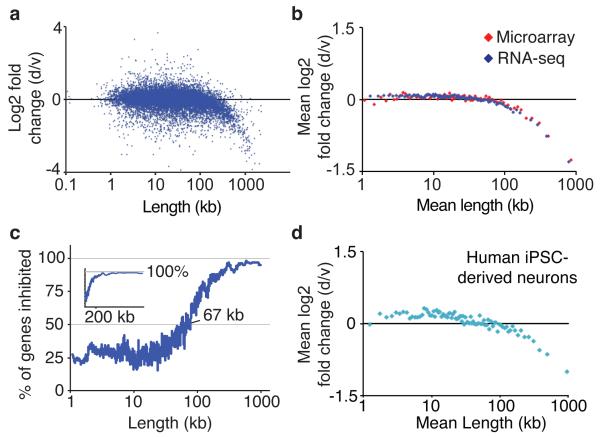
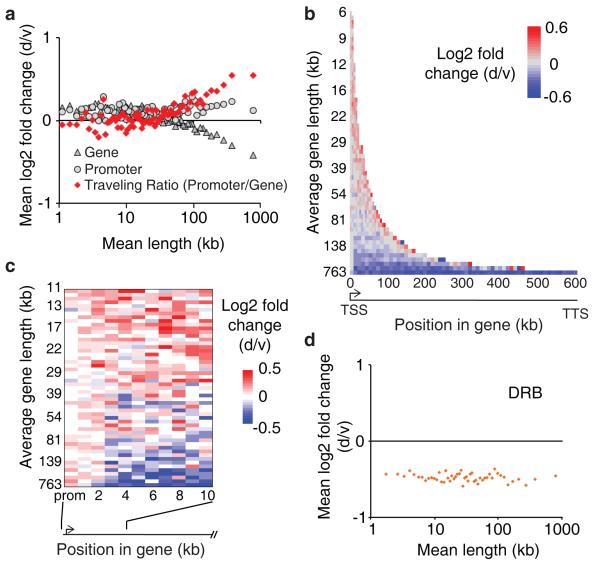
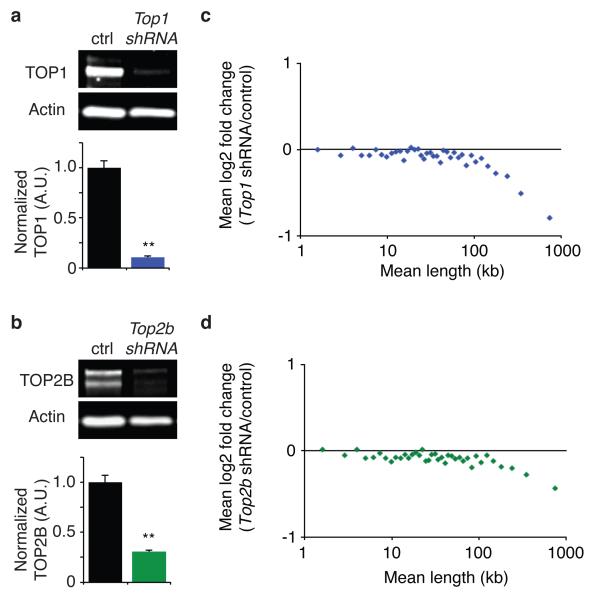
Topoisomerases are expressed throughout the developing and adult brain and are mutated in some individuals with autism spectrum disorder (ASD). However, how topoisomerases are mechanistically connected to ASD is unknown. Here we find that topotecan, a topoisomerase 1 (TOP1) inhibitor, dose-dependently reduces the expression of extremely long genes in mouse and human neurons, including nearly all genes that are longer than 200 kilobases. Expression of long genes is also reduced after knockdown of Top1 or Top2b in neurons, highlighting that both enzymes are required for full expression of long genes. By mapping RNA polymerase II density genome-wide in neurons, we found that this length-dependent effect on gene expression was due to impaired transcription elongation. Interestingly, many high-confidence ASD candidate genes are exceptionally long and were reduced in expression after TOP1 inhibition. Our findings suggest that chemicals and genetic mutations that impair topoisomerases could commonly contribute to ASD and other neurodevelopmental disorders.
拓扑异构酶在发育中和成年大脑中均有表达,并且在一些自闭症谱系障碍(ASD)患者中发生突变。然而,拓扑异构酶如何与 ASD 在机制上相关联尚不清楚。在这里,我们发现拓扑替康(一种拓扑异构酶 1(TOP1)抑制剂)可剂量依赖性地降低小鼠和人类神经元中极长基因的表达,包括几乎所有超过 200kb 的基因。在神经元中敲低 Top1 或 Top2b 后,长基因的表达也会减少,这突出表明两种酶都需要长基因的完全表达。通过在神经元中全基因组范围内绘制 RNA 聚合酶 II 密度图,我们发现这种对基因表达的长度依赖性效应是由于转录延伸受损所致。有趣的是,许多高可信度的 ASD 候选基因都非常长,并且在 TOP1 抑制后表达减少。我们的研究结果表明,破坏拓扑异构酶的化学物质和基因突变可能会共同导致 ASD 和其他神经发育障碍。