Xiangya Hospital of Central South University, 87 Xiangya Road, Changsha, Hunan 410008, People's Republic of China.
Institute of Nano Biomedicine and Engineering, Key Laboratory for Thin Film and Microfabrication Technology of the Ministry of Education, Department of Instrument Science and Technology, Bio-X Center, Research Institute of Translation Medicine, Shanghai JiaoTong University, Dongchuan Road 800, Shanghai 200240, People's Republic of China.
Nanoscale Res Lett. 2014 May 30;9(1):274. doi: 10.1186/1556-276X-9-274. eCollection 2014.
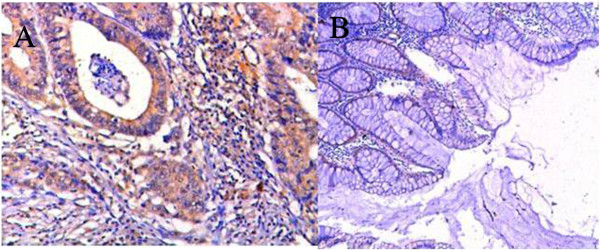
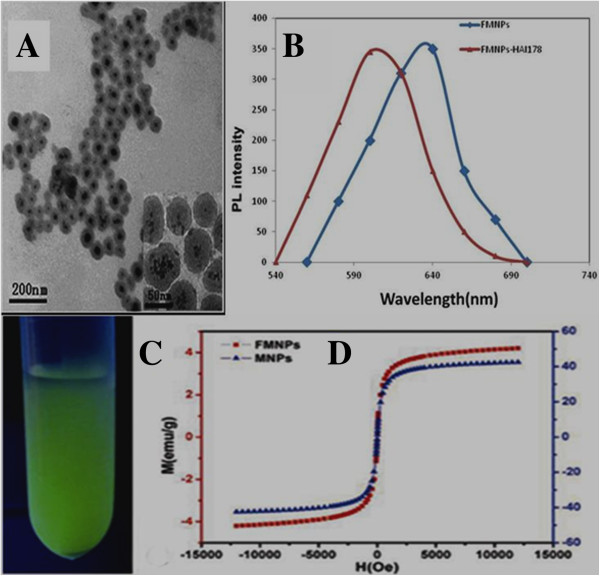
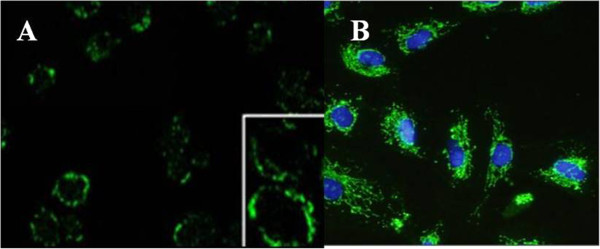
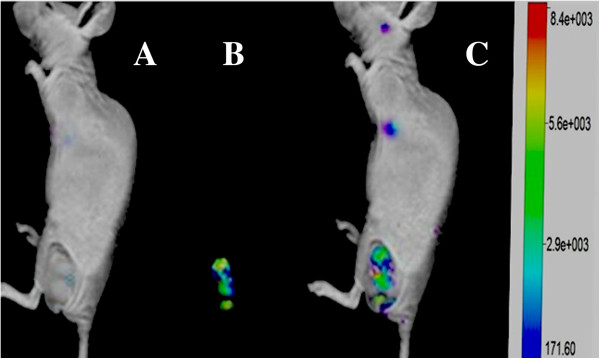
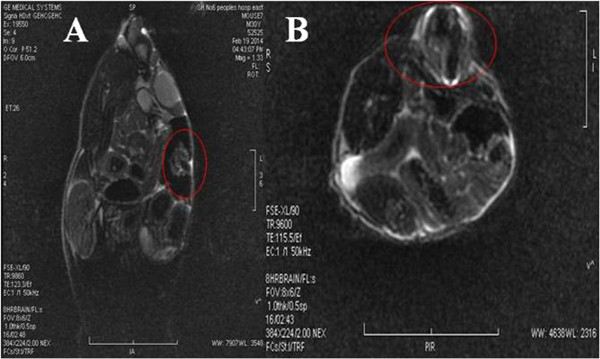
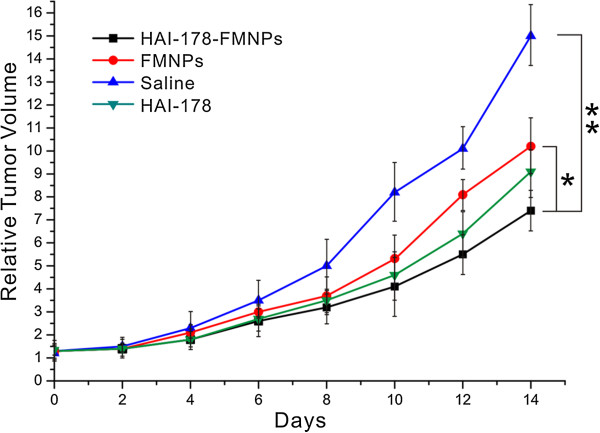
The successful development of safe and highly effective nanoprobes for targeted imaging and simultaneous therapy of in vivo gastric cancer is a great challenge. Herein we reported for the first time that anti-α-subunit of ATP synthase antibody, HAI-178 monoclonal antibody-conjugated fluorescent magnetic nanoparticles, was successfully used for targeted imaging and simultaneous therapy of in vivo gastric cancer. A total of 172 specimens of gastric cancer tissues were collected, and the expression of α-subunit of ATP synthase in gastric cancer tissues was investigated by immunohistochemistry method. Fluorescent magnetic nanoparticles were prepared and conjugated with HAI-178 monoclonal antibody, and the resultant HAI-178 antibody-conjugated fluorescent magnetic nanoparticles (HAI-178-FMNPs) were co-incubated with gastric cancer MGC803 cells and gastric mucous GES-1 cells. Gastric cancer-bearing nude mice models were established, were injected with prepared HAI-178-FMNPs via tail vein, and were imaged by magnetic resonance imaging and small animal fluorescent imaging system. The results showed that the α-subunit of ATP synthase exhibited high expression in 94.7% of the gastric cancer tissues. The prepared HAI-178-FMNPs could target actively MGC803 cells, realized fluorescent imaging and magnetic resonance imaging of in vivo gastric cancer, and actively inhibited growth of gastric cancer cells. In conclusion, HAI-178 antibody-conjugated fluorescent magnetic nanoparticles have a great potential in applications such as targeted imaging and simultaneous therapy of in vivo early gastric cancer cells in the near future.
成功开发用于靶向成像和同时治疗体内胃癌的安全、高效的纳米探针是一个巨大的挑战。本文首次报道了,抗 ATP 合酶α亚单位单克隆抗体 HAI-178 与荧光磁性纳米颗粒偶联物,成功地用于体内胃癌的靶向成像和同时治疗。共收集 172 例胃癌组织标本,采用免疫组织化学方法研究胃癌组织中 ATP 合酶α亚单位的表达。制备荧光磁性纳米颗粒,并与 HAI-178 单克隆抗体偶联,得到 HAI-178 抗体偶联荧光磁性纳米颗粒(HAI-178-FMNPs),与胃癌 MGC803 细胞和胃黏膜 GES-1 细胞共孵育。建立荷胃癌裸鼠模型,经尾静脉注射制备的 HAI-178-FMNPs,通过磁共振成像和小动物荧光成像系统进行成像。结果表明,94.7%的胃癌组织中 ATP 合酶α亚单位呈高表达。所制备的 HAI-178-FMNPs 能够主动靶向 MGC803 细胞,实现体内胃癌的荧光成像和磁共振成像,并能主动抑制胃癌细胞的生长。综上所述,HAI-178 抗体偶联荧光磁性纳米颗粒在靶向成像和同时治疗体内早期胃癌细胞等方面具有很大的应用潜力。