Zhou Zhijun, Zhang Chunlei, Qian Qirong, Ma Jiebing, Huang Peng, Zhang Xi, Pan Liyuan, Gao Guo, Fu Hualin, Fu Shen, Song Hua, Zhi Xiao, Ni Jian, Cui Daxiang
J Nanobiotechnology. 2013 May 29;11:17. doi: 10.1186/1477-3155-11-17.
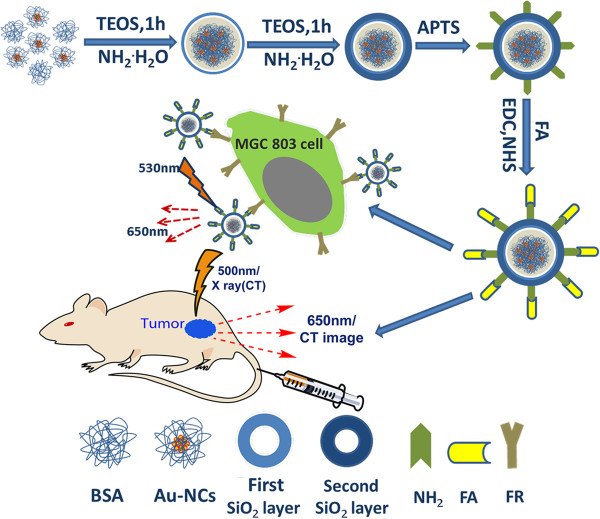
Gastric cancer is 2th most common cancer in China, and is still the second most common cause of cancer-related death in the world. Successful development of safe and effective nanoprobes for in vivo gastric cancer targeting imaging is a big challenge. This study is aimed to develop folic acid (FA)-conjugated silica coated gold nanoclusters (AuNCs) for targeted dual-modal fluorescent and X-ray computed tomography imaging (CT) of in vivo gastric cancer cells.
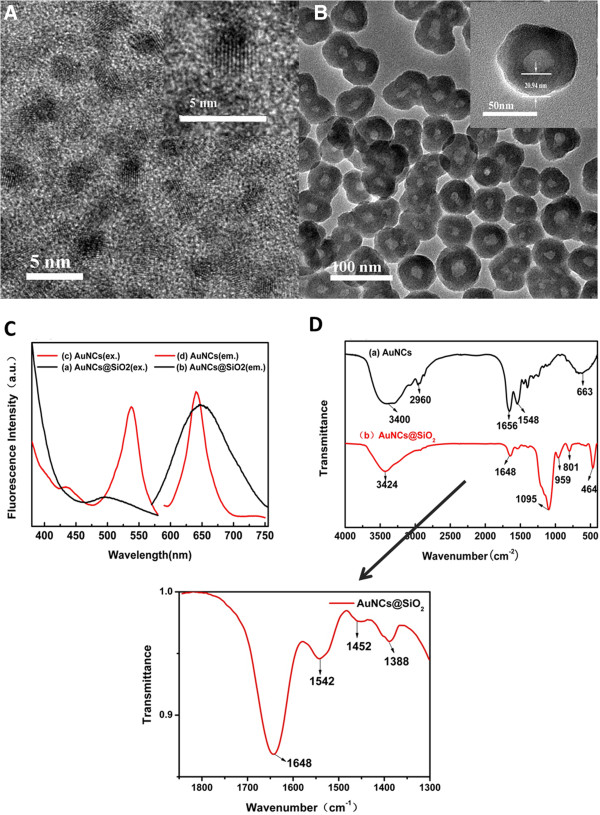
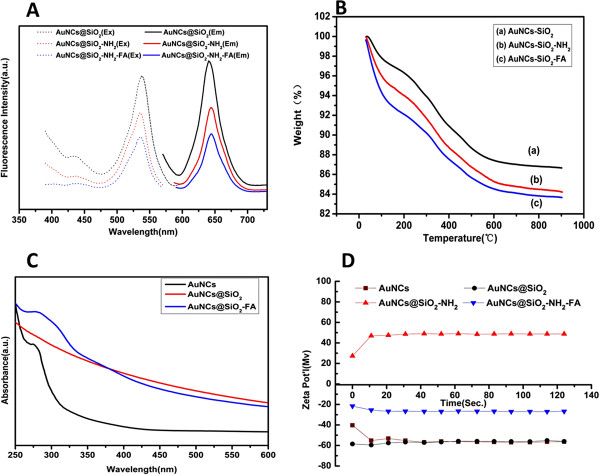
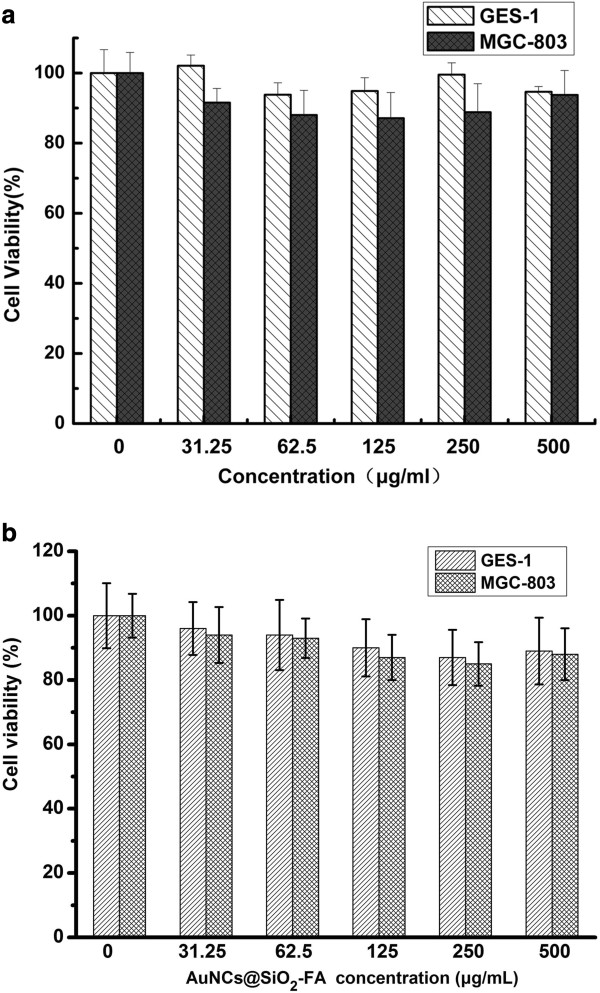
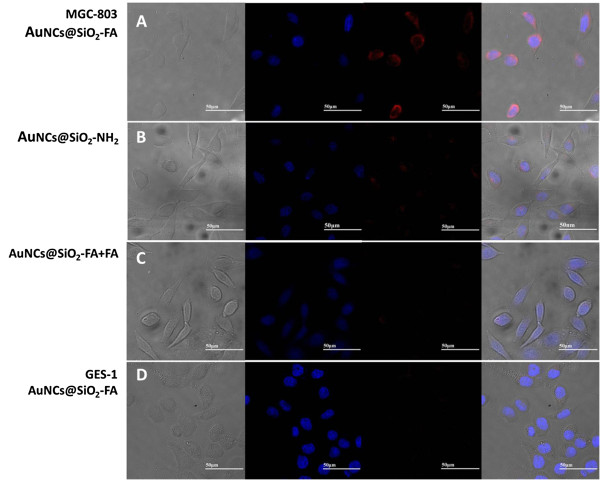
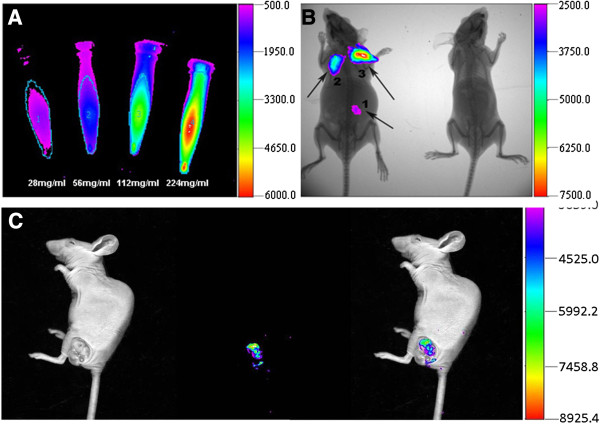
AuNCs were prepared, silica was coated on the surface of AuNCs, then folic acid was covalently anchored on the surface of AuNCs, resultant FA-conjugated AuNCs@SiO2 nanoprobes were investigated their cytotoxicity by MTT method, and their targeted ability to FR(+) MGC803 cells and FR(-) GES-1 cells. Nude mice model loaded with MGC803 cells were prepared, prepared nanoprobes were injected into nude mice via tail vein, and then were imaged by fluorescent and X-ray computed tomography (CT) imaging.
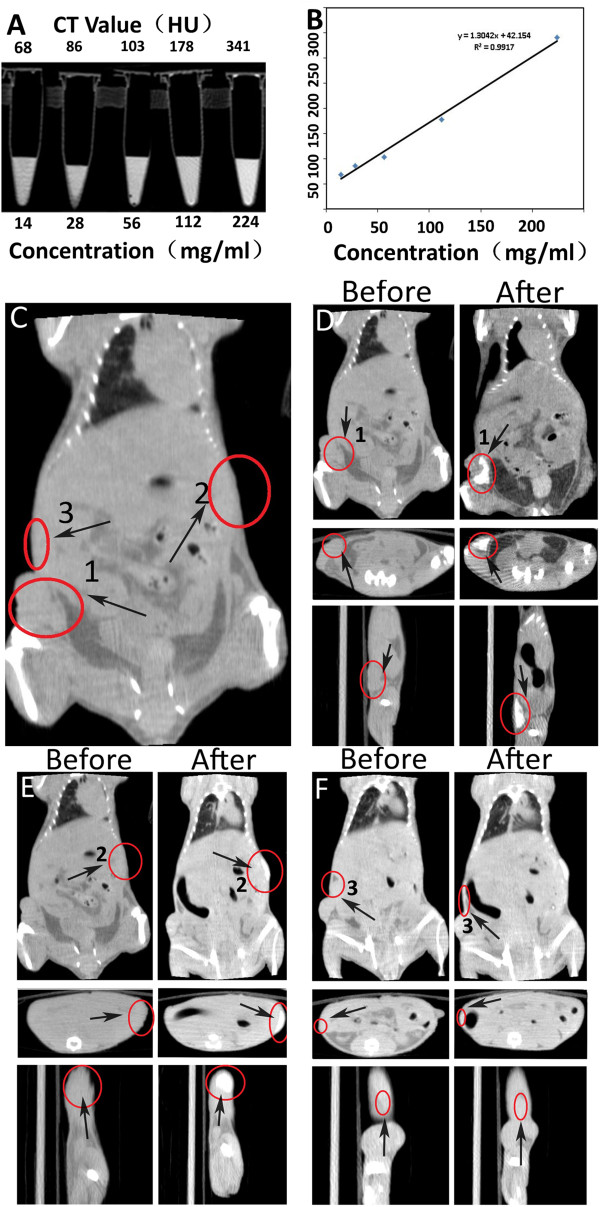
FA-conjugated AuNCs@SiO2 nanoprobes exhibited good biocompatibility, and could target actively the FR(+) MGC-803 cells and in vivo gastric cancer tissues with 5 mm in diameter in nude mice models, exhibited excellent red emitting fluorescence imaging and CT imaging.
The high-performance FA-conjugated AuNCs@SiO2 nanoprobes can target in vivo gastric cancer cells, can be used for fluorescent and CT dual-mode imaging, and may own great potential in applications such as targeted dual-mode imaging of in vivo early gastric cancer and other tumors with FR positive expression in near future.
胃癌是中国第二大常见癌症,在全球仍然是癌症相关死亡的第二大常见原因。成功开发用于体内胃癌靶向成像的安全有效的纳米探针是一项巨大挑战。本研究旨在开发叶酸(FA)共轭的二氧化硅包覆金纳米簇(AuNCs),用于体内胃癌细胞的靶向双模态荧光和X射线计算机断层扫描成像(CT)。
制备AuNCs,在AuNCs表面包覆二氧化硅,然后将叶酸共价锚定在AuNCs表面,通过MTT法研究所得FA共轭的AuNCs@SiO2纳米探针的细胞毒性,以及它们对FR(+) MGC803细胞和FR(-) GES-1细胞的靶向能力。制备负载MGC803细胞的裸鼠模型,将制备好的纳米探针经尾静脉注射到裸鼠体内,然后进行荧光和X射线计算机断层扫描(CT)成像。
FA共轭的AuNCs@SiO2纳米探针表现出良好的生物相容性,能够主动靶向裸鼠模型中直径为5 mm的FR(+) MGC-803细胞和体内胃癌组织,表现出优异的红色荧光成像和CT成像。
高性能的FA共轭AuNCs@SiO2纳米探针能够靶向体内胃癌细胞,可用于荧光和CT双模态成像,在未来不久用于体内早期胃癌及其他FR阳性表达肿瘤的靶向双模态成像等应用中可能具有巨大潜力。