Di Marco Fabiana, Di Paolo Mattia, Romeo Stefania, Colecchi Linda, Fiorani Lavinia, Spana Sharon, Stone Jonathan, Bisti Silvia
Department of Biotechnology and Applied Clinical Science, University of L'Aquila, L'Aquila, Italy.
Discipline of Physiology and Bosch Institute, University of Sydney, Sydney, New South Wales, Australia.
PLoS One. 2014 Jun 23;9(6):e100389. doi: 10.1371/journal.pone.0100389. eCollection 2014.
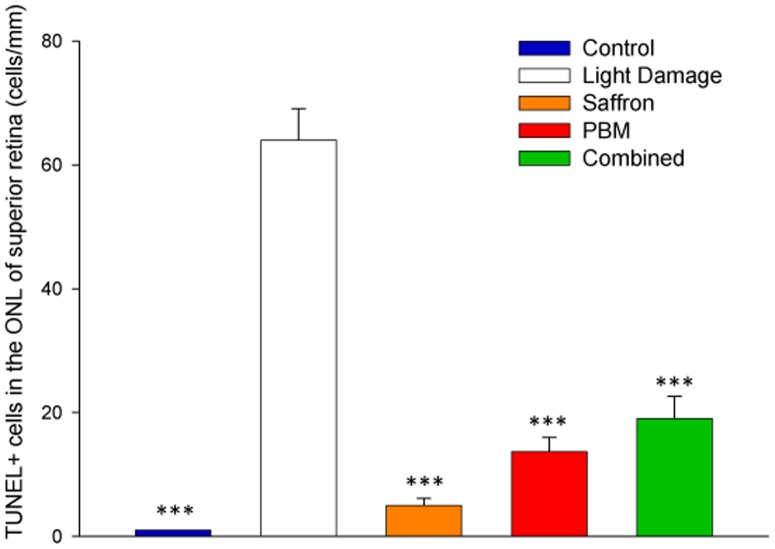
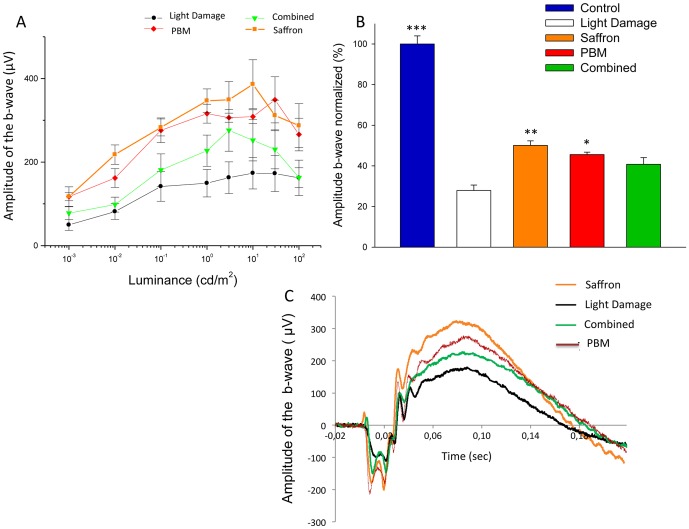
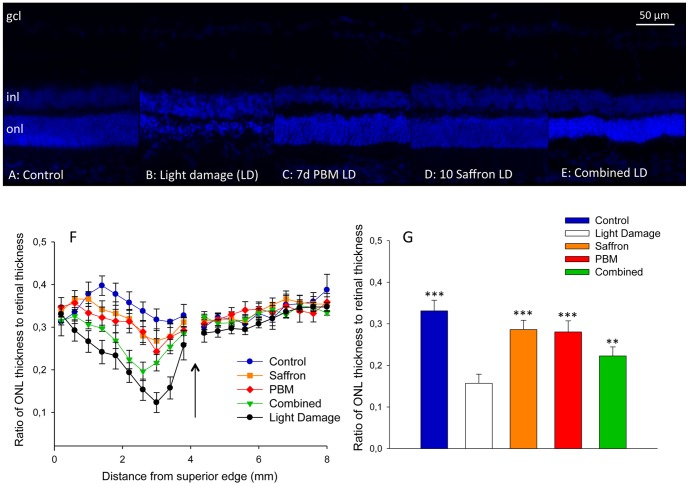
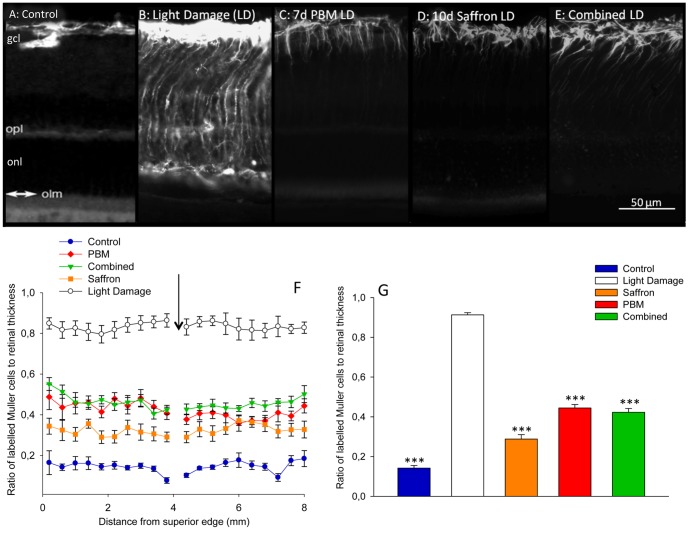
The central nervous system undergoing degeneration can be stabilized, and in some models can be restored to function, by neuroprotective treatments. Photobiomodulation (PBM) and dietary saffron are distinctive as neuroprotectants in that they upregulate protective mechanisms, without causing measurable tissue damage. This study reports a first attempt to combine the actions of PBM and saffron. Our working hypothesis was that the actions of PBM and saffron in protecting retinal photoreceptors, in a rat light damage model, would be additive. Results confirmed the neuroprotective potential of each used separately, but gave no evidence that their effects are additive. Detailed analysis suggests that there is actually a negative interaction between PBM and saffron when given simultaneously, with a consequent reduction of the neuroprotection. Specific testing will be required to understand the mechanisms involved and to establish whether there is clinical potential in combining neuroprotectants, to improve the quality of life of people affected by retinal pathology, such as age-related macular degeneration, the major cause of blindness and visual impairment in older adults.
通过神经保护治疗,正在发生退变的中枢神经系统可以得到稳定,在某些模型中还可以恢复功能。光生物调节(PBM)和膳食藏红花作为神经保护剂具有独特之处,因为它们能上调保护机制,且不会造成可测量的组织损伤。本研究报告了首次将PBM和藏红花的作用相结合的尝试。我们的工作假设是,在大鼠光损伤模型中,PBM和藏红花对视网膜光感受器的保护作用将具有相加性。结果证实了单独使用时每种物质的神经保护潜力,但没有证据表明它们的作用具有相加性。详细分析表明,同时给予PBM和藏红花时实际上存在负相互作用,从而导致神经保护作用减弱。需要进行特定测试以了解其中涉及的机制,并确定联合使用神经保护剂是否具有临床潜力,从而改善受视网膜病变(如年龄相关性黄斑变性,老年人失明和视力障碍的主要原因)影响的人群的生活质量。