Ryabov Eugene V, Wood Graham R, Fannon Jessica M, Moore Jonathan D, Bull James C, Chandler Dave, Mead Andrew, Burroughs Nigel, Evans David J
School of Life Sciences, University of Warwick, Coventry, United Kingdom.
Warwick Systems Biology Centre, University of Warwick, Coventry, United Kingdom.
PLoS Pathog. 2014 Jun 26;10(6):e1004230. doi: 10.1371/journal.ppat.1004230. eCollection 2014 Jun.
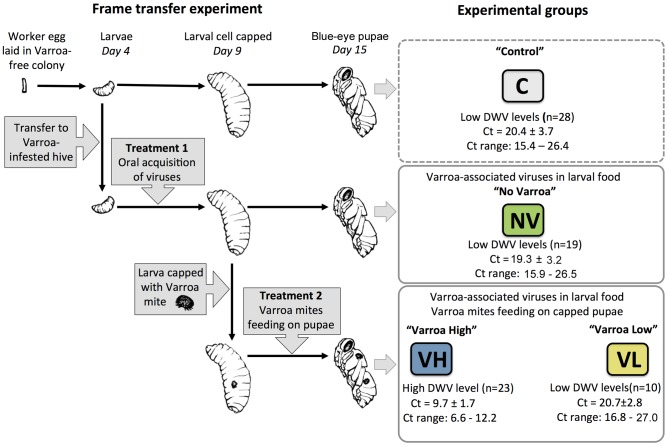
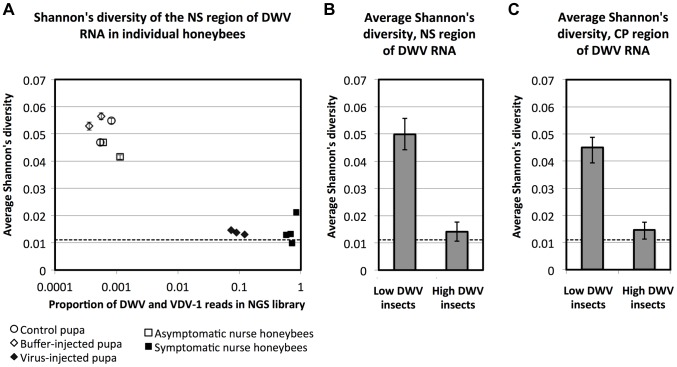
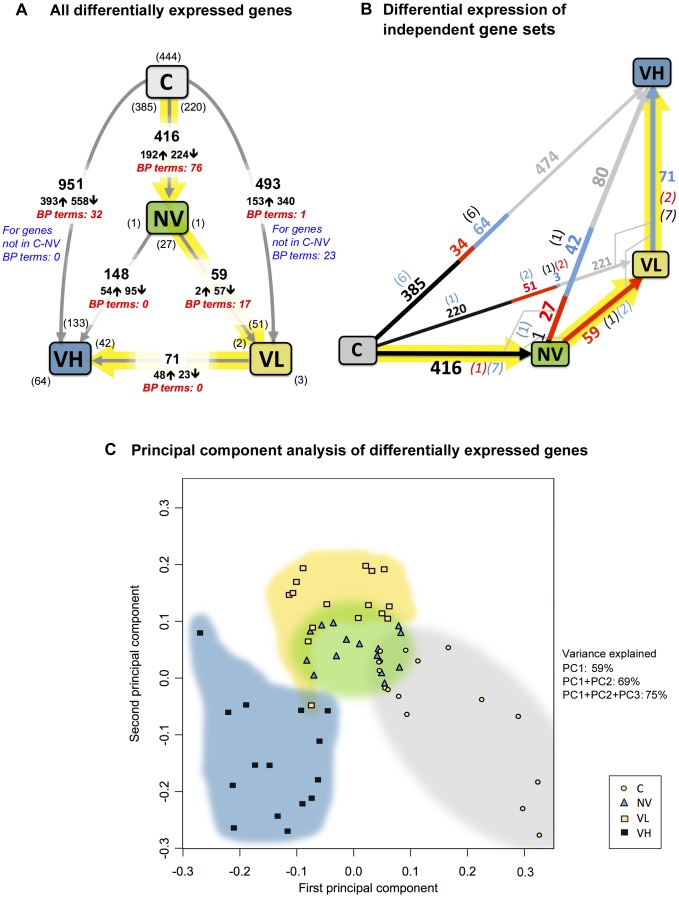
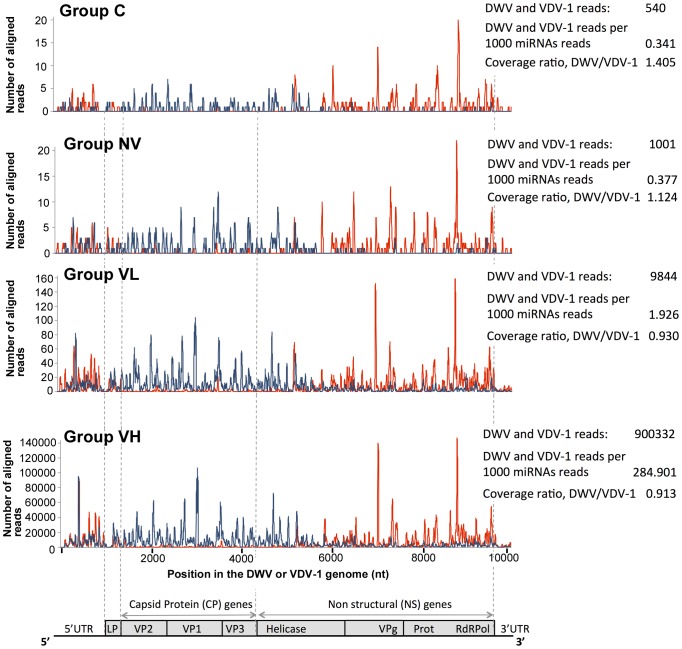
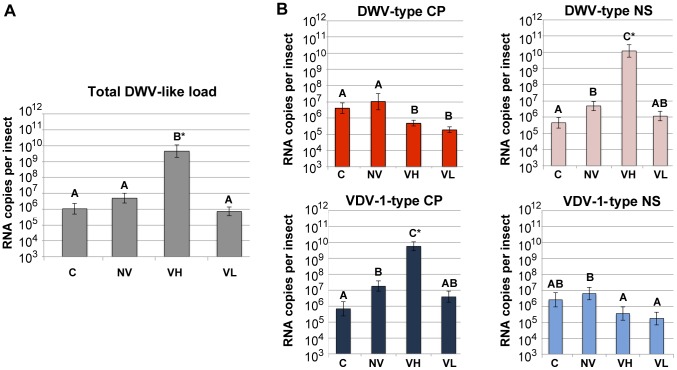
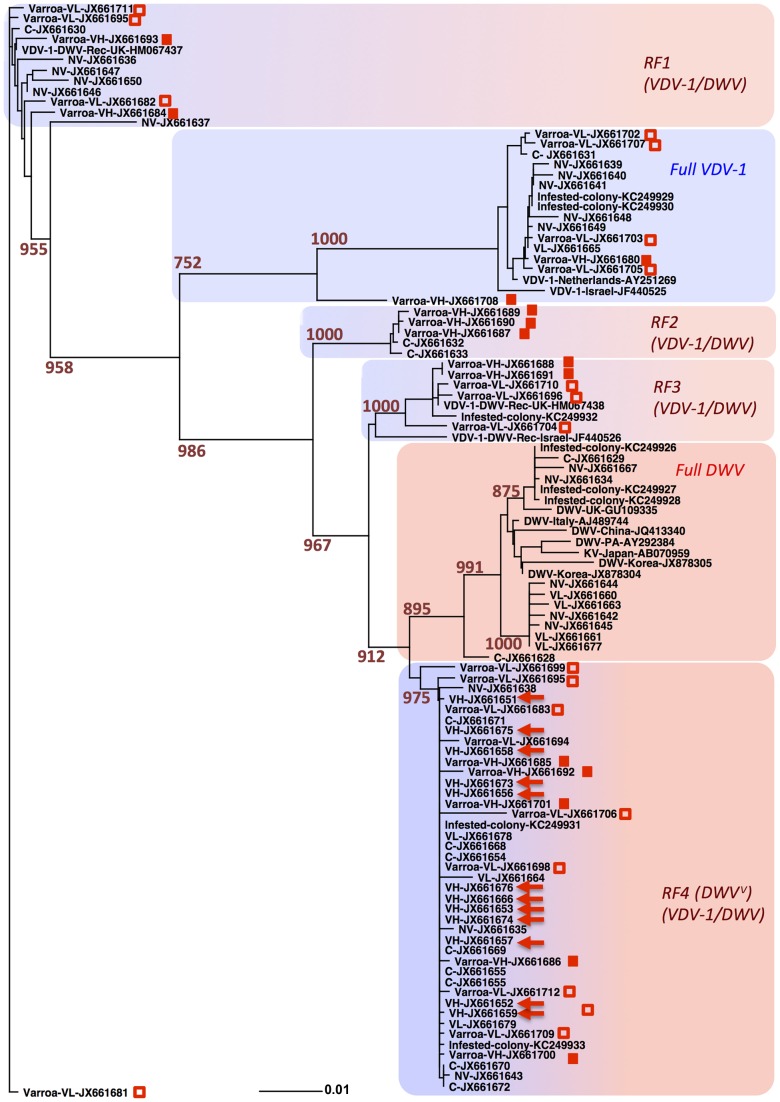
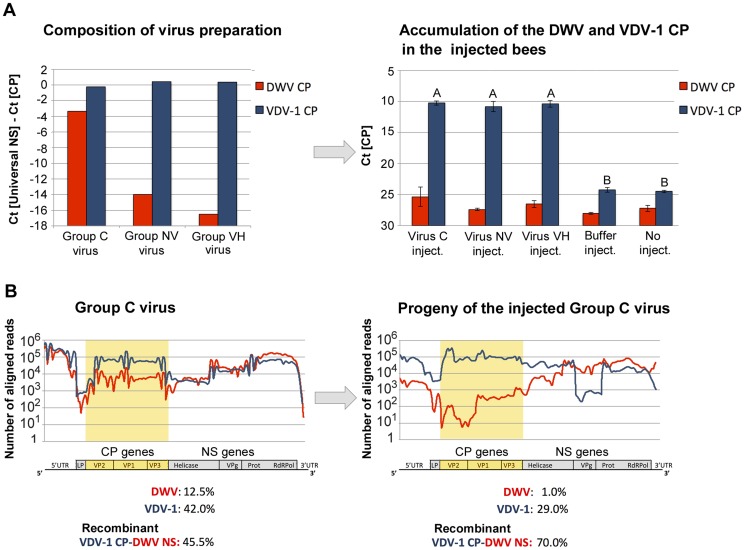
The globally distributed ectoparasite Varroa destructor is a vector for viral pathogens of the Western honeybee (Apis mellifera), in particular the Iflavirus Deformed Wing Virus (DWV). In the absence of Varroa low levels DWV occur, generally causing asymptomatic infections. Conversely, Varroa-infested colonies show markedly elevated virus levels, increased overwintering colony losses, with impairment of pupal development and symptomatic workers. To determine whether changes in the virus population were due Varroa amplifying and introducing virulent virus strains and/or suppressing the host immune responses, we exposed Varroa-naïve larvae to oral and Varroa-transmitted DWV. We monitored virus levels and diversity in developing pupae and associated Varroa, the resulting RNAi response and transcriptome changes in the host. Exposed pupae were stratified by Varroa association (presence/absence) and virus levels (low/high) into three groups. Varroa-free pupae all exhibited low levels of a highly diverse DWV population, with those exposed per os (group NV) exhibiting changes in the population composition. Varroa-associated pupae exhibited either low levels of a diverse DWV population (group VL) or high levels of a near-clonal virulent variant of DWV (group VH). These groups and unexposed controls (C) could be also discriminated by principal component analysis of the transcriptome changes observed, which included several genes involved in development and the immune response. All Varroa tested contained a diverse replicating DWV population implying the virulent variant present in group VH, and predominating in RNA-seq analysis of temporally and geographically separate Varroa-infested colonies, was selected upon transmission from Varroa, a conclusion supported by direct injection of pupae in vitro with mixed virus populations. Identification of a virulent variant of DWV, the role of Varroa in its transmission and the resulting host transcriptome changes furthers our understanding of this important viral pathogen of honeybees.
全球分布的外寄生虫狄斯瓦螨是西方蜜蜂(意大利蜜蜂)病毒病原体的传播媒介,尤其是感染Iflavirus属的变形翅病毒(DWV)。在没有狄斯瓦螨的情况下,DWV水平较低,通常引起无症状感染。相反,感染狄斯瓦螨的蜂群显示病毒水平显著升高,越冬蜂群损失增加,蛹发育受损且工蜂出现症状。为了确定病毒种群的变化是由于狄斯瓦螨扩增并引入了毒性病毒株和/或抑制宿主免疫反应,我们将未接触过狄斯瓦螨的幼虫暴露于经口和通过狄斯瓦螨传播的DWV。我们监测了发育中的蛹和相关狄斯瓦螨中的病毒水平和多样性、宿主产生的RNAi反应以及转录组变化。根据是否有狄斯瓦螨(存在/不存在)和病毒水平(低/高)将暴露的蛹分为三组。无狄斯瓦螨的蛹均表现出低水平的高度多样化的DWV种群,经口暴露的蛹(NV组)种群组成发生了变化。与狄斯瓦螨相关的蛹要么表现出低水平的多样化DWV种群(VL组),要么表现出高水平的近乎克隆的DWV毒性变体(VH组)。通过对观察到的转录组变化进行主成分分析,也可以区分这些组和未暴露的对照(C组),其中包括几个参与发育和免疫反应的基因。所有测试的狄斯瓦螨都含有多样化的正在复制的DWV种群,这意味着VH组中存在的毒性变体,并且在对时间和地理上不同的感染狄斯瓦螨的蜂群进行RNA测序分析中占主导地位,这是通过在体外将混合病毒种群直接注射到蛹中得到支持的结论。鉴定出DWV的毒性变体、狄斯瓦螨在其传播中的作用以及由此导致的宿主转录组变化,进一步加深了我们对这种重要蜜蜂病毒病原体的理解。