Baccelli Ivan, Lombardi Lara, Luti Simone, Bernardi Rodolfo, Picciarelli Piero, Scala Aniello, Pazzagli Luigia
Department of Agri-food Production and Environmental Sciences, University of Florence, Florence, Italy.
Department of Biology, University of Pisa, Pisa, Italy.
PLoS One. 2014 Jun 26;9(6):e100959. doi: 10.1371/journal.pone.0100959. eCollection 2014.
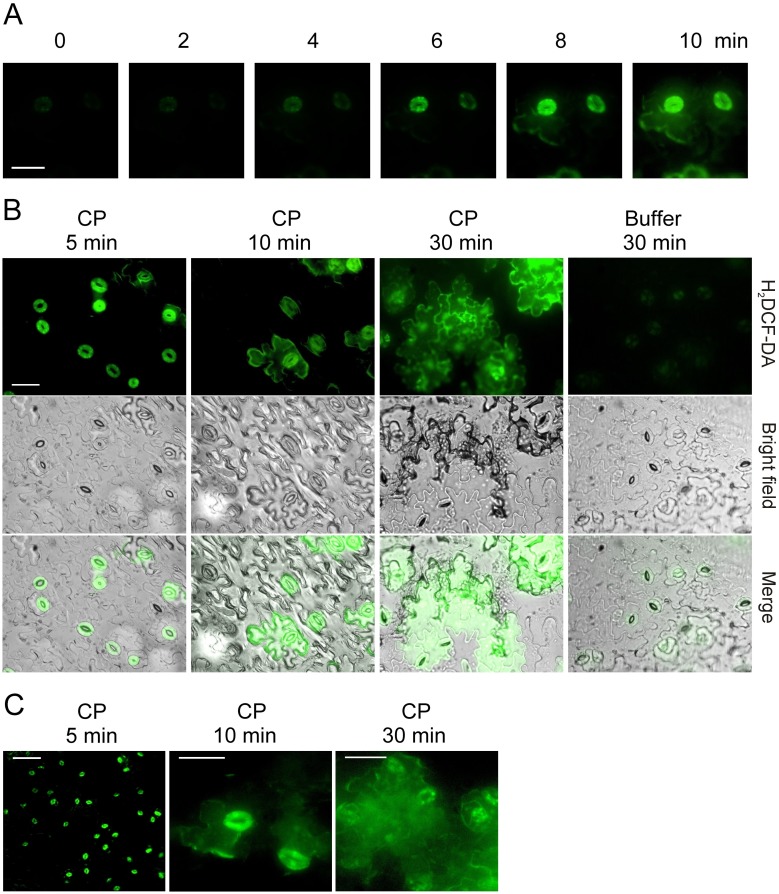
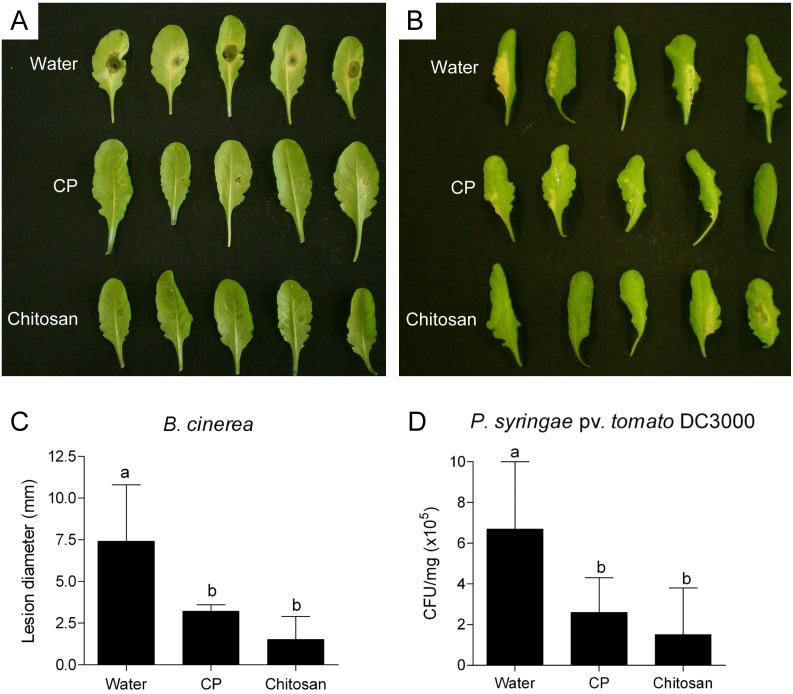
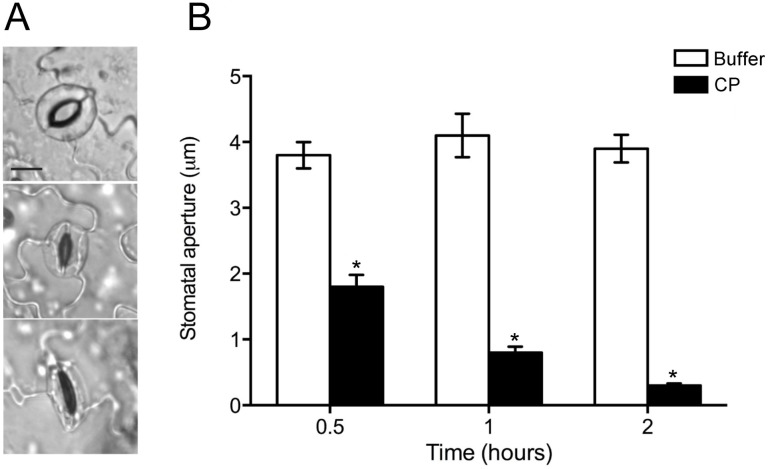
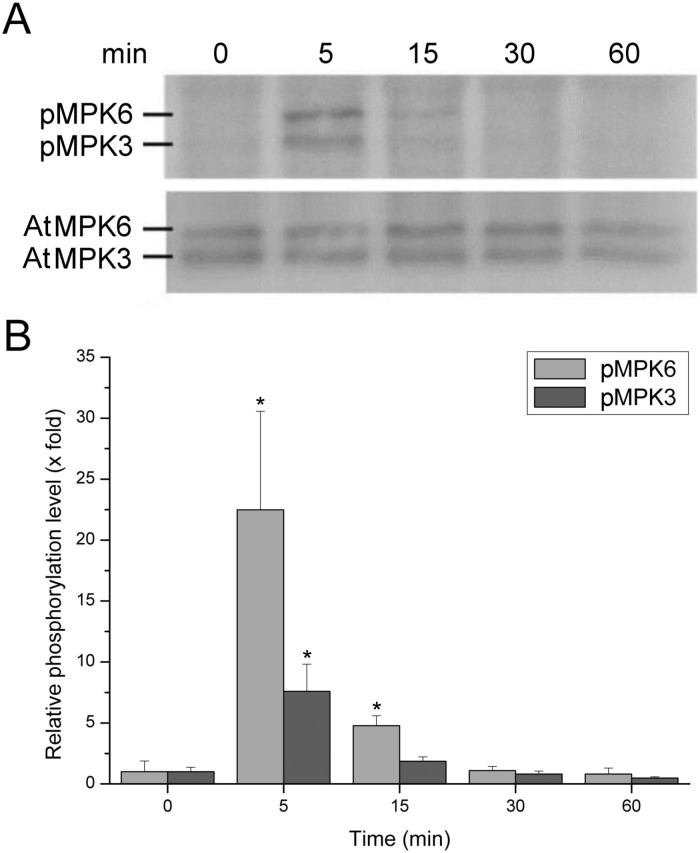
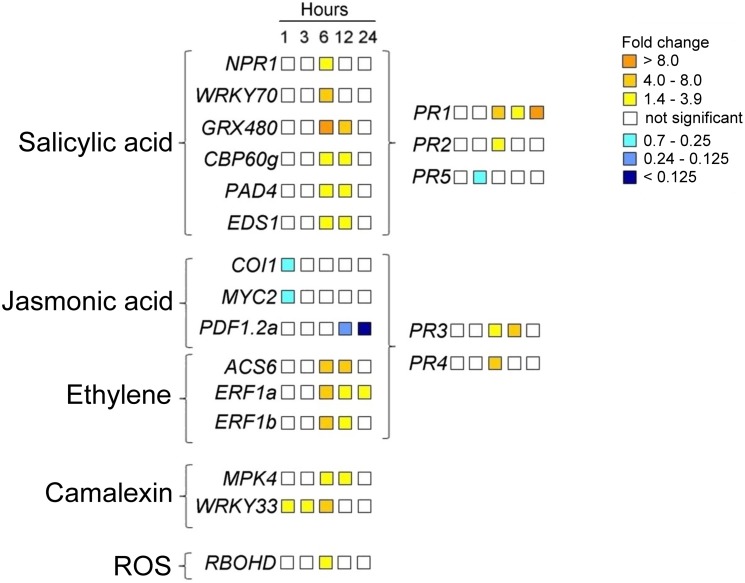
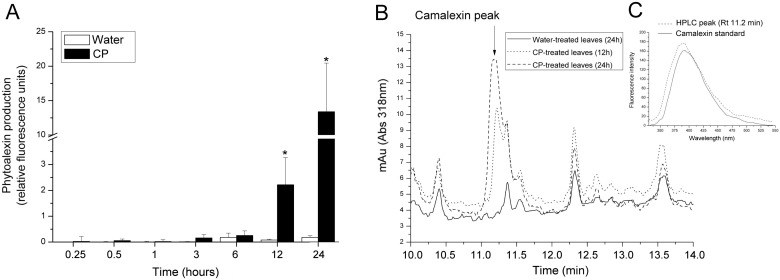
Microbe-associated molecular patterns (MAMPs) lead to the activation of the first line of plant defence. Few fungal molecules are universally qualified as MAMPs, and proteins belonging to the cerato-platanin protein (CPP) family seem to possess these features. Cerato-platanin (CP) is the name-giving protein of the CPP family and is produced by Ceratocystis platani, the causal agent of the canker stain disease of plane trees (Platanus spp.). On plane tree leaves, the biological activity of CP has been widely studied. Once applied on the leaf surface, CP acts as an elicitor of defence responses. The molecular mechanism by which CP elicits leaves is still unknown, and the protective effect of CP against virulent pathogens has not been clearly demonstrated. In the present study, we tried to address these questions in the model plant Arabidopsis thaliana. Our results suggest that stomata rapidly sense CP since they responded to the treatment with ROS signalling and stomatal closure, and that CP triggers salicylic acid (SA)- and ethylene (ET)-signalling pathways, but not the jasmonic acid (JA)-signalling pathway, as revealed by the expression pattern of 20 marker genes. Among these, EDS1, PAD4, NPR1, GRX480, WRKY70, ACS6, ERF1a/b, COI1, MYC2, PDF1.2a and the pathogenesis-related (PR) genes 1-5. CP rapidly induced MAPK phosphorylation and induced the biosynthesis of camalexin within 12 hours following treatment. The induction of localised resistance was shown by a reduced susceptibility of the leaves to the infection with Botrytis cinerea and Pseudomonas syringae pv. tomato. These results contribute to elucidate the key steps of the signalling process underlying the resistance induction in plants by CP and point out the central role played by the stomata in this process.
微生物相关分子模式(MAMPs)可激活植物的第一道防线。很少有真菌分子被普遍认定为MAMPs,而属于cerato - platanin蛋白(CPP)家族的蛋白质似乎具备这些特征。Ceratoplatanin(CP)是CPP家族的命名蛋白,由悬铃木溃疡病菌(Ceratocystis platani)产生,该病菌可引发悬铃木属植物的溃疡病。在悬铃木叶片上,CP的生物活性已得到广泛研究。一旦施用于叶片表面,CP就会作为防御反应的激发子起作用。CP引发叶片反应的分子机制尚不清楚,而且CP对强致病性病原体的保护作用也未得到明确证实。在本研究中,我们试图在模式植物拟南芥中解决这些问题。我们的结果表明,气孔能快速感知CP,因为它们会通过活性氧信号传导和气孔关闭对CP处理作出反应,并且CP会触发水杨酸(SA)和乙烯(ET)信号通路,但不会触发茉莉酸(JA)信号通路,这一点通过20个标记基因的表达模式得以揭示。其中包括EDS1、PAD4、NPR1、GRX480、WRKY70、ACS6、ERF1a/b、COI1、MYC2、PDF1.2a以及病程相关(PR)基因1 - 5。CP在处理后12小时内迅速诱导丝裂原活化蛋白激酶(MAPK)磷酸化并诱导植保素(camalexin)的生物合成。叶片对灰葡萄孢菌和番茄丁香假单胞菌感染的易感性降低,表明诱导了局部抗性。这些结果有助于阐明CP诱导植物抗性信号传导过程的关键步骤,并指出气孔在这一过程中所起的核心作用。