Kokkinopoulou Maria, Güler M Alptekin, Lieb Bernhard, Barbeck Mike, Ghanaati Shahram, Markl Jürgen
Institute of Zoology, Johannes Gutenberg University, Mainz, Germany.
Institute of Pathology, University Medical Center of the Johannes Gutenberg University, Mainz, Germany.
PLoS One. 2014 Jun 27;9(6):e101078. doi: 10.1371/journal.pone.0101078. eCollection 2014.
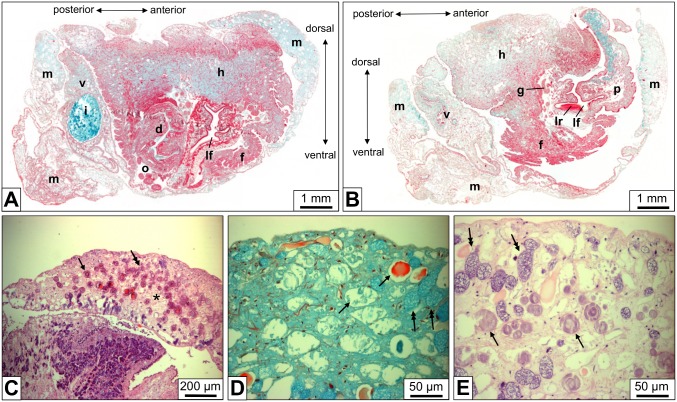
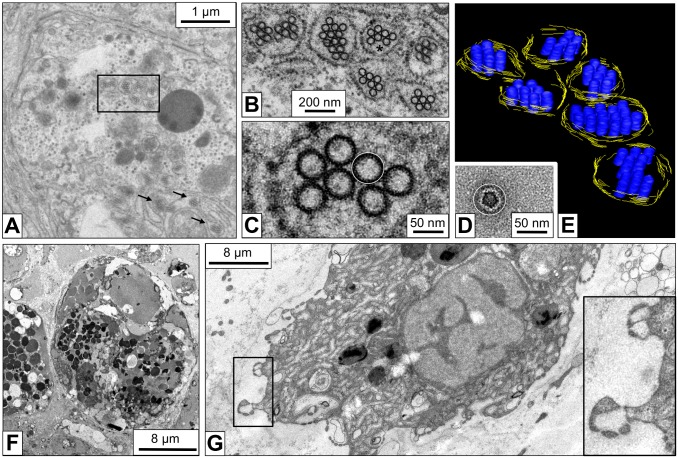
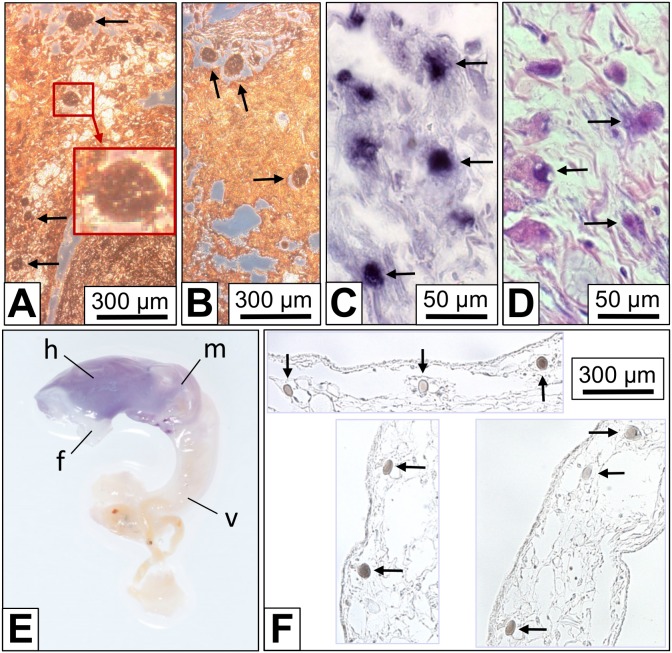
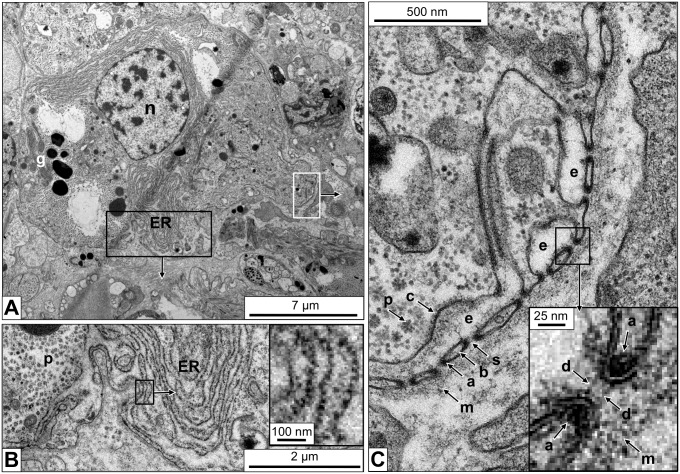
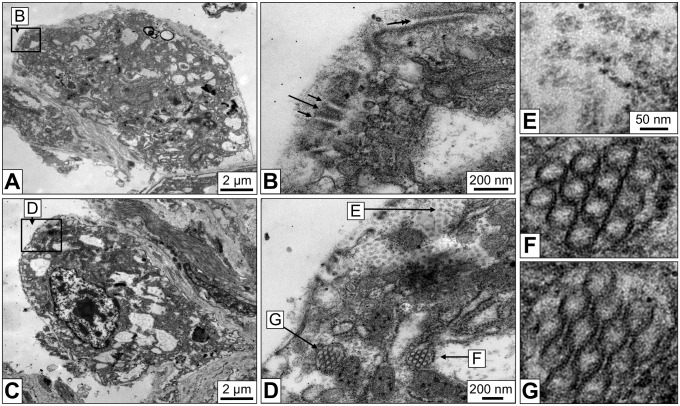
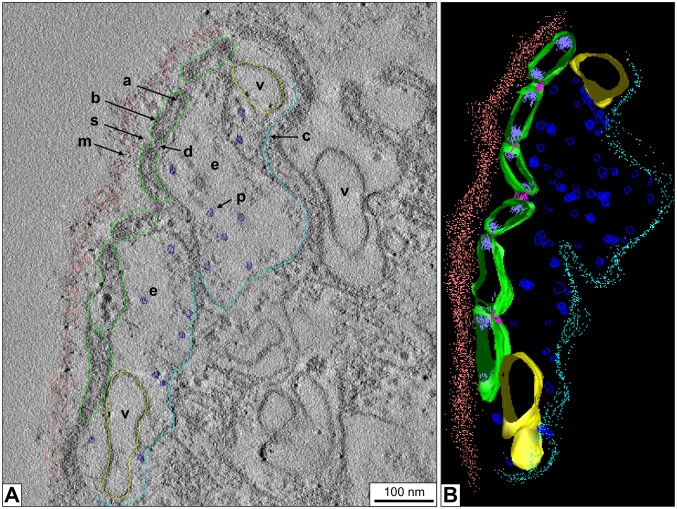
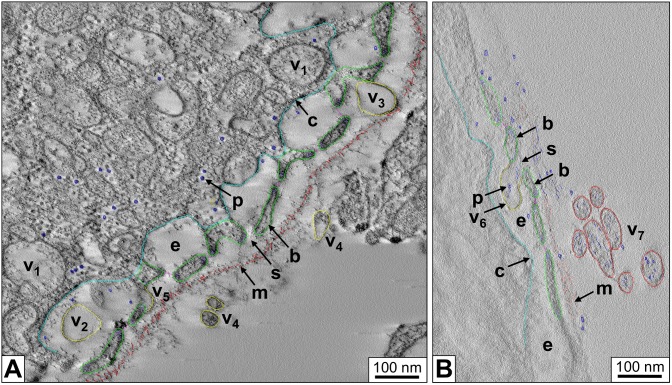
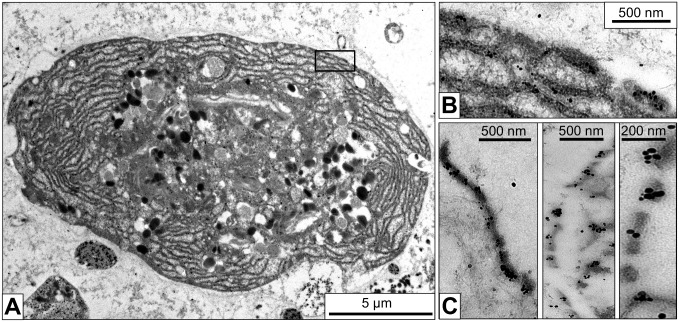
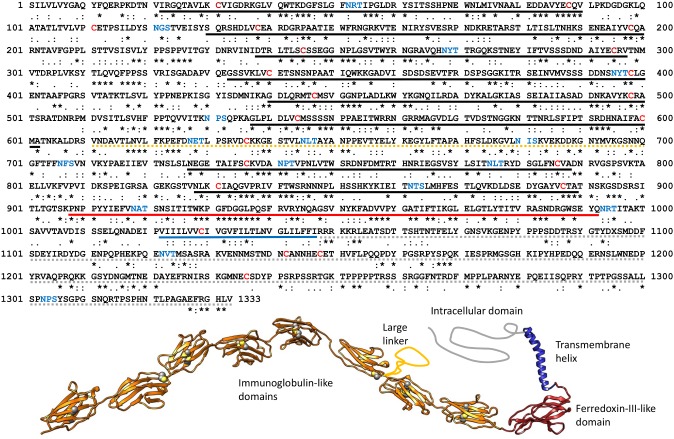
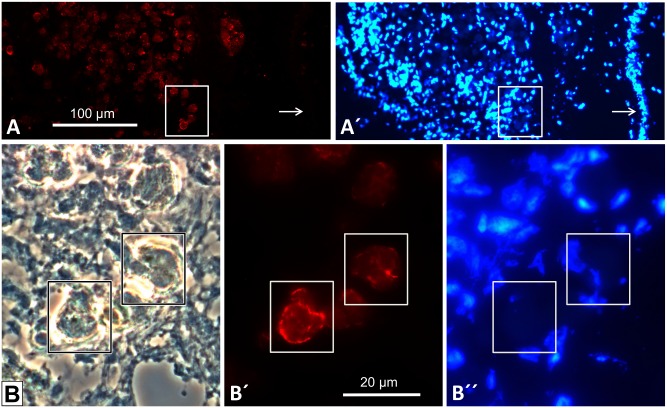
Rhogocytes are pore cells scattered among the connective tissue of different body parts of gastropods and other molluscs, with great variation in their number, shape and size. They are enveloped by a lamina of extracellular matrix. Their most characteristic feature is the "slit apparatus", local invaginations of the plasma membrane bridged by cytoplasmic bars, forming slits of ca. 20 nm width. A slit diaphragm creates a molecular sieve with permeation holes of 20×20 nm. In blue-blooded gastropods, rhogocytes synthesize and secrete the respiratory protein hemocyanin, and it has been proposed-though not proven-that in the rare red-blooded snail species they might synthesize and secrete the hemoglobin. However, the cellular secretion pathway for respiratory proteins, and the functional role(s) of the enigmatic rhogocyte slit apparatus are still unclear. Additional functions for rhogocytes have been proposed, notably a role in protein uptake and degradation, and in heavy metal detoxification. Here we provide new structural and functional information on the rhogocytes of the red-blooded freshwater snail Biomphalaria glabrata. By in situ hybridization of mantle tissues, we prove that rhogocytes indeed synthesize hemoglobin. By electron tomography, the first three dimensional (3D) reconstructions of the slit apparatus are provided, showing detail of highly dense material in the cytoplasmic bars close to the slits. By immunogold labelling, we collected evidence that a major component of this material is actin. By genome databank mining, the complete sequence of a B. glabrata nephrin was obtained, and localized to the rhogocytes by immunofluorescence microscopy. The presence of both proteins fit the ultrastructure-based hypothesis that rhogocytes are related to mammalian podocytes and insect nephrocytes. Reactions of the rhogocytes to deprivation of food and cadmium toxification are also documented, and a possible secretion pathway of newly synthesized respiratory proteins through the slit apparatus is discussed.
血红细胞散布于腹足纲动物和其他软体动物身体不同部位的结缔组织中,其数量、形状和大小差异很大。它们被一层细胞外基质所包裹。其最显著的特征是“裂隙装置”,即质膜局部内陷,由细胞质条带桥接,形成宽度约为20纳米的裂隙。裂隙隔膜形成一个具有20×20纳米渗透孔的分子筛。在血蓝蛋白的腹足纲动物中,血红细胞合成并分泌呼吸蛋白血蓝蛋白,并且有人提出——尽管尚未得到证实——在罕见的血红细胞蜗牛物种中,它们可能合成并分泌血红蛋白。然而,呼吸蛋白的细胞分泌途径以及神秘的血红细胞裂隙装置的功能作用仍不清楚。有人提出血红细胞还有其他功能,特别是在蛋白质摄取和降解以及重金属解毒方面的作用。在这里,我们提供了关于红血细胞淡水蜗牛光滑双脐螺血红细胞的新的结构和功能信息。通过外套膜组织的原位杂交,我们证明血红细胞确实合成血红蛋白。通过电子断层扫描,提供了裂隙装置的首批三维(3D)重建图像,显示了靠近裂隙的细胞质条带中高密度物质的细节。通过免疫金标记,我们收集到证据表明这种物质的主要成分是肌动蛋白。通过基因组数据库挖掘,获得了光滑双脐螺nephrin的完整序列,并通过免疫荧光显微镜将其定位到血红细胞。这两种蛋白质的存在符合基于超微结构的假设,即血红细胞与哺乳动物足细胞和昆虫肾细胞有关。还记录了血红细胞对食物剥夺和镉中毒的反应,并讨论了新合成的呼吸蛋白通过裂隙装置的可能分泌途径。