Bengtsson Daniel, Avril Alexis, Gunnarsson Gunnar, Elmberg Johan, Söderquist Pär, Norevik Gabriel, Tolf Conny, Safi Kamran, Fiedler Wolfgang, Wikelski Martin, Olsen Björn, Waldenström Jonas
Centre for Ecology and Evolution in Microbial Model Systems, Linnaeus University, Kalmar, Sweden.
Division of Natural Sciences, Kristianstad University, Kristianstad, Sweden.
PLoS One. 2014 Jun 27;9(6):e100764. doi: 10.1371/journal.pone.0100764. eCollection 2014.
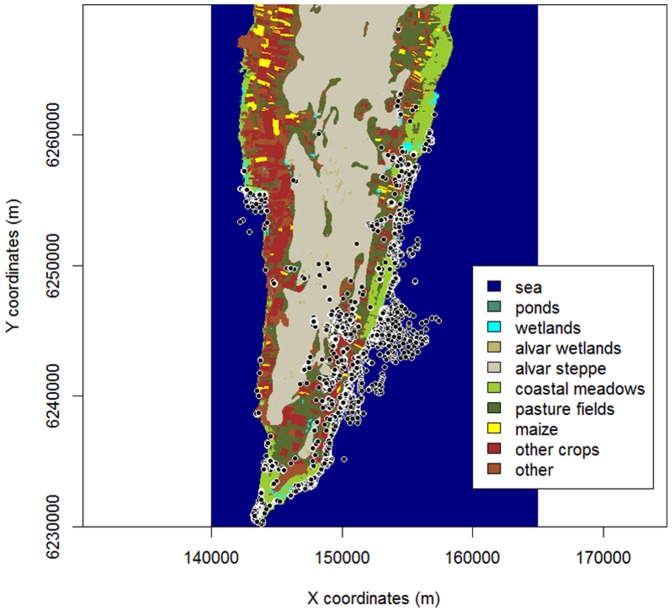
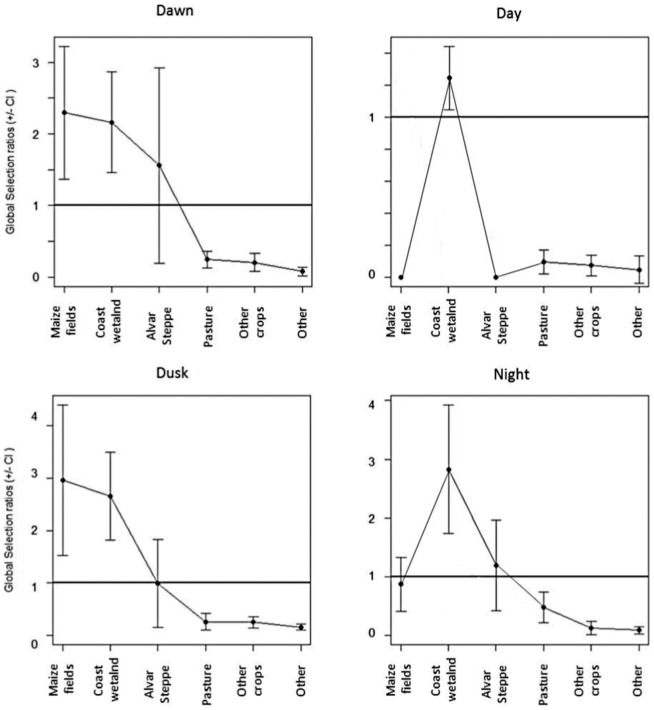
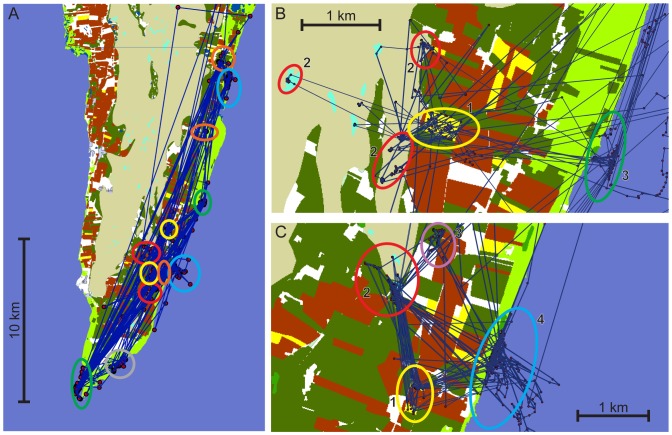
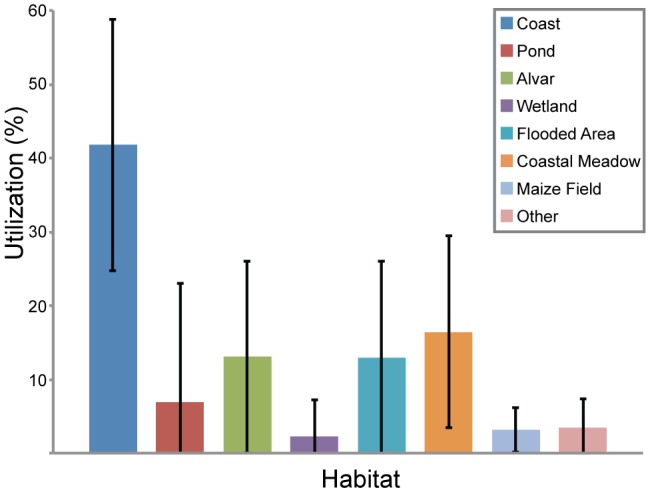
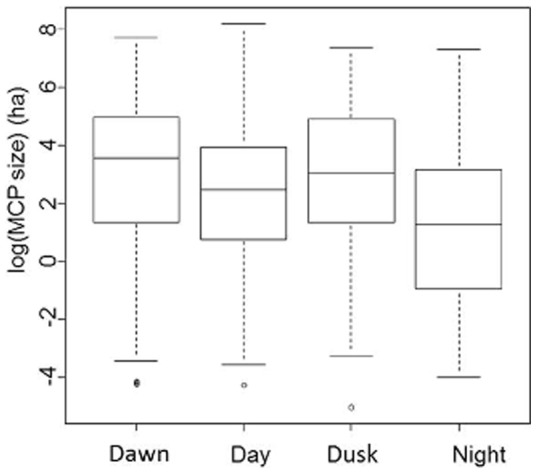
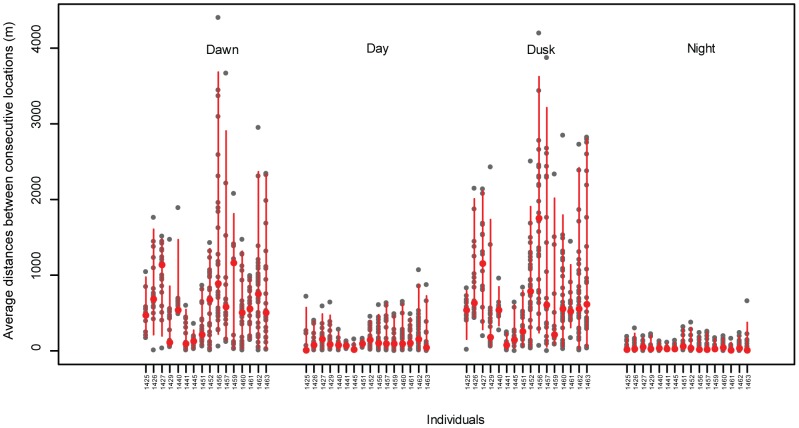
The mallard (Anas platyrhynchos) is a focal species in game management, epidemiology and ornithology, but comparably little research has focused on the ecology of the migration seasons. We studied habitat use, time-budgets, home-range sizes, habitat selection, and movements based on spatial data collected with GPS devices attached to wild mallards trapped at an autumn stopover site in the Northwest European flyway. Sixteen individuals (13 males, 3 females) were followed for 15-38 days in October to December 2010. Forty-nine percent (SD = 8.4%) of the ducks' total time, and 85% of the day-time (SD = 28.3%), was spent at sheltered reefs and bays on the coast. Two ducks used ponds, rather than coast, as day-roosts instead. Mallards spent most of the night (76% of total time, SD = 15.8%) on wetlands, mainly on alvar steppe, or in various flooded areas (e.g. coastal meadows). Crop fields with maize were also selectively utilized. Movements between roosting and foraging areas mainly took place at dawn and dusk, and the home-ranges observed in our study are among the largest ever documented for mallards (mean = 6,859 ha; SD = 5,872 ha). This study provides insights into relatively unknown aspects of mallard ecology. The fact that autumn-staging migratory mallards have a well-developed diel activity pattern tightly linked to the use of specific habitats has implications for wetland management, hunting and conservation, as well as for the epidemiology of diseases shared between wildlife and domestic animals.
绿头鸭(Anas platyrhynchos)是狩猎管理、流行病学和鸟类学领域的重点研究物种,但相对而言,针对其迁徙季节生态的研究较少。我们基于在西北欧飞行路线上一个秋季中途停留地捕获的野生绿头鸭身上安装的GPS设备收集的空间数据,研究了其栖息地利用、时间分配、活动范围大小、栖息地选择和移动情况。2010年10月至12月,对16只绿头鸭(13只雄性,3只雌性)进行了15至38天的跟踪研究。这些鸭子49%(标准差=8.4%)的总时间以及85%的白天时间(标准差=28.3%)都在海岸的隐蔽礁石和海湾度过。有两只鸭子白天栖息在池塘而非海岸。绿头鸭大部分夜晚(占总时间的76%,标准差=15.8%)在湿地度过,主要是在阿尔瓦草原或各种水淹区域(如沿海草甸)。有玉米的农田也被选择性利用。栖息和觅食区域之间的移动主要发生在黎明和黄昏,我们研究中观察到的活动范围是有记录以来绿头鸭最大的活动范围之一(平均=6859公顷;标准差=5872公顷)。这项研究为绿头鸭生态中相对未知的方面提供了见解。秋季迁徙中途停留的绿头鸭具有与特定栖息地利用紧密相关的发达昼夜活动模式,这一事实对湿地管理、狩猎和保护以及野生动物与家畜共患疾病的流行病学都有影响。