Zheng Fenping, Zhang Saifei, Lu Weina, Wu Fang, Yin Xueyao, Yu Dan, Pan Qianqian, Li Hong
Department of Endocrinology, Sir Run Run Shaw Hospital Affiliated with School of Zhejiang University, Hangzhou, Zhejiang, P. R. China.
Biomedical Research Center and Key Laboratory of Biotherapy of Zhejiang Province, Sir Run Run Shaw Hospital Affiliated with School of Zhejiang University, Hangzhou, Zhejiang, P.R. China.
PLoS One. 2014 Jun 27;9(6):e101269. doi: 10.1371/journal.pone.0101269. eCollection 2014.
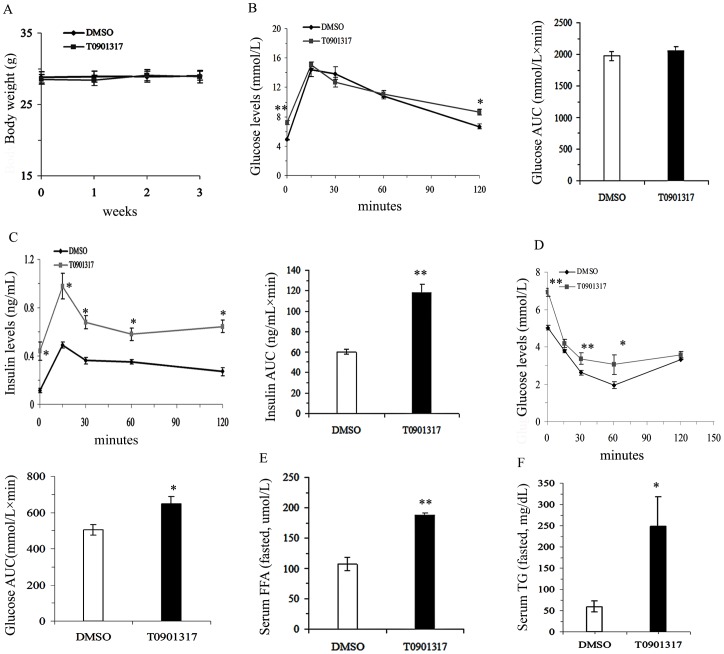
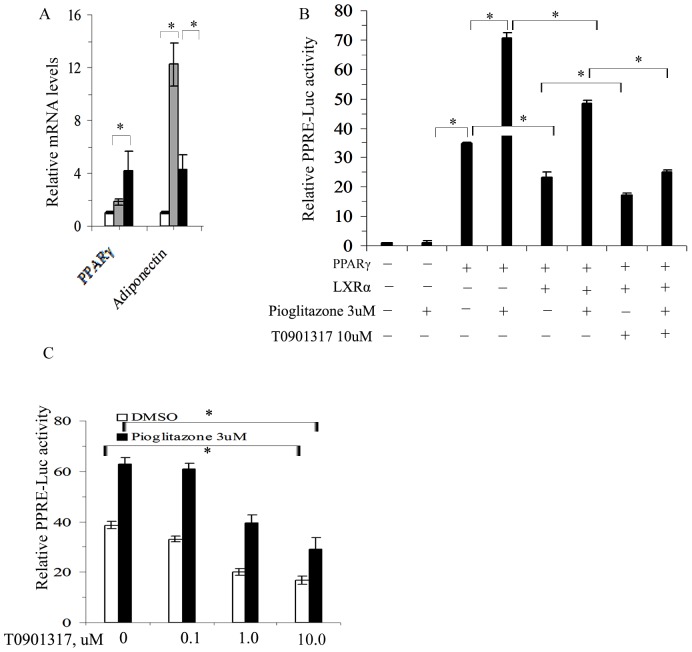
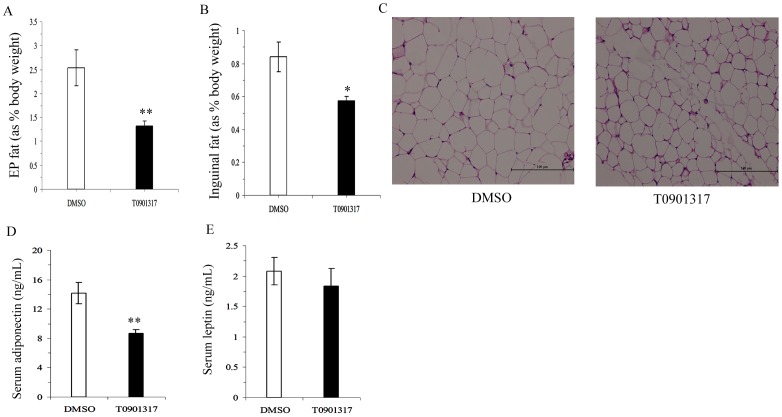
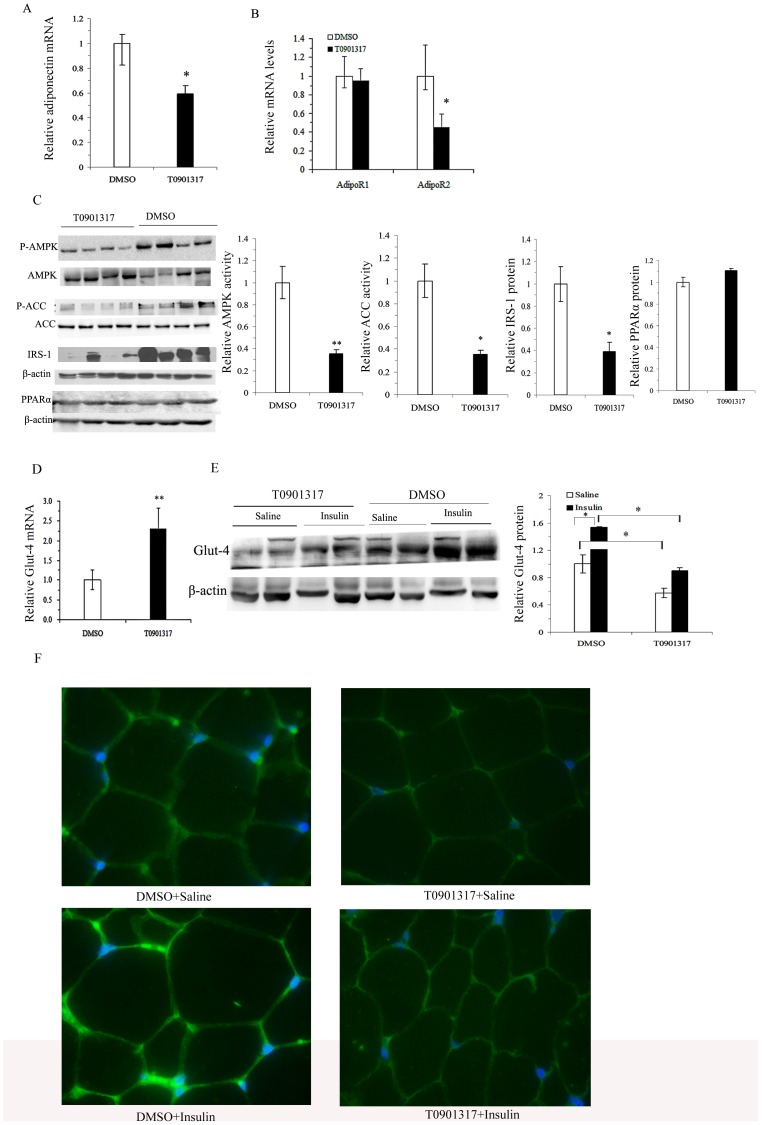
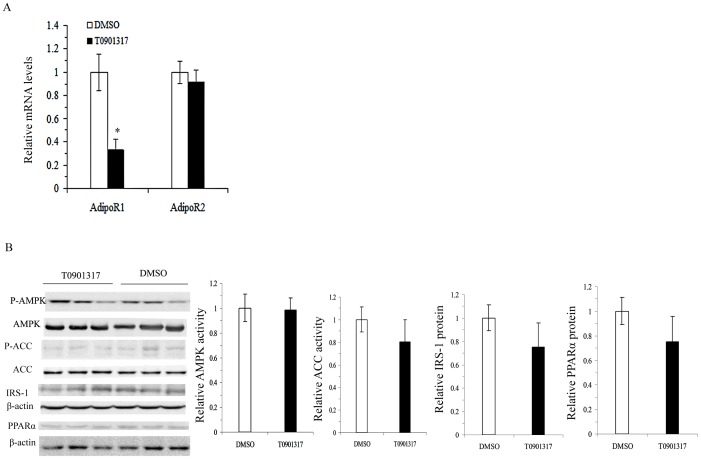
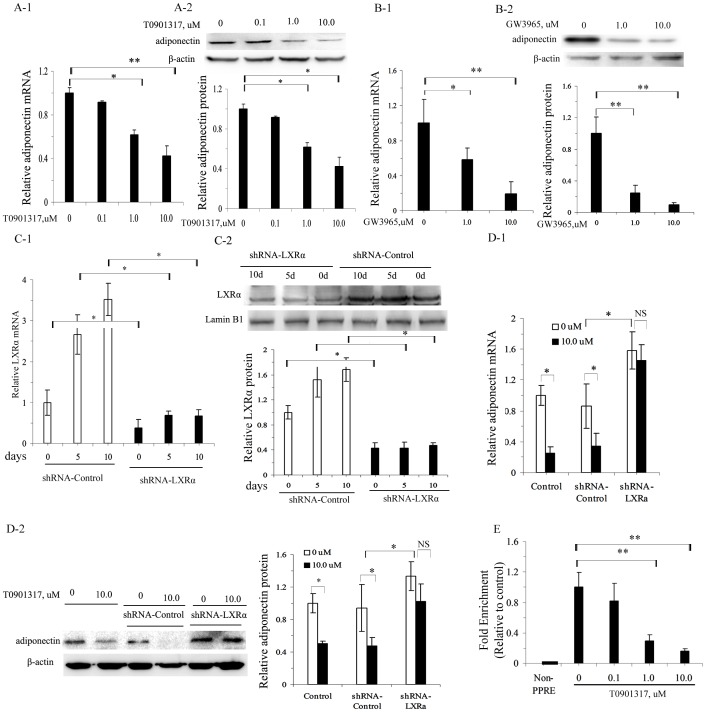
Liver X receptors (LXRs) have been recognized as a promising therapeutic target for atherosclerosis; however, their role in insulin sensitivity is controversial. Adiponectin plays a unique role in maintaining insulin sensitivity. Currently, no systematic experiments elucidating the role of LXR activation in insulin function based on adiponectin signaling have been reported. Here, we investigated the role of LXR activation in insulin resistance based on adiponectin signaling, and possible mechanisms. C57BL/6 mice maintained on a regular chow received the LXR agonist, T0901317 (30 mg/kg.d) for 3 weeks by intraperitoneal injection, and differentiated 3T3-L1 adipocytes were treated with T0901317 or GW3965. T0901317 treatment induced significant insulin resistance in C57BL/6 mice. It decreased adiponectin gene transcription in epididymal fat, as well as serum adiponectin levels. Activity of AMPK, a key mediator of adiponectin signaling, was also decreased, resulting in decreased Glut-4 membrane translocation in epididymal fat. In contrast, adiponectin activity was not changed in the liver of T0901317 treated mice. In vitro, both T0901317 and GW3965 decreased adiponectin expression in adipocytes in a dose-dependent manner, an effect which was diminished by LXRα silencing. ChIP-qPCR studies demonstrated that T0901317 decreased the binding of PPARγ to the PPAR-responsive element (PPRE) of the adiponectin promoter in a dose-dependent manner. Furthermore, T0901317 exerted an antagonistic effect on the expression of adiponectin in adipocytes co-treated with 3 µM Pioglitazone. In luciferase reporter gene assays, T0901317 dose-dependently inhibited PPRE-Luc activity in HEK293 cells co-transfected with LXRα and PPARγ. These results suggest that LXR activation induces insulin resistance with decreased adiponectin signaling in epididymal fat, probably due to negative regulation of PPARγ signaling. These findings indicate that the potential of LXR activation as a therapeutic target for atherosclerosis may be limited by the possibility of exacerbating insulin resistance-related disease.
肝脏X受体(LXRs)已被公认为动脉粥样硬化的一个有前景的治疗靶点;然而,它们在胰岛素敏感性中的作用存在争议。脂联素在维持胰岛素敏感性方面发挥着独特作用。目前,尚未有基于脂联素信号通路阐明LXR激活在胰岛素功能中作用的系统性实验报道。在此,我们研究了基于脂联素信号通路的LXR激活在胰岛素抵抗中的作用及可能机制。以常规饲料喂养的C57BL/6小鼠通过腹腔注射接受LXR激动剂T0901317(30 mg/kg·d),持续3周,对分化的3T3-L1脂肪细胞用T0901317或GW3965进行处理。T0901317处理诱导C57BL/6小鼠出现显著的胰岛素抵抗。它降低了附睾脂肪中脂联素基因的转录以及血清脂联素水平。脂联素信号通路的关键介质AMPK的活性也降低,导致附睾脂肪中葡萄糖转运蛋白4(Glut-4)的膜转位减少。相比之下,T0901317处理的小鼠肝脏中脂联素活性未改变。在体外,T0901317和GW3965均以剂量依赖性方式降低脂肪细胞中脂联素的表达,这种作用在LXRα沉默后减弱。染色质免疫沉淀-定量聚合酶链反应(ChIP-qPCR)研究表明,T0901317以剂量依赖性方式降低PPARγ与脂联素启动子的PPAR反应元件(PPRE)的结合。此外,T0901317对与3 μM吡格列酮共同处理的脂肪细胞中脂联素的表达具有拮抗作用。在荧光素酶报告基因测定中,T0901317在与LXRα和PPARγ共转染的HEK293细胞中剂量依赖性地抑制PPRE-Luc活性。这些结果表明,LXR激活通过降低附睾脂肪中的脂联素信号通路诱导胰岛素抵抗,这可能是由于对PPARγ信号通路的负调控所致。这些发现表明,LXR激活作为动脉粥样硬化治疗靶点的潜力可能会因加重胰岛素抵抗相关疾病的可能性而受到限制。