Institute of Pharmacology and Toxicology, University of Braunschweig, Braunschweig, Germany.
Institute of Psychology, University of Braunschweig, Braunschweig, Germany.
Nutr Diabetes. 2014 Jun 30;4(6):e123. doi: 10.1038/nutd.2014.19.
Epidemiological evidence shows that chronic coffee consumption in humans is correlated with a lower incidence of type 2 diabetes mellitus. For the experimental exploration of the underlying mechanisms, this effect needs to be replicated in an animal model of type 2 diabetes with a short lifespan.
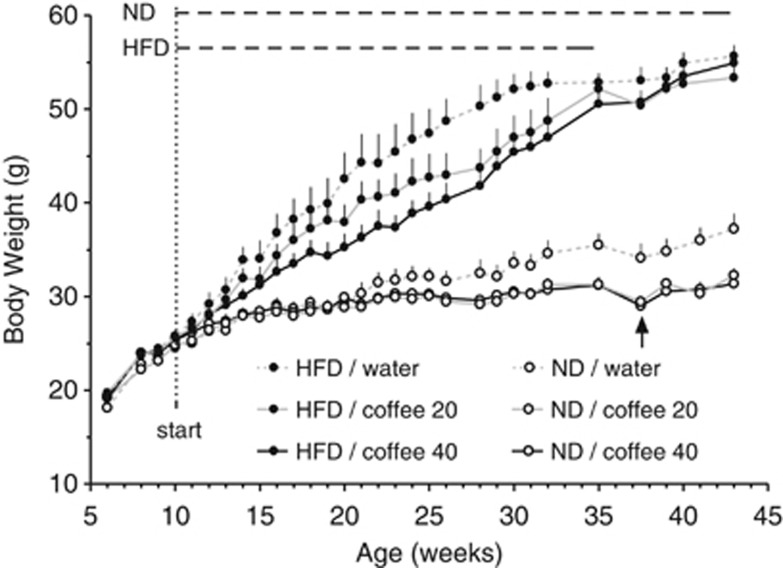
Male C57BL/6 mice consumed regular coffee or water ad libitum and the development of obesity and diabetes caused by high-fat diet (55% lipids, HFD) was observed from week 10 on for 35 weeks in comparison with mice feeding on a defined normal diet (9% lipids, ND).
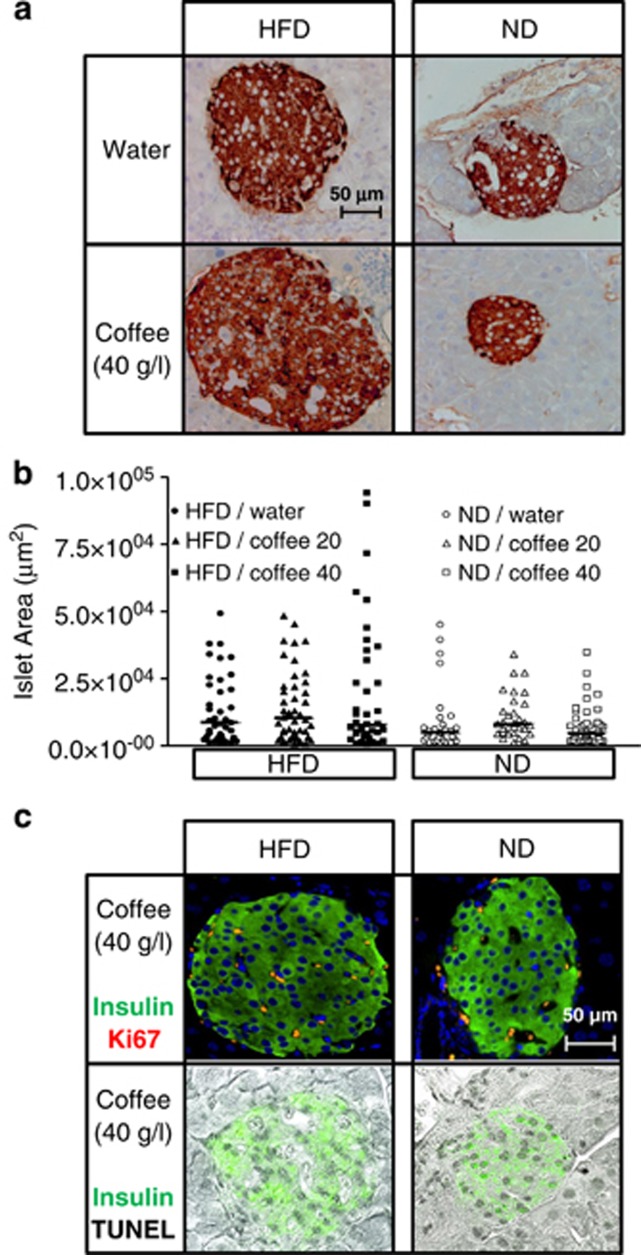
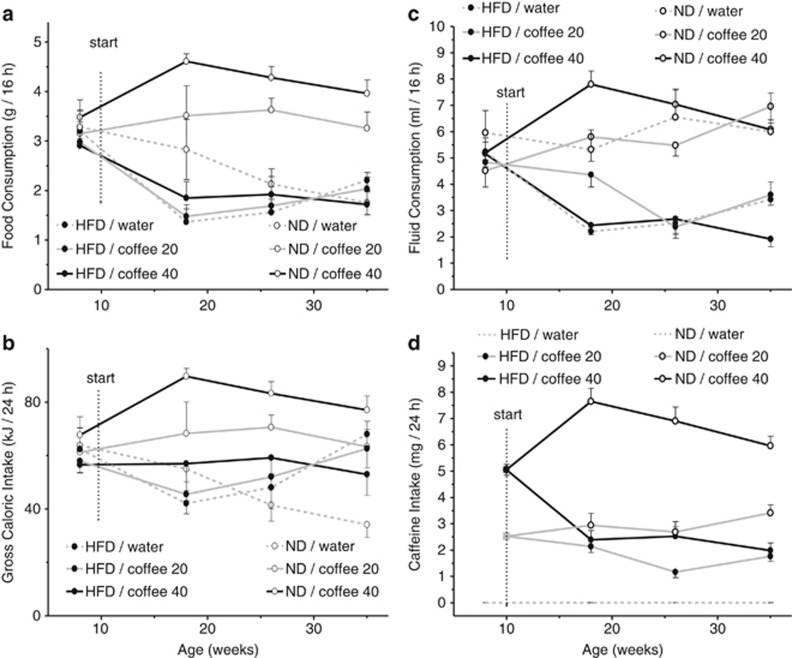
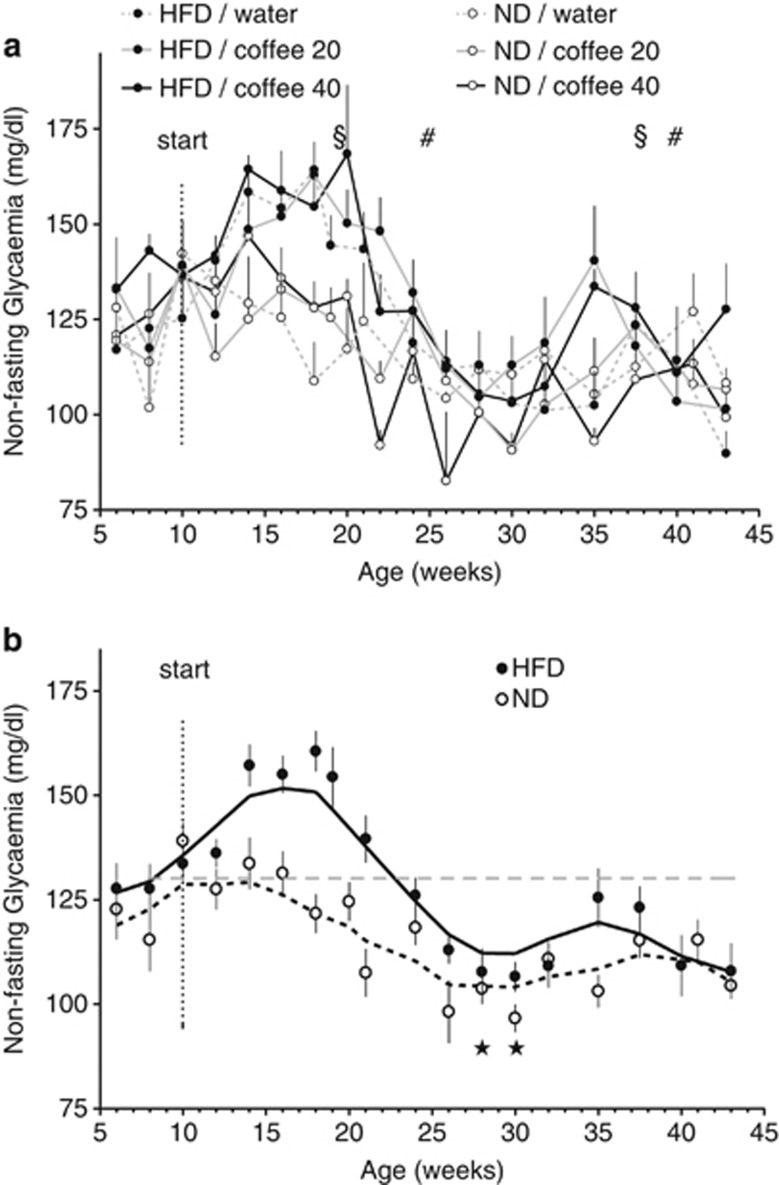
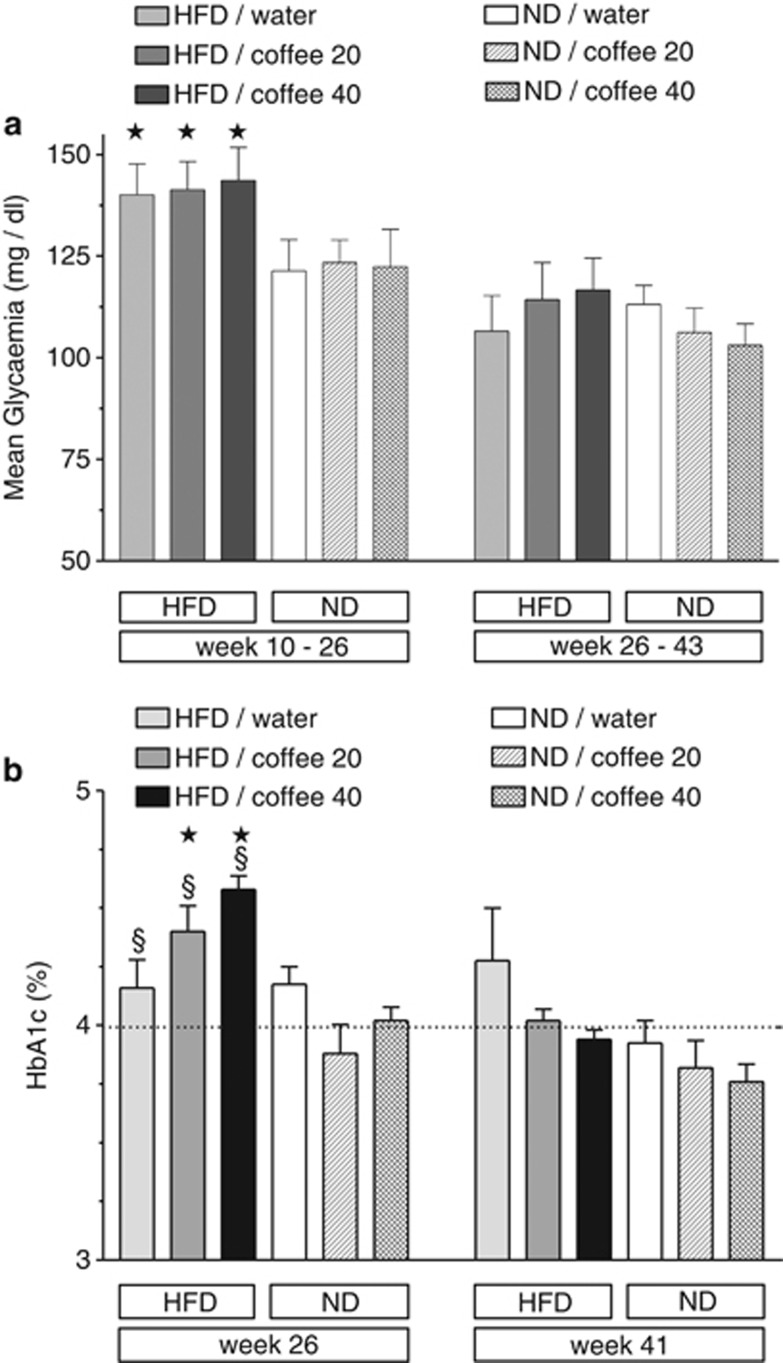
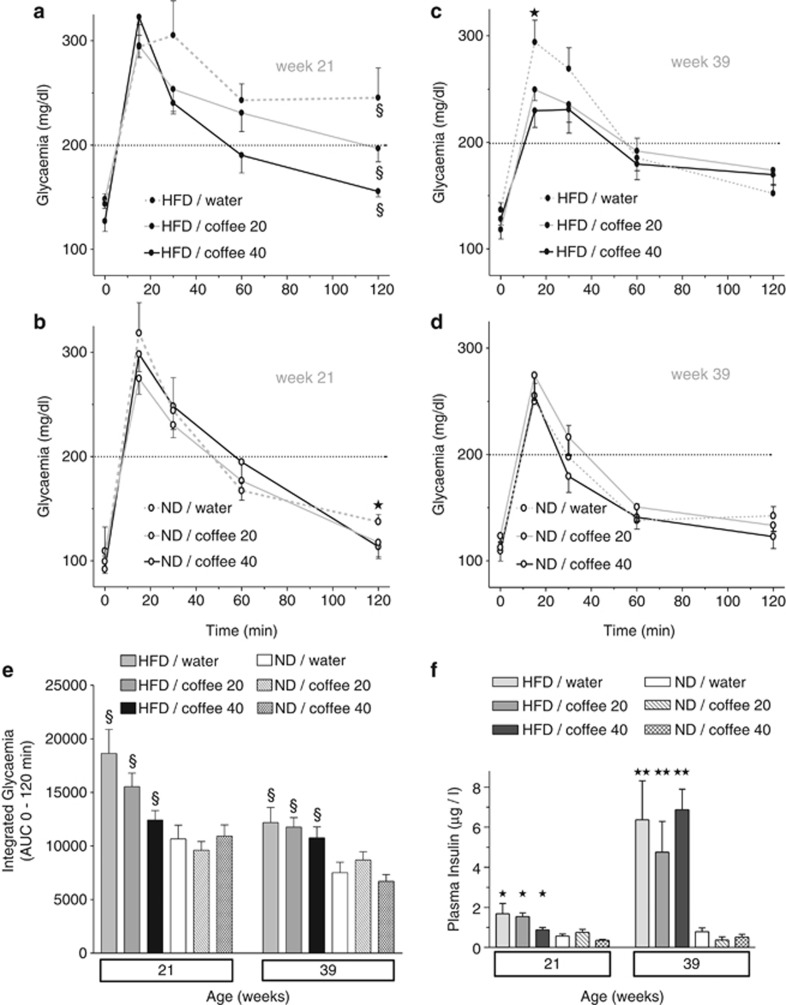
The massive weight gain in HFD mice was dose-dependently retarded (P=0.034), the moderate weight gain in ND mice was abolished (P<0.001) by coffee consumption, probably because of a lower feeding efficiency. The consumption of fluid (water or coffee) was significantly diminished by HFD (P<0.001), resulting in a higher coffee exposure of ND mice. On week 21 intraperitoneal glucose tolerance tests (IPGTT) showed a dose-dependent faster decline of elevated glucose levels in coffee-consuming HFD mice (P=0.016), but not in ND mice. Remarkably, a spontaneous decrease in non-fasting glycaemia occurred after week 21 in all treatment groups (P<0.001). On week 39 the IPGTT showed diminished peak of glucose levels in coffee-consuming HFD mice (P<0.05). HFD mice were hyperinsulinaemic and had significantly (P<0.001) enlarged islets. Coffee consumption did not affect islet size or parameters of beta-cell apoptosis, proliferation and insulin granule content.
Coffee consumption retarded weight gain and improved glucose tolerance in a mouse model of type 2 diabetes and corresponding controls. This gives rise to the expectation that further insight into the mechanism of the diabetes-preventive effect of coffee consumption in humans may be gained by this approach.
流行病学证据表明,人类慢性喝咖啡与 2 型糖尿病发病率降低有关。为了对 2 型糖尿病的潜在机制进行实验探索,需要在寿命较短的 2 型糖尿病动物模型中复制这种效果。
雄性 C57BL/6 小鼠随意饮用普通咖啡或水,从第 10 周开始,用高脂肪饮食(55%脂肪,HFD)观察肥胖和糖尿病的发展,共 35 周,与用标准正常饮食(9%脂肪,ND)喂养的小鼠进行比较。
HFD 小鼠的体重大量增加呈剂量依赖性迟缓(P=0.034),而 ND 小鼠的适度体重增加则被咖啡消耗所消除(P<0.001),这可能是由于进食效率降低。HFD 显著降低了液体(水或咖啡)的摄入(P<0.001),导致 ND 小鼠的咖啡暴露量更高。在第 21 周进行的腹腔内葡萄糖耐量试验(IPGTT)显示,咖啡消耗的 HFD 小鼠血糖水平升高的下降呈剂量依赖性(P=0.016),而 ND 小鼠则没有。值得注意的是,所有治疗组在第 21 周后非禁食血糖水平自发下降(P<0.001)。在第 39 周时,IPGTT 显示咖啡消耗的 HFD 小鼠血糖峰值降低(P<0.05)。HFD 小鼠胰岛素血症,胰岛明显增大(P<0.001)。咖啡消耗不影响胰岛大小或β细胞凋亡、增殖和胰岛素颗粒含量的参数。
咖啡消耗可延缓 2 型糖尿病模型和相应对照小鼠的体重增加,并改善葡萄糖耐量。这使得人们期望通过这种方法进一步深入了解人类喝咖啡预防糖尿病的效果的机制。