Wei Yanhong, Shi Liqiao, Wang Kaimei, Liu Manli, Yang Qingyu, Yang Ziwen, Ke Shaoyong
College of Life Sciences, Wuhan University, Wuhan 430072, China.
National Biopesticide Engineering Research Center, Hubei Academy of Agricultural Sciences, Wuhan 430064, China.
Molecules. 2014 Jun 27;19(7):8949-64. doi: 10.3390/molecules19078949.
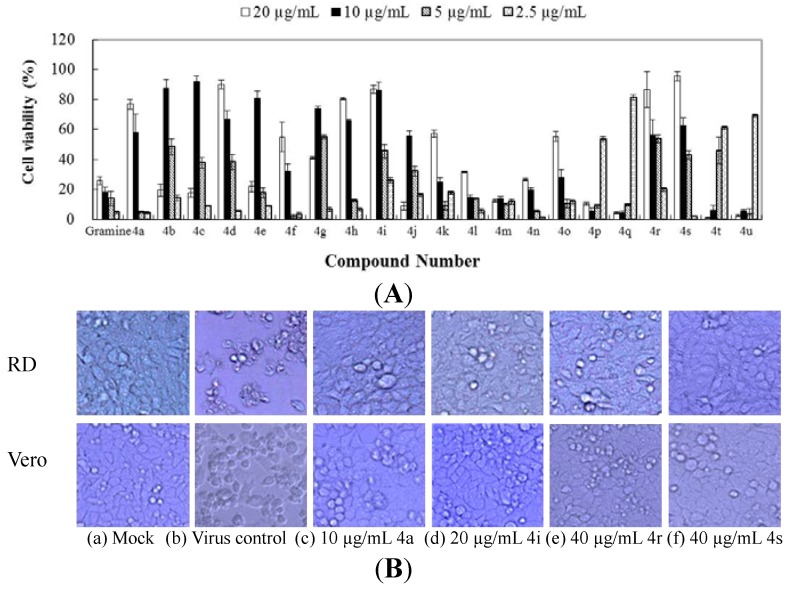
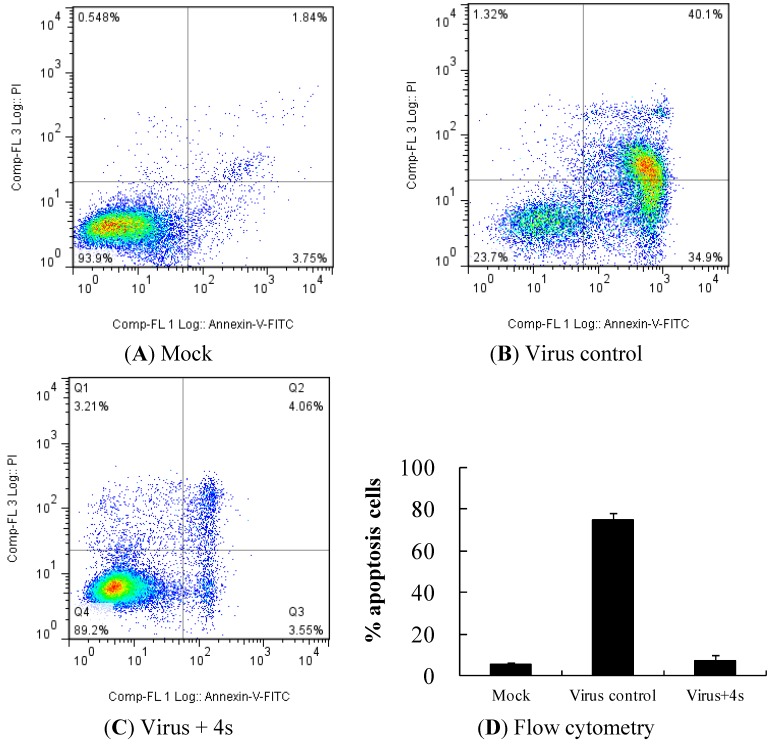
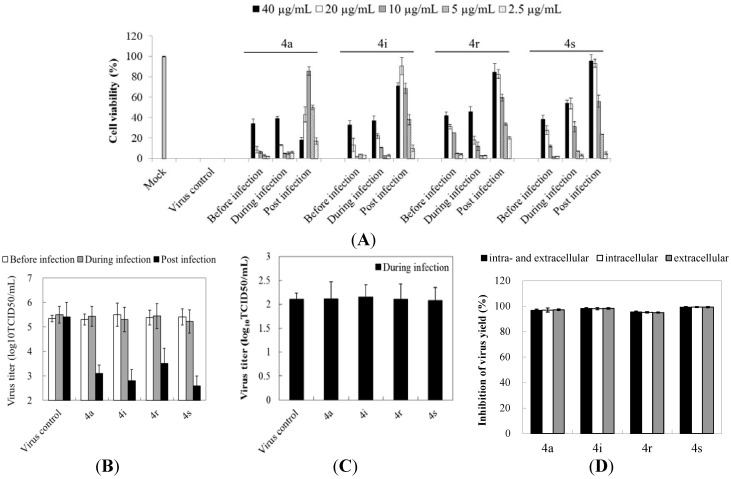
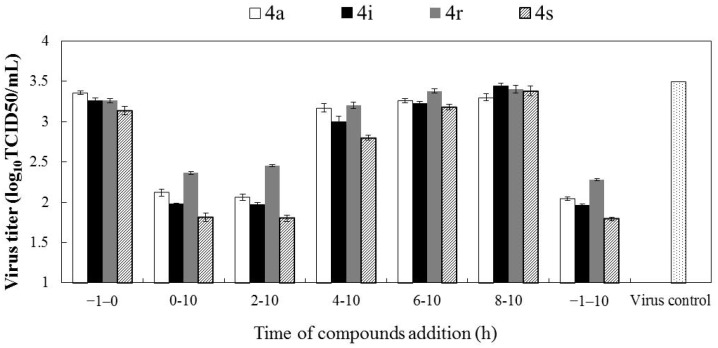
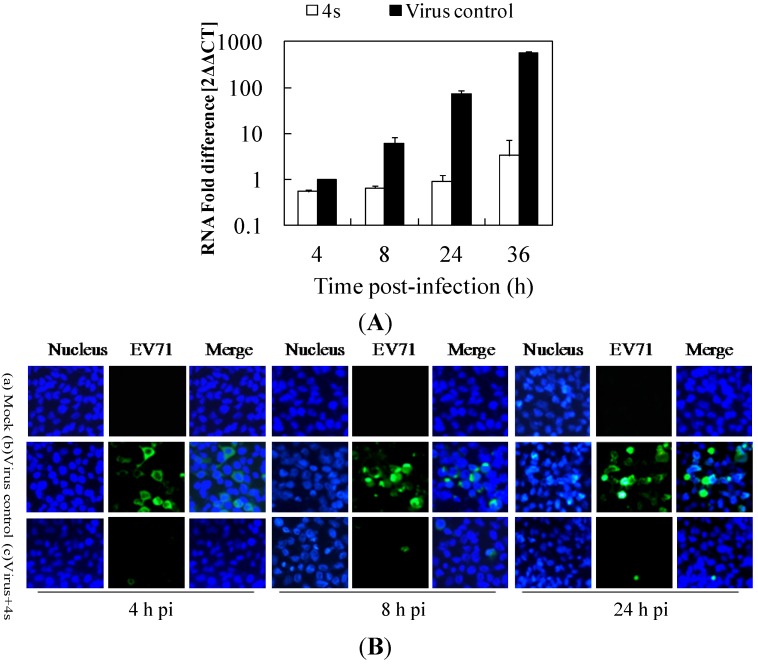
Enterovirus 71 (EV71) is a notable causative agent of hand, foot, and mouth disease in children, which is associated with an increased incidence of severe neurological disease and death, yet there is no specific treatment or vaccine for EV71 infections. In this study, the antiviral activity of gramine and 21 gramine derivatives against EV71 was investigated in cell-based assays. Eighteen derivatives displayed some degree of inhibitory effects against EV71, in that they could effectively inhibit virus-induced cytopathic effects (CPEs), but the anti-EV71 activity of the lead compound gramine was not observed. Studies on the preliminary modes of action showed that these compounds functioned by targeting the early stage of the EV71 lifecycle after viral entry, rather than inactivating the virus directly, inhibiting virus adsorption or affecting viral release from the cells. Among these derivatives, one (compound 4s) containing pyridine and benzothiazole units showed the most potency against EV71. Further studies demonstrated that derivative 4s could profoundly inhibit viral RNA replication, protein synthesis, and virus-induced apoptosis in RD cells. These results indicate that derivative 4s might be a feasible therapeutic agent against EV71 infection and that these gramine derivatives may provide promising lead scaffolds for the further design and synthesis of potential antiviral agents.
肠道病毒71型(EV71)是引起儿童手足口病的一种重要病原体,与严重神经疾病和死亡发生率的增加有关,然而目前尚无针对EV71感染的特效治疗方法或疫苗。在本研究中,通过基于细胞的实验研究了禾本科碱和21种禾本科碱衍生物对EV71的抗病毒活性。18种衍生物对EV71表现出一定程度的抑制作用,即它们能有效抑制病毒诱导的细胞病变效应(CPE),但未观察到先导化合物禾本科碱的抗EV71活性。初步作用模式研究表明,这些化合物通过靶向病毒进入后EV71生命周期的早期阶段发挥作用,而非直接使病毒失活、抑制病毒吸附或影响病毒从细胞中释放。在这些衍生物中,一种含有吡啶和苯并噻唑单元的化合物(化合物4s)对EV71表现出最强的活性。进一步研究表明,衍生物4s能显著抑制RD细胞中的病毒RNA复制、蛋白质合成以及病毒诱导的凋亡。这些结果表明,衍生物4s可能是一种针对EV71感染的可行治疗药物,并且这些禾本科碱衍生物可能为进一步设计和合成潜在抗病毒药物提供有前景的先导骨架。