Esghaei Moein, Daliri Mohammad Reza
School of Cognitive Sciences (SCS), Institute for Research in Fundamental Sciences (IPM), Tehran, Iran; Cognitive Neuroscience Laboratory, German Primate Center (DPZ), Goettingen, Germany.
School of Cognitive Sciences (SCS), Institute for Research in Fundamental Sciences (IPM), Tehran, Iran; Biomedical Engineering Department, Faculty of Electrical Engineering, Iran University of Science and Technology (IUST), Tehran, Iran; Cognitive Neuroscience Laboratory, German Primate Center (DPZ), Goettingen, Germany.
PLoS One. 2014 Jun 30;9(6):e100381. doi: 10.1371/journal.pone.0100381. eCollection 2014.
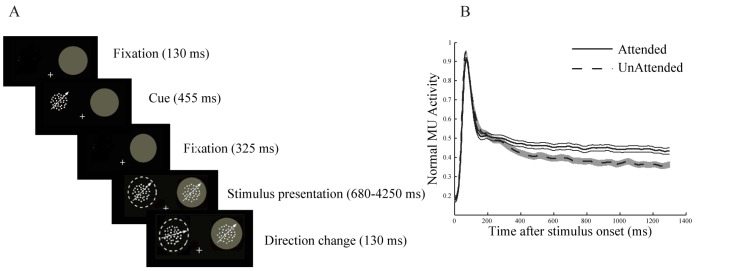
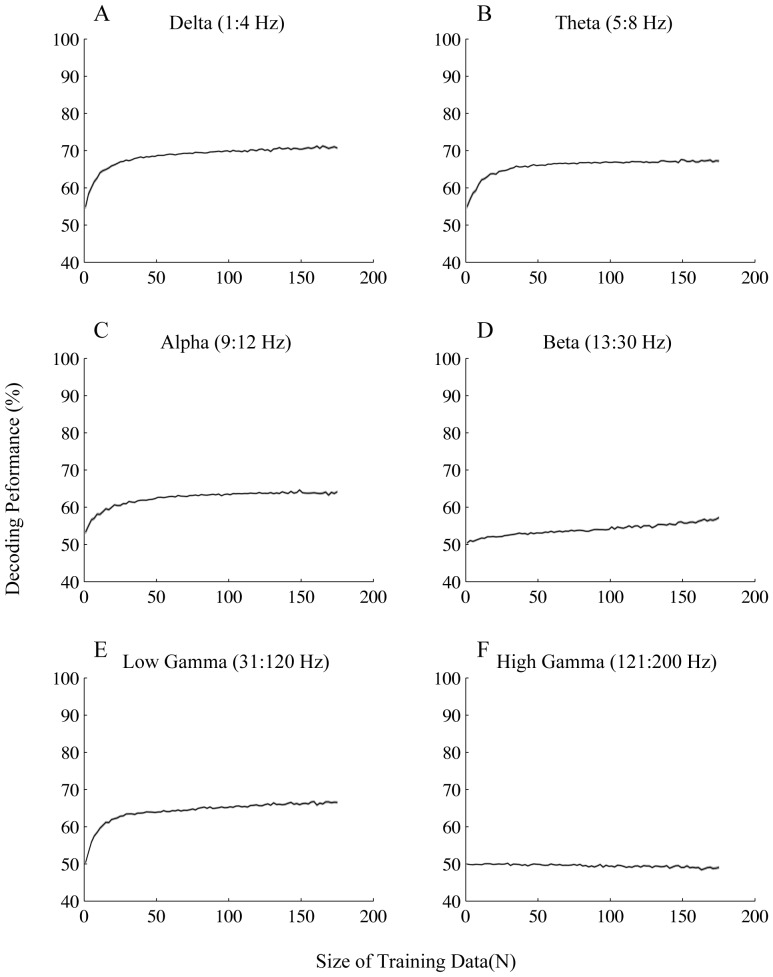
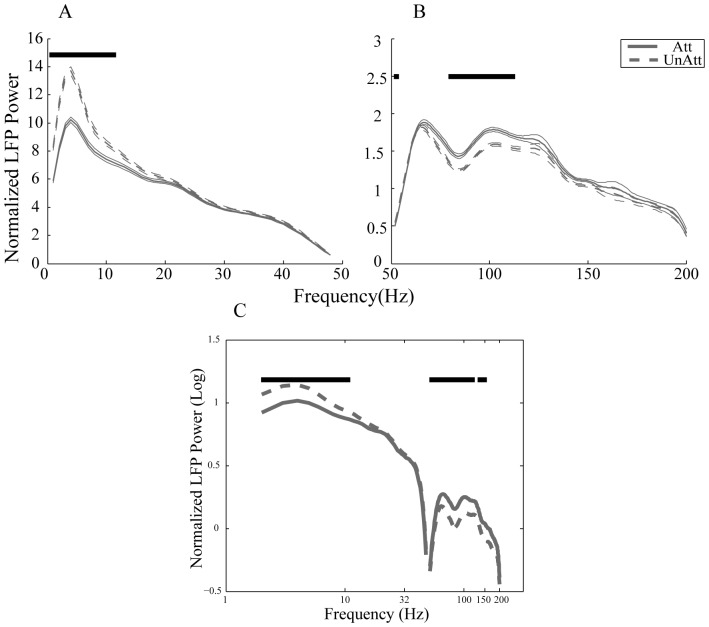
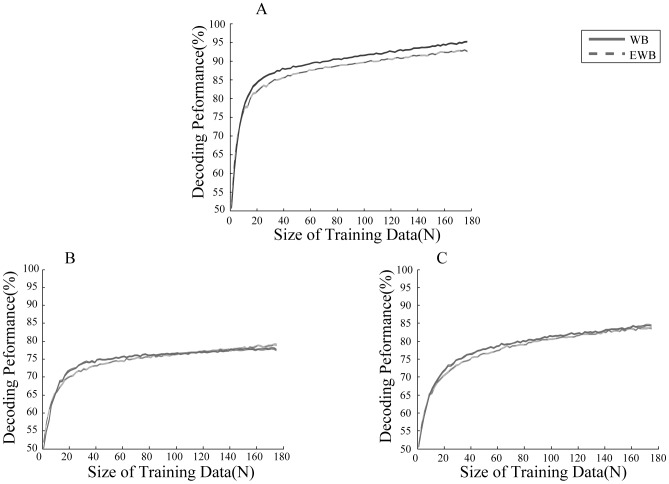
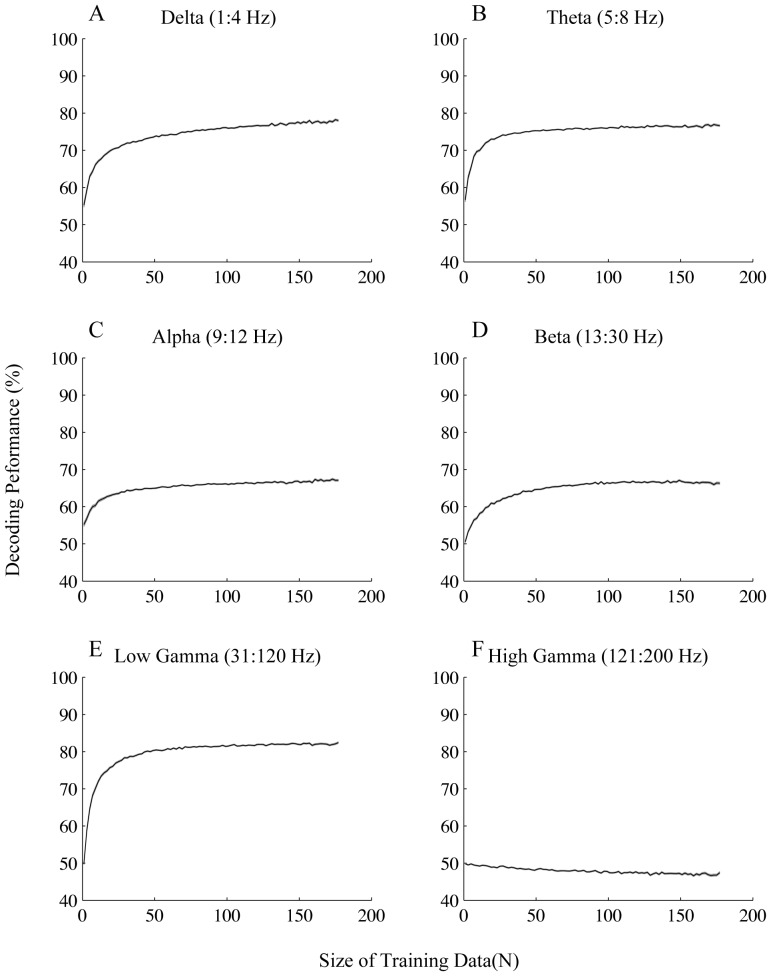
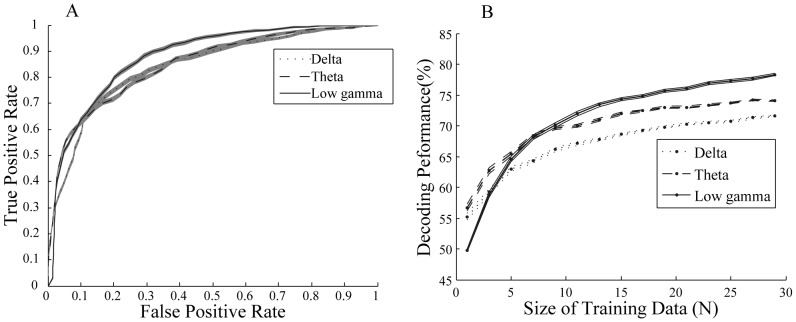
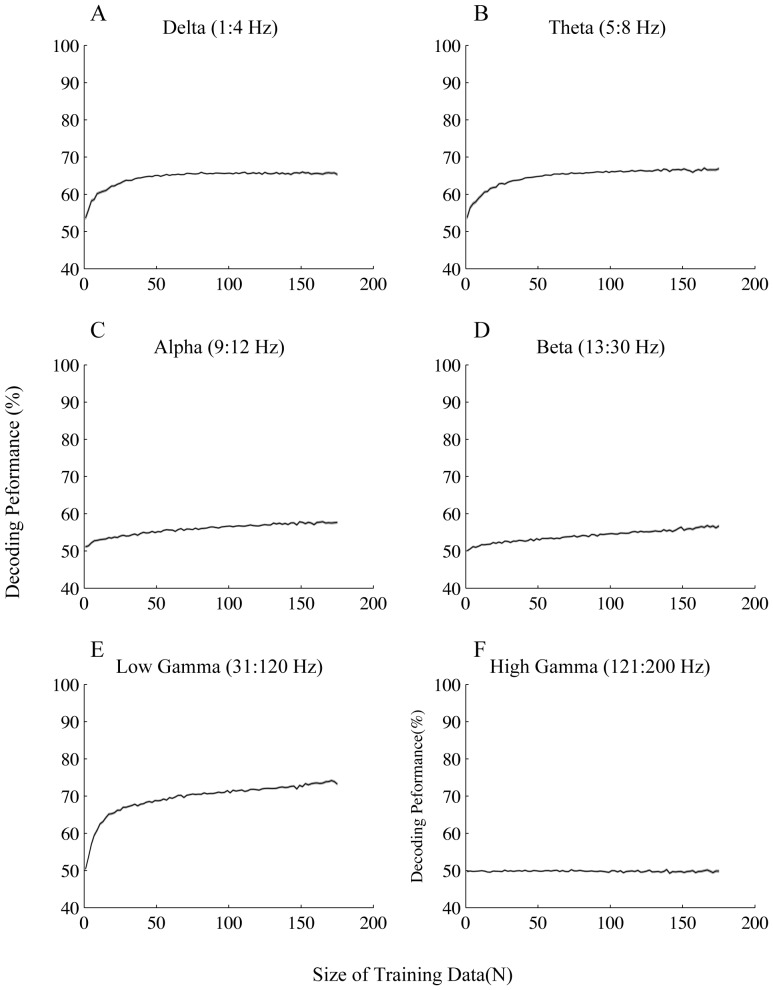
The local field potential (LFP) has recently been widely used in brain computer interfaces (BCI). Here we used power of LFP recorded from area MT of a macaque monkey to decode where the animal covertly attended. Support vector machines (SVM) were used to learn the pattern of power at different frequencies for attention to two possible positions. We found that LFP power at both low (<9 Hz) and high (31-120 Hz) frequencies contains sufficient information to decode the focus of attention. Highest decoding performance was found for gamma frequencies (31-120 Hz) and reached 82%. In contrast low frequencies (<9 Hz) could help the classifier reach a higher decoding performance with a smaller amount of training data. Consequently, we suggest that low frequency LFP can provide fast but coarse information regarding the focus of attention, while higher frequencies of the LFP deliver more accurate but less timely information about the focus of attention.
局部场电位(LFP)最近在脑机接口(BCI)中得到了广泛应用。在此,我们利用从猕猴MT区记录的LFP功率来解码动物 covertly 关注的位置。支持向量机(SVM)用于学习不同频率下注意力指向两个可能位置时的功率模式。我们发现,低频(<9 Hz)和高频(31 - 120 Hz)的LFP功率都包含足够的信息来解码注意力焦点。在伽马频率(31 - 120 Hz)下发现了最高的解码性能,达到了82%。相比之下,低频(<9 Hz)可以帮助分类器在训练数据量较少的情况下达到更高的解码性能。因此,我们认为低频LFP可以提供关于注意力焦点的快速但粗略的信息,而高频LFP则能提供关于注意力焦点更准确但不太及时的信息。