Noirot Elodie, Der Christophe, Lherminier Jeannine, Robert Franck, Moricova Pavla, Kiêu Kiên, Leborgne-Castel Nathalie, Simon-Plas Françoise, Bouhidel Karim
INRA, UMR1347 Agroécologie, ERL CNRS 6300, Plateforme DImaCell, Centre de Microscopie INRA/Université de Bourgogne, BP 86510, F-21065 Dijon Cedex, France.
Université de Bourgogne, UMR1347 Agroécologie, ERL CNRS 6300, BP 86510, F-21065 Dijon Cedex, France.
J Exp Bot. 2014 Sep;65(17):5011-22. doi: 10.1093/jxb/eru265. Epub 2014 Jul 1.
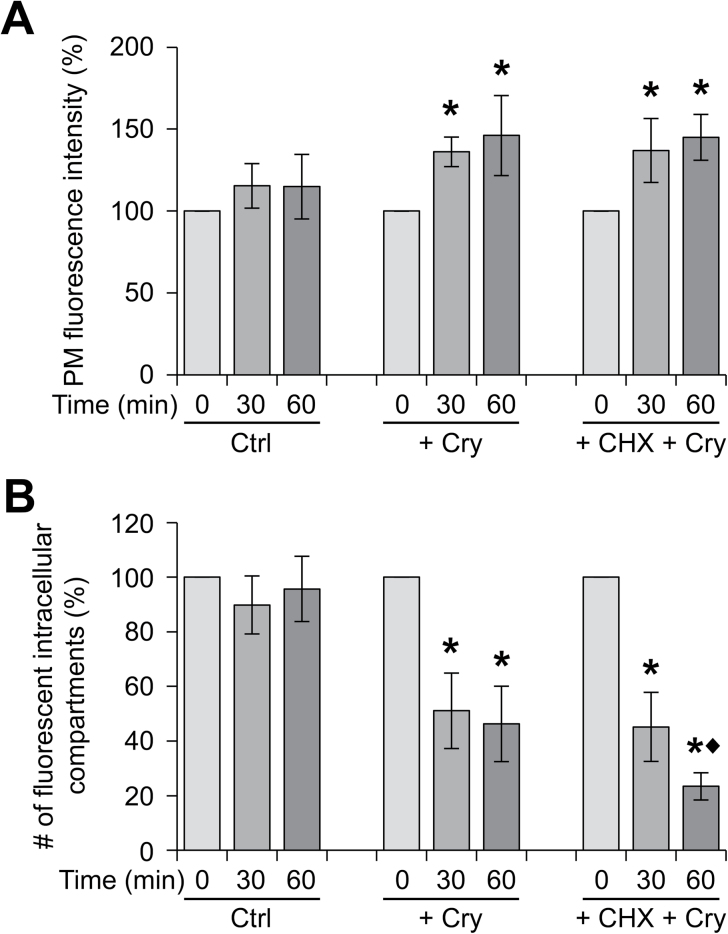
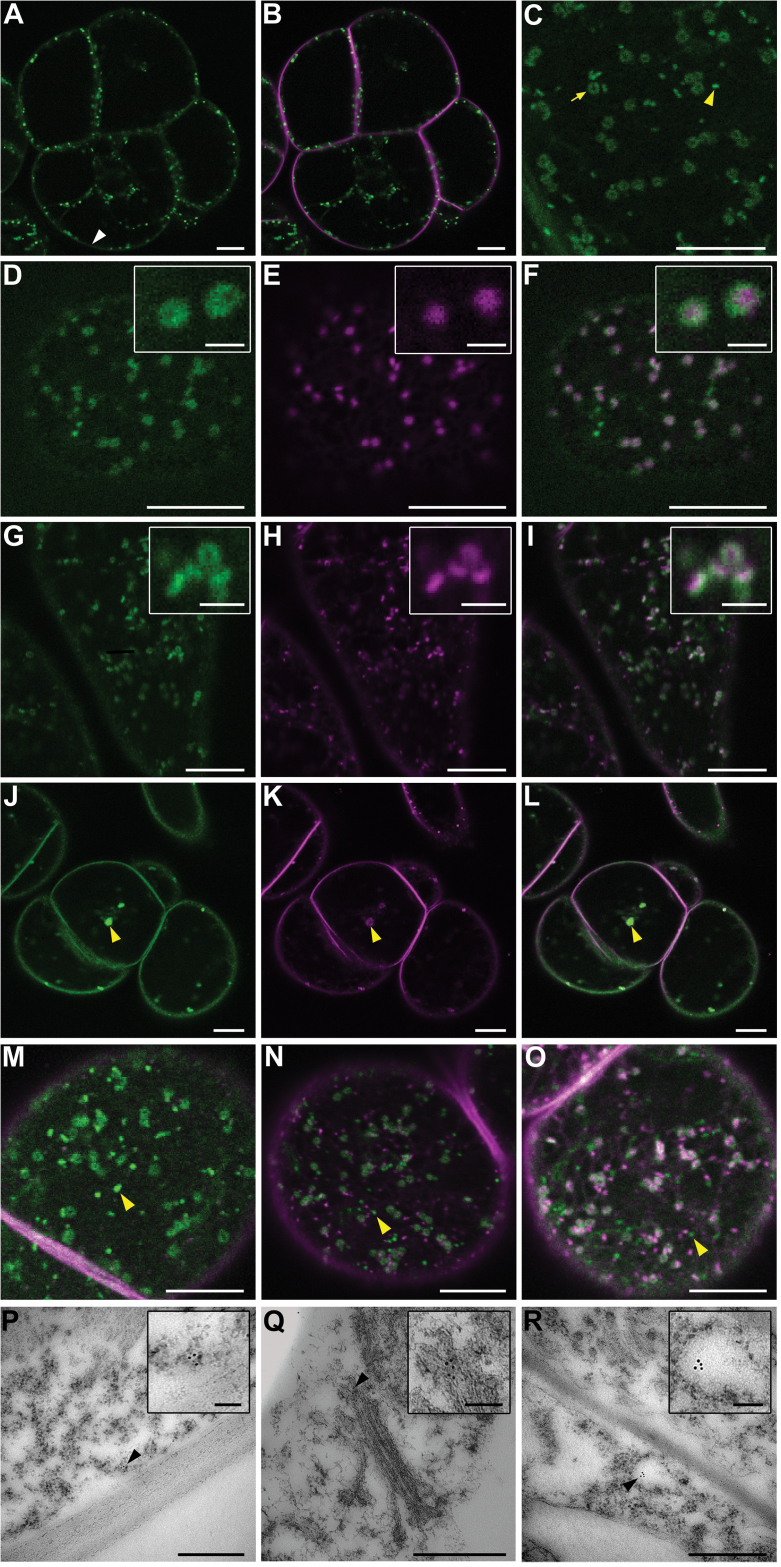
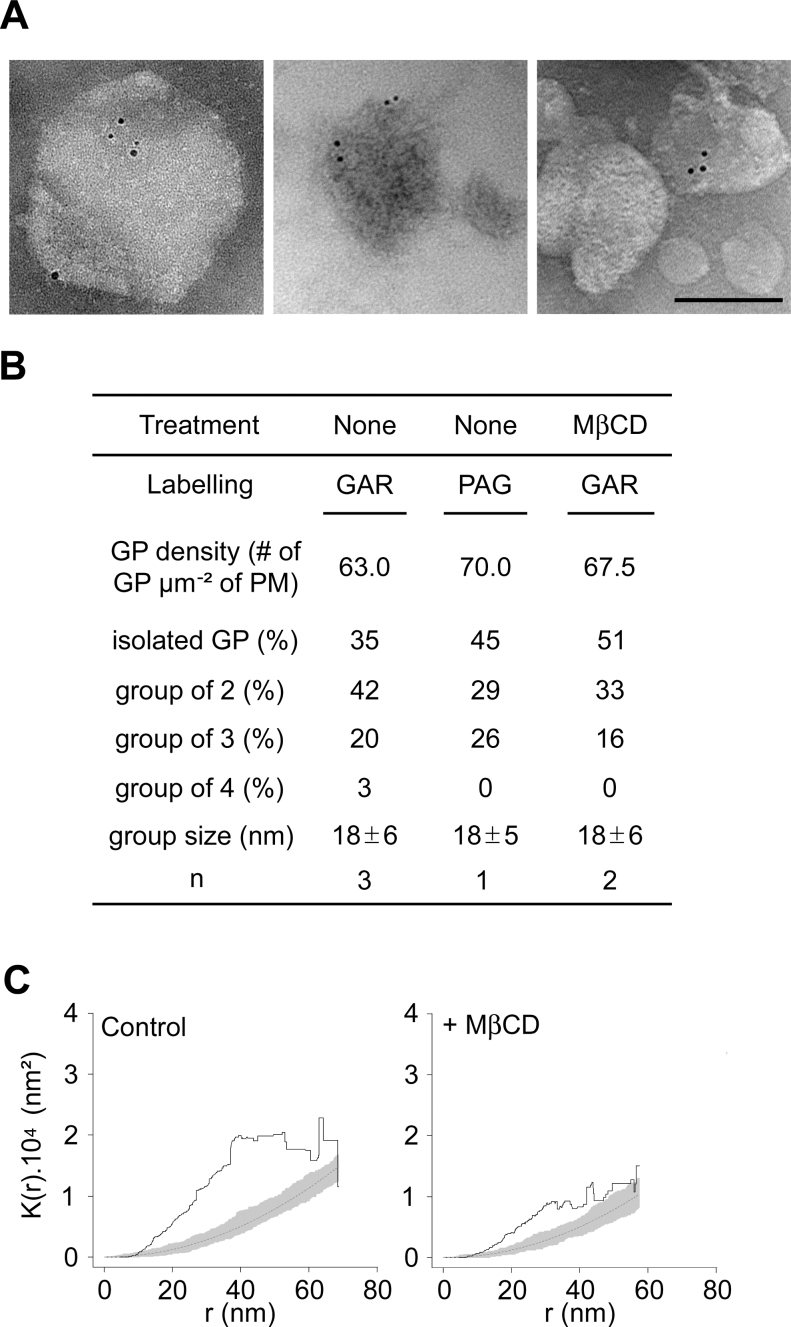
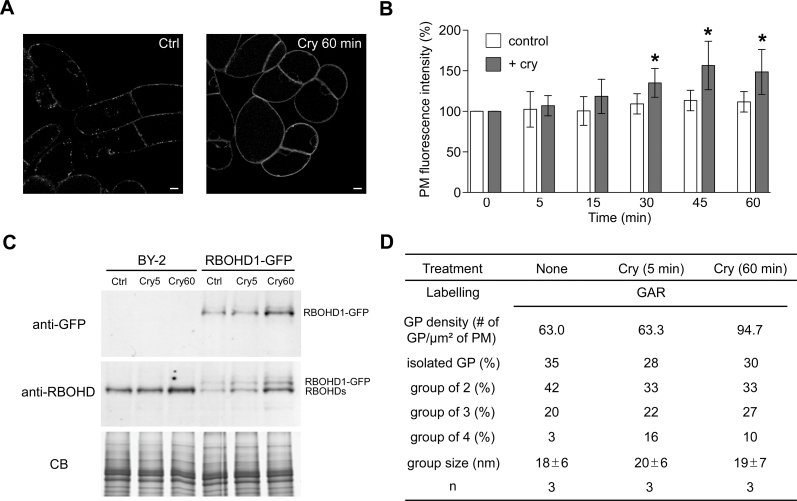
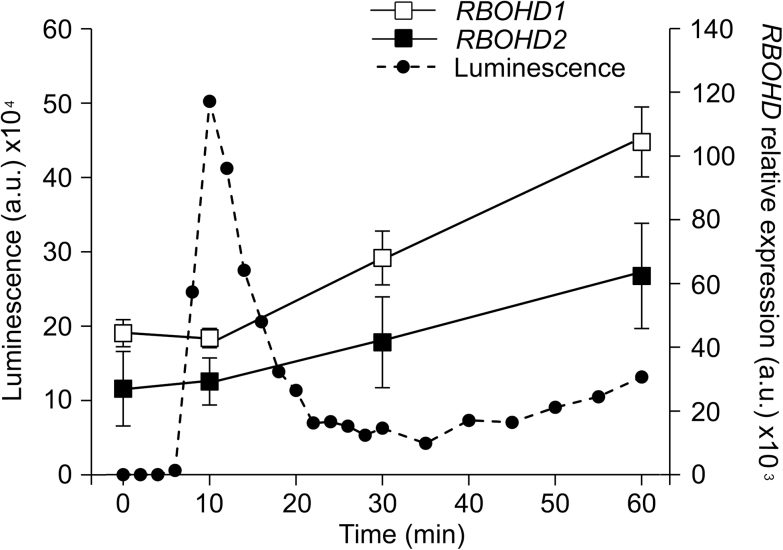
Plant NADPH oxidases, also known as respiratory burst oxidase homologues (RBOHs), have been identified as a major source of reactive oxygen species (ROS) during plant-microbe interactions. The subcellular localization of the tobacco (Nicotiana tabacum) ROS-producing enzyme RBOHD was examined in Bright Yellow-2 cells before and after elicitation with the oomycete protein cryptogein using electron and confocal microscopy. The plasma membrane (PM) localization of RBOHD was confirmed and immuno-electron microscopy on purified PM vesicles revealed its distribution in clusters. The presence of the protein fused to GFP was also seen in intracellular compartments, mainly Golgi cisternae. Cryptogein induced, within 1h, a 1.5-fold increase in RBOHD abundance at the PM and a concomitant decrease in the internal compartments. Use of cycloheximide revealed that most of the proteins targeted to the PM upon elicitation were not newly synthesized but may originate from the Golgi pool. ROS accumulation preceded RBOHD transcript- and protein-upregulation, indicating that ROS resulted from the activation of a PM-resident pool of enzymes, and that enzymes newly addressed to the PM were inactive. Taken together, the results indicate that control of RBOH abundance and subcellular localization may play a fundamental role in the mechanism of ROS production.
植物NADPH氧化酶,也被称为呼吸爆发氧化酶同源物(RBOHs),已被确定为植物与微生物相互作用过程中活性氧(ROS)的主要来源。利用电子显微镜和共聚焦显微镜,在卵菌蛋白隐地蛋白诱导前后,对烟草(Nicotiana tabacum)产ROS酶RBOHD在亮黄-2细胞中的亚细胞定位进行了检测。证实了RBOHD定位于质膜(PM),对纯化的质膜囊泡进行免疫电子显微镜检查显示其呈簇状分布。在细胞内区室,主要是高尔基体潴泡中也发现了与绿色荧光蛋白融合的该蛋白。隐地蛋白在1小时内使质膜上的RBOHD丰度增加了1.5倍,同时细胞内区室中的RBOHD丰度下降。使用环己酰亚胺表明,诱导后靶向质膜的大多数蛋白质不是新合成的,而是可能来源于高尔基体库。ROS积累先于RBOHD转录本和蛋白上调,这表明ROS是由质膜驻留酶池的激活产生的,而新转运到质膜的酶是无活性的。综上所述,结果表明对RBOH丰度和亚细胞定位的控制可能在ROS产生机制中起重要作用。