Zhang Cui, Xiao Bo, Jiang Yuanyuan, Zhao Yihua, Li Zhenkui, Gao Han, Ling Yuan, Wei Jun, Li Shaoneng, Lu Mingke, Su Xin-Zhuan, Cui Huiting, Yuan Jing
State Key Laboratory of Cellular Stress Biology, Innovation Center for Cell Biology, School of Life Sciences, Xiamen University, Xiamen, Fujian, China.
Laboratory of Malaria and Vector Research, National Institute of Allergy and Infectious Diseases, National Institutes of Health, Bethesda, Maryland, USA
mBio. 2014 Jul 1;5(4):e01414-14. doi: 10.1128/mBio.01414-14.
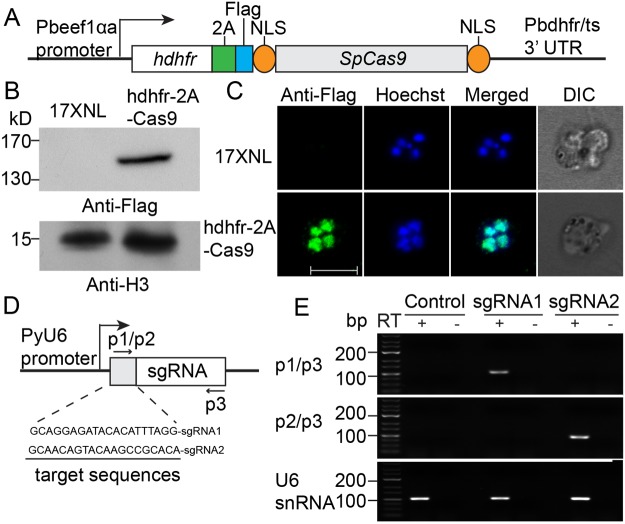
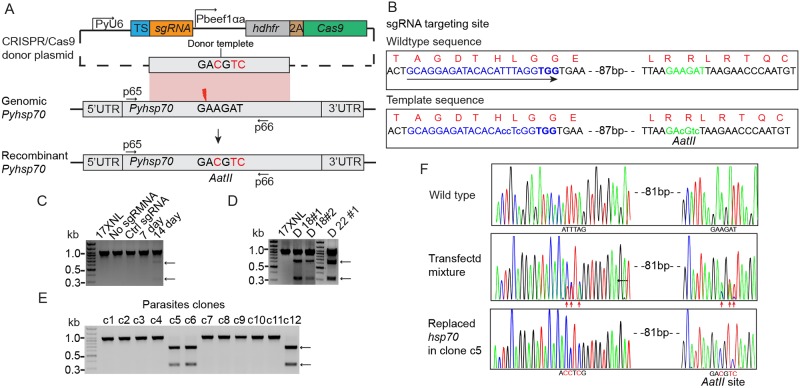
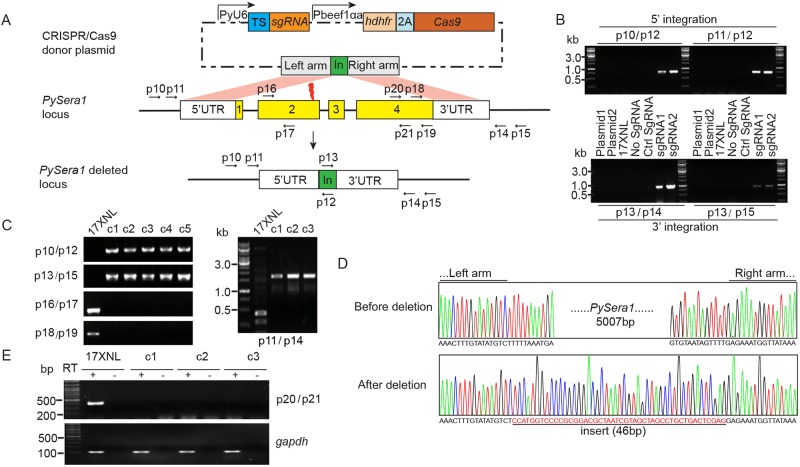
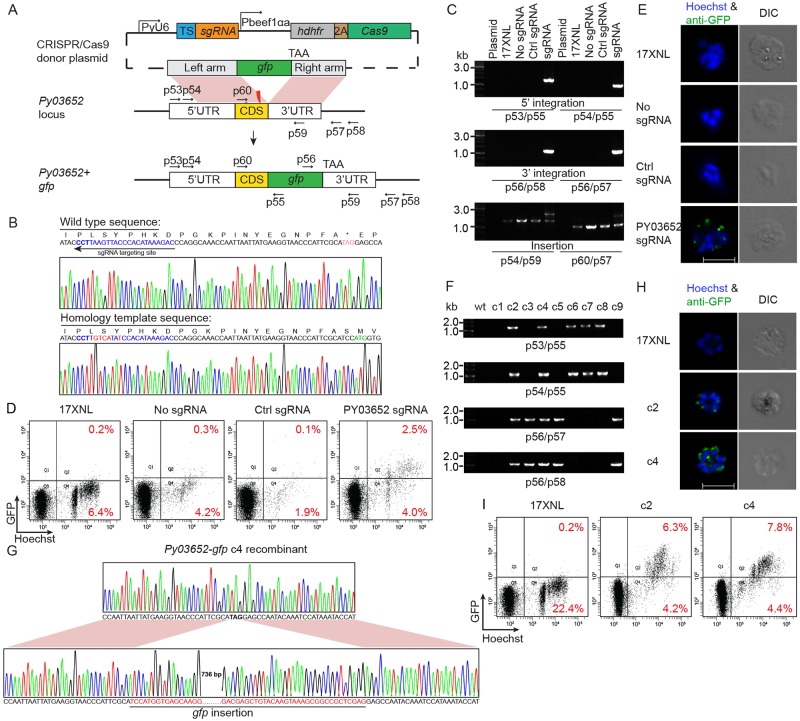
Malaria parasites are unicellular organisms residing inside the red blood cells, and current methods for editing the parasite genes have been inefficient. The CRISPR/Cas9 (clustered regularly interspaced short palindromic repeats and Cas9 endonuclease-mediated genome editing) system is a new powerful technique for genome editing and has been widely employed to study gene function in various organisms. However, whether this technique can be applied to modify the genomes of malaria parasites has not been determined. In this paper, we demonstrated that Cas9 is able to introduce site-specific DNA double-strand breaks in the Plasmodium yoelii genome that can be repaired through homologous recombination. By supplying engineered homologous repair templates, we generated targeted deletion, reporter knock-in, and nucleotide replacement in multiple parasite genes, achieving up to 100% efficiency in gene deletion and 22 to 45% efficiencies in knock-in and allelic replacement. Our results establish methodologies for introducing desired modifications in the P. yoelii genome with high efficiency and accuracy, which will greatly improve our ability to study gene function of malaria parasites. Importance: Malaria, caused by infection of Plasmodium parasites, remains a world-wide public health burden. Although the genomes of many malaria parasites have been sequenced, we still do not know the functions of approximately half of the genes in the genomes. Studying gene function has become the focus of many studies; however, editing genes in malaria parasite genomes is still inefficient. Here we designed several efficient approaches, based on the CRISPR/Cas9 system, to introduce site-specific DNA double-strand breaks in the Plasmodium yoelii genome that can be repaired through homologous recombination. Using this system, we achieved high efficiencies in gene deletion, reporter tagging, and allelic replacement in multiple parasite genes. This technique for editing the malaria parasite genome will greatly facilitate our ability to elucidate gene function.
疟原虫是寄生于红细胞内的单细胞生物,目前编辑疟原虫基因的方法效率低下。CRISPR/Cas9(成簇规律间隔短回文重复序列和Cas9核酸酶介导的基因组编辑)系统是一种新的强大的基因组编辑技术,已被广泛用于研究各种生物体中的基因功能。然而,该技术是否可应用于修饰疟原虫的基因组尚未确定。在本文中,我们证明了Cas9能够在约氏疟原虫基因组中引入位点特异性DNA双链断裂,这些断裂可通过同源重组进行修复。通过提供工程化的同源修复模板,我们在多个疟原虫基因中实现了靶向缺失、报告基因敲入和核苷酸替换,基因缺失效率高达100%,敲入和等位基因替换效率为22%至45%。我们的结果建立了在约氏疟原虫基因组中高效、准确地引入所需修饰的方法,这将大大提高我们研究疟原虫基因功能的能力。重要性:由疟原虫感染引起的疟疾仍然是全球公共卫生负担。尽管许多疟原虫的基因组已被测序,但我们仍然不知道基因组中约一半基因的功能。研究基因功能已成为许多研究的重点;然而,编辑疟原虫基因组中的基因仍然效率低下。在这里,我们基于CRISPR/Cas9系统设计了几种有效的方法,以在约氏疟原虫基因组中引入位点特异性DNA双链断裂,这些断裂可通过同源重组进行修复。使用该系统,我们在多个疟原虫基因的基因缺失、报告基因标记和等位基因替换方面实现了高效率。这种编辑疟原虫基因组的技术将极大地促进我们阐明基因功能的能力。