Department of Neuroscience, University of Minnesota Minneapolis, MN, USA.
Front Syst Neurosci. 2014 Jun 17;8:113. doi: 10.3389/fnsys.2014.00113. eCollection 2014.
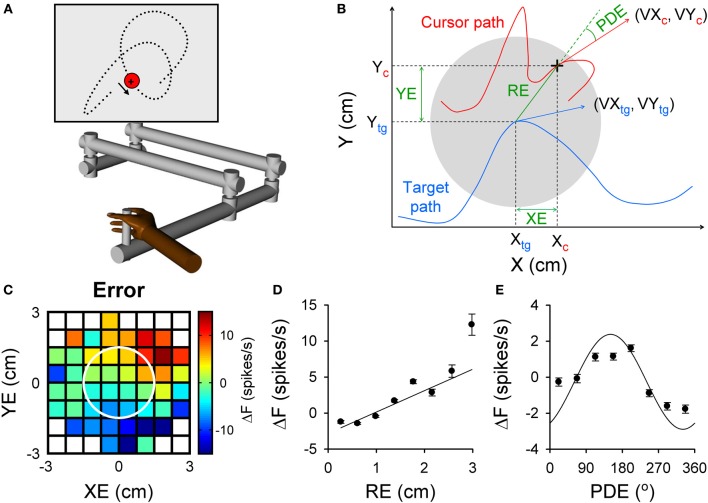
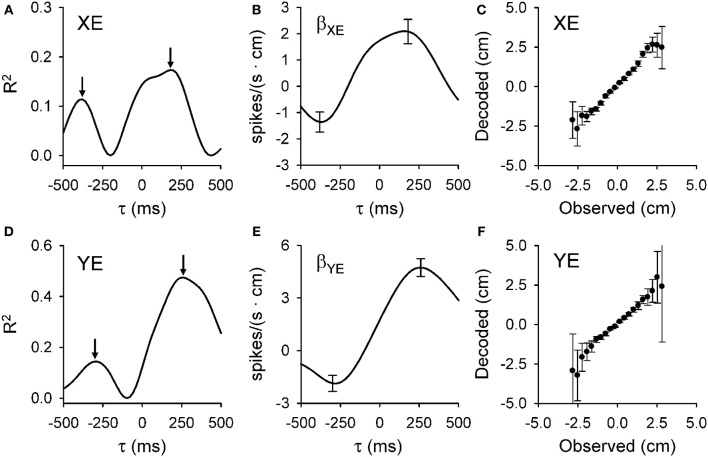
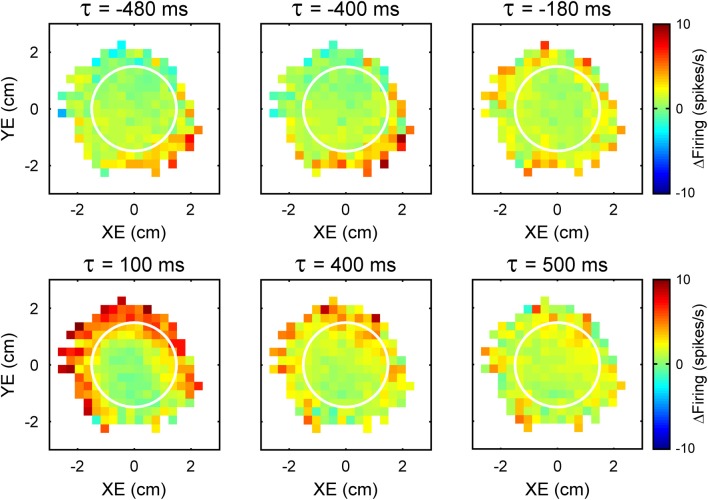
Historically the cerebellum has been implicated in the control of movement. However, the cerebellum's role in non-motor functions, including cognitive and emotional processes, has also received increasing attention. Starting from the premise that the uniform architecture of the cerebellum underlies a common mode of information processing, this review examines recent electrophysiological findings on the motor signals encoded in the cerebellar cortex and then relates these signals to observations in the non-motor domain. Simple spike firing of individual Purkinje cells encodes performance errors, both predicting upcoming errors as well as providing feedback about those errors. Further, this dual temporal encoding of prediction and feedback involves a change in the sign of the simple spike modulation. Therefore, Purkinje cell simple spike firing both predicts and responds to feedback about a specific parameter, consistent with computing sensory prediction errors in which the predictions about the consequences of a motor command are compared with the feedback resulting from the motor command execution. These new findings are in contrast with the historical view that complex spikes encode errors. Evaluation of the kinematic coding in the simple spike discharge shows the same dual temporal encoding, suggesting this is a common mode of signal processing in the cerebellar cortex. Decoding analyses show the considerable accuracy of the predictions provided by Purkinje cells across a range of times. Further, individual Purkinje cells encode linearly and independently a multitude of signals, both kinematic and performance errors. Therefore, the cerebellar cortex's capacity to make associations across different sensory, motor and non-motor signals is large. The results from studying how Purkinje cells encode movement signals suggest that the cerebellar cortex circuitry can support associative learning, sequencing, working memory, and forward internal models in non-motor domains.
从小脑统一的架构基础上存在着一种共同的信息处理模式这一前提出发,本综述首先探讨了近期有关小脑皮层运动信号的电生理发现,然后将这些信号与非运动领域的观察结果联系起来。单个浦肯野细胞的简单锋电位发放编码了运动表现误差,既可以预测即将发生的错误,也可以提供有关这些错误的反馈。此外,这种预测和反馈的双重时间编码涉及到简单锋电位调制符号的变化。因此,浦肯野细胞的简单锋电位发放既预测了特定参数的反馈,又对该参数的反馈做出了反应,这与计算感觉预测误差一致,其中对运动指令后果的预测与从运动指令执行中产生的反馈进行了比较。这些新发现与历史上认为复杂锋电位编码错误的观点形成了对比。对简单锋电位放电中的运动编码进行评估显示出相同的双重时间编码,这表明这是小脑皮层中一种共同的信号处理模式。解码分析表明,浦肯野细胞在一系列时间内提供的预测具有相当高的准确性。此外,单个浦肯野细胞可以线性且独立地编码多种信号,包括运动和表现误差。因此,小脑皮层在不同感觉、运动和非运动信号之间进行关联的能力很大。研究浦肯野细胞如何编码运动信号的结果表明,小脑皮层电路可以支持非运动领域的联想学习、排序、工作记忆和正向内部模型。